How to Calibrate a Miter Saw for Perfect Cuts

A miter saw is a great addition to your woodworking tools, but getting the perfect angle and cut can be a daunting task if it’s not calibrated correctly. Adjusting and aligning a miter saw might seem like an intimidating process, but it’s actually quite simple if you have the right tools and follow the steps carefully.
In this article, we will cover everything you need to know about the process for perfect cuts. We will discuss why calibration is important and how it impacts the accuracy of your cuts. We will also go through the necessary tools rand explain each step involved. Additionally, we’ll share some tips for achieving precise cuts with your miter saw, common issues in calibration, and how often you should perform an alignment. So let’s dive in and make sure that your next project has perfect cuts!
Understanding Miter Saw Calibration
Proper calibration is crucial for woodworking as it allows for efficiency, precision, and accuracy. Specifically, it enhances the precision of bevel and miter cuts, improving cutting accuracy overall. Additional benefits include minimizing troubleshooting needs for crooked cuts and ensuring the saw fully stops at cut lines. Popular miter saws like compound models with sliding features provide necessary adjustments for specialty cuts on crown moldings and baseboards.
Why is Calibration Important?
Proper calibration of a miter saw is crucial for ensuring accuracy and reliability in woodworking. It prevents inaccurate and inconsistent cuts, minimizing material wastage. Additionally, accurate calibration reduces the risk of kickback and accidents, essential for achieving professional-quality carpentry work. Calibration guarantees the saw’s precision, making it an indispensable practice for any carpenter or woodworking enthusiast.
The Impact on Cut Accuracy
Proper calibration of a miter saw ensures precise angle and bevel cuts, resulting in clean and accurate cuts. It minimizes the need for additional adjustments and significantly improves cutting precision, delivering consistent and accurate results. The impact of accurate calibration is evident in the quality of woodworking and carpentry work, making it essential for professionals seeking professional-grade results.
Necessary Tools for Miter Saw Calibration
Precision instruments like combination squares, levels, and adjustable stops help guarantee fully aligned fence and blade positions. Upgraded saw blades and tables also improve crosscutting capacities. The proper specialized tools prevent even slight measurement inaccuracies during the calibration process.
Importance of Proper Calibration Tools
Quality calibration tools enhance the accuracy of a compound miter saw, ensuring precise and reliable cuts. The importance of using reliable tools for miter saw calibration cannot be overstated, as they contribute to accurate adjustments and consistent cutting accuracy. By utilizing the right tools, carpenters can achieve precise calibration, leading to perfect cuts on molding, baseboards, and other workpieces.
How to Calibrate a Miter Saw: A Step by Step Guide
Step 1: Checking the Blade Squareness
A blade must sit perfectly perpendicular to the saw table to ensure straight cuts. Use a combination square across the blade’s teeth at several spots to identify any deviations from 90 degrees. Make small adjustments and recheck until properly aligned.
Step 2: How to Adjust a Miter Saw Blade
Loosen the arbor bolt enough to allow careful movement of the blade itself to correct any misalignments spotted in the squareness check. Re-tighten the arbor bolt once aligned to 90 degrees.
Step 3: How to Align a Miter Saw Fence
Use a dial indicator to measure fence distances from the saw blade along the fence’s length. Make adjustments to align it evenly along the entire fence within 0.005 inches.
Step 4: Synchronizing the Angle Pointer
Verify the angle pointer matches the bevel gauge with a combo square. Adjust and lubricate gears if needed to sync the pointer perfectly.
Step 5: Alignment of the Laser
Position the laser line just left of the blade and use a straight edge to guarantee it runs parallel. Adjust laser alignment as required for accuracy.
How to Calibrate a Miter Saw Safely
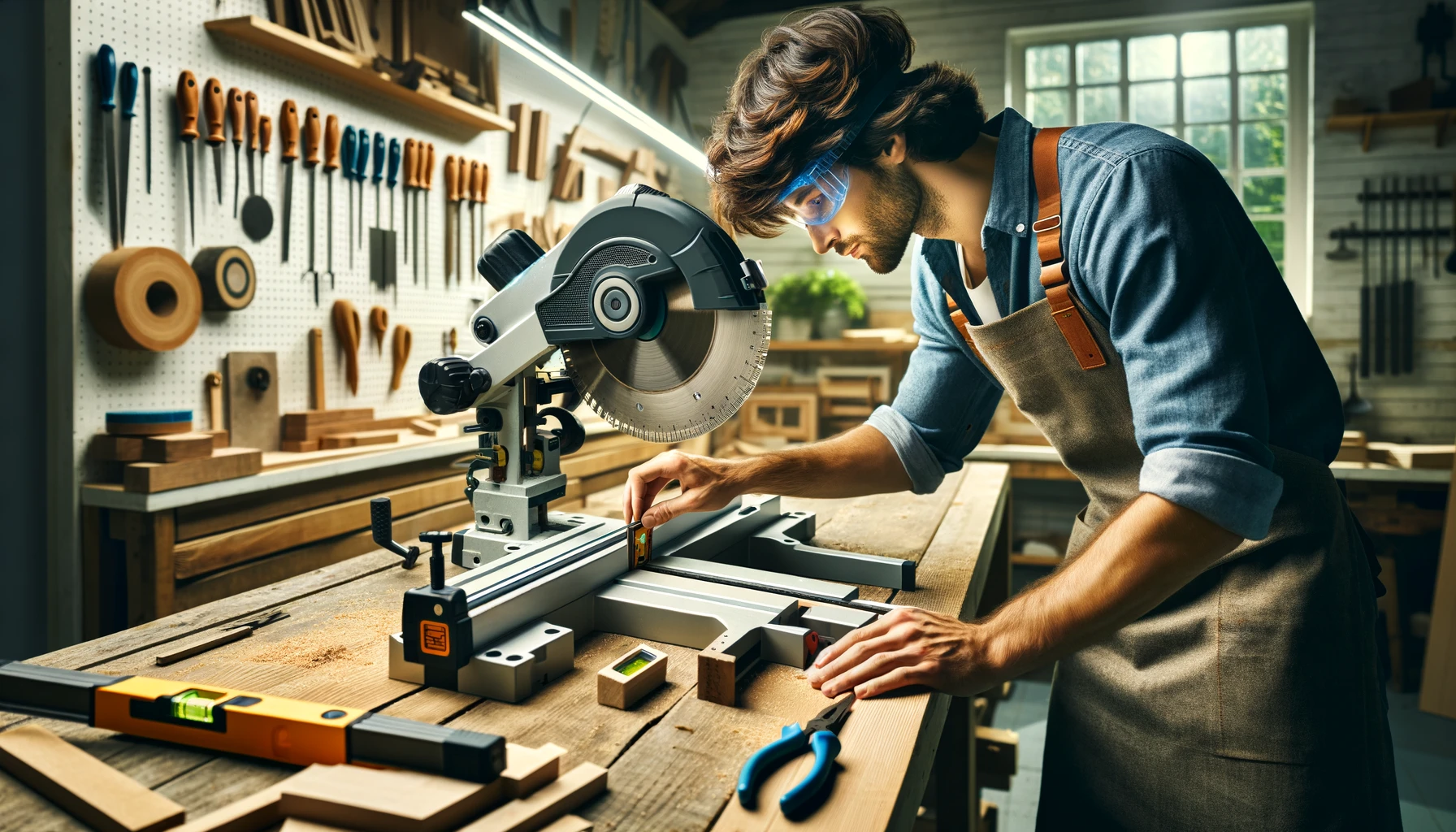
Adhering to safety precautions during miter saw calibration is crucial to prevent accidents. It’s essential to follow the operation manual’s safety guidelines and prioritize the use of safety glasses and ear protection. Keeping the miter saw unplugged while making calibration adjustments ensures safety, along with maintaining a well-lit workspace. By prioritizing safety measures, carpenters can enhance their work environment and maintain safe practices when working with power tools.
Safety Precautions before Calibration
Before calibrating a miter saw, ensure the table is clear of debris for a safe process. Secure the blade guard to prevent accidental contact. Place the saw on a stable, level surface, and keep the power cord unplugged. Wear appropriate safety gear like gloves. These precautions eliminate potential hazards and optimize the calibration process.
Safety Measures while Adjusting
When adjusting a miter saw, it’s crucial to prioritize safety. Avoid touching the blade to prevent injuries and wait for it to stop completely before making adjustments. Maintaining a firm grip on the handle ensures control, while securing the workpiece against the fence prevents unexpected movement. Additionally, using a clamp for further stabilization during calibration is essential for ensuring a safe and injury-free process.
Tips for Precise Miter Saw Cuts
When aiming for precise miter saw cuts, selecting the suitable blade type and size is crucial. Utilize kerf inserts to enhance cutting precision and reduce tear-out. Pay close attention to the alignment of the miter saw blade teeth for accurate performance. Consider the material’s thickness and density when choosing the blade. Lastly, evaluate the blade body’s condition to ensure smooth and precise cutting operations.
Selecting the Right Blade for the Job
When selecting the right blade for your miter saw, it’s crucial to consider the specific material and cutting requirements. Assess the tooth configuration and number of teeth to optimize cutting performance and achieve the desired finish on the workpiece. Evaluating the material’s composition and the blade’s condition are essential for precise cutting results. By choosing a suitable miter saw blade, you can ensure efficient and accurate cutting operations, enhancing the overall performance of your miter saw.
Importance of Kerf Inserts
Minimize the risk of tear-out and enhance miter saw cut quality by utilizing kerf inserts. These inserts provide support to the workpiece, reducing splintering during cutting. Matching the kerf inserts to the blade’s width ensures enhanced cutting accuracy. Optimize precision by verifying alignment and condition of kerf inserts, and maintain cutting integrity by replacing worn or damaged inserts. The right kerf inserts can significantly improve the overall cutting performance.
Common Issues in Miter Saw Calibration
Identify and rectify problems with bevel and miter angle adjustments on the miter saw. Diagnose issues related to detent plate and stop adjustments. Troubleshoot inaccurate bevel or miter angle settings. Address challenges with blade alignment and fence squareness. Resolve calibration problems linked to laser alignment and cutting head adjustments.
Troubleshooting Crooked Miter Saw Cuts
When troubleshooting crooked miter saw cuts, inspect the bevel stop to rectify issues and ensure precise angle adjustments. Verify the miter gauge’s alignment to eliminate inaccuracies and achieve perfect cuts. Check the straightness of the miter saw fence to address deviations, ensuring even and accurate cuts. In addition, calibrate the miter scale for precise angle adjustments and adjust the bevel angle to correct any deviations causing crooked cuts.
Frequently Asked Questions
How Often Should You Calibrate Your Miter Saw?
Regular calibration is crucial to ensure accurate cuts and extend the lifespan of your miter saw. While the frequency may vary based on usage, it’s generally recommended to calibrate at least once a year. Factors like heavy use, blade changes, and transportation may require more frequent calibration. Consistency is key for precision in woodworking and carpentry projects. Always consult the saw’s manual for manufacturer-recommended calibration intervals.
What is the importance of calibrating a miter saw?
Calibrating a miter saw is crucial to ensure accurate and precise cuts. It helps to maintain consistency in angles, allows for tight joints, reduces material waste, and ensures a professional finish to your woodworking projects. Don’t skip this step to achieve perfect cuts every time!