Best Corded Angle Grinder: Let the Sparks Fly

Do you have a fun weekend project that’s been waiting for the right tools?
If so, it’s time to let the sparks fly with the best angle grinder.
For any serious DIYer, having an angle grinder in their arsenal is key; it can help speed up cutting, grinding, and polishing tasks – making your projects go faster than ever before!
Whether you’re looking to cut large pieces of metal or sharpen chisels, choosing the right type of grinder is essential.
In this article, we will offer some tips on how to find a reliable corded angle grinder that won’t break the bank, while providing quality performance and durability.
So read on and get ready to make sparks fly – it’s time to choose the best angle grinder for your upcoming projects!
Looking to cut the cord? Check out our picks for the best cordless angle grinders.
How We Choose the Best Angle Grinders
Corded angle grinders can be a little overwhelming to shop for, with all of the different brands and features.
How do you know which one is the best for you?
It can be tough to figure out what matters most when shopping for this type of power tool.
We did the hard work for you.
After reading through thousands of reviews and considering the features that make the biggest impact, we’ve narrowed it down to these choices of the best angle grinders.
Overall Winner – Best 4-1/2-Inch Angle Grinder
Makita 4-1/2″ Paddle Switch Angle Grinder (9557PB)
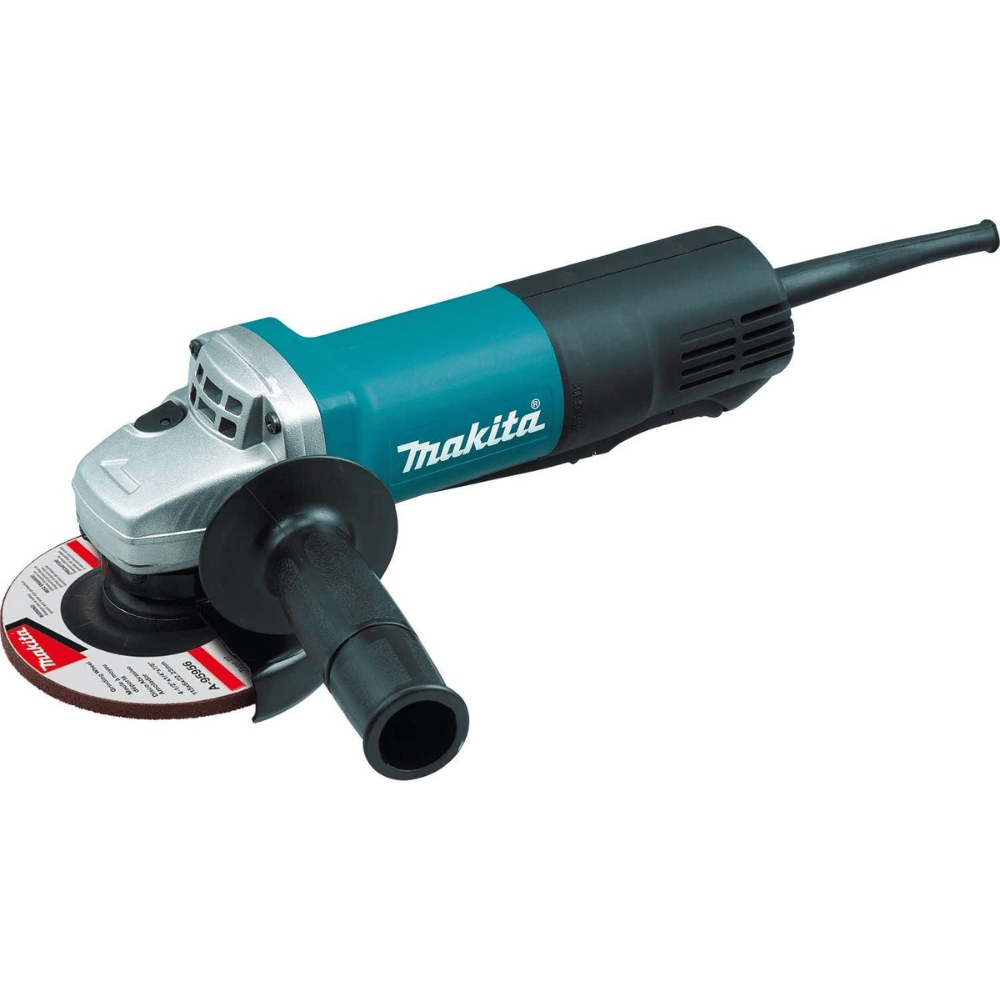
Key Features
- 7.5 amp motor
- Up to 11,000 RPM
- Compact 2-1/2″ barrel
Why It’s a Great Choice
The Makita 4-1/2″ Paddle Switch Angle Grinder is the perfect DIY and professional tool for tackling all sorts of jobs.
From edging and grinding to polishing and sanding, this grinder is designed with features to make your job easier and ensure you do it better than ever before.
For starters, you get a soft start for smoother start-ups that won’t send objects flying everywhere.
Plus, a unique labyrinth construction keeps dust and debris out, meaning longer tool life and less maintenance along the way.
And don’t worry about getting scratched up as its protective zig-zag varnish seals everything nicely.
The extra large paddle switch allows comfortable operation while the lock-on/off feature gives you uninterrupted use until you’re done with your project.
Weighing only 4.5 lbs., Makita’s 4-1/2″ Paddle Switch Angle Grinder also comes with an ergonomic side handle that can be easily installed on either side – truly making it ideal for any task or situation!
Make it easy on yourself – pick up Makita’s 4-1/2″ Paddle Switch Angle Grinder today!
You’ll be calling yourself a DIY master in no time!
Best Full Package Deal
Metabo HPT 4-1/2″ Angle Grinder (G12SR4)
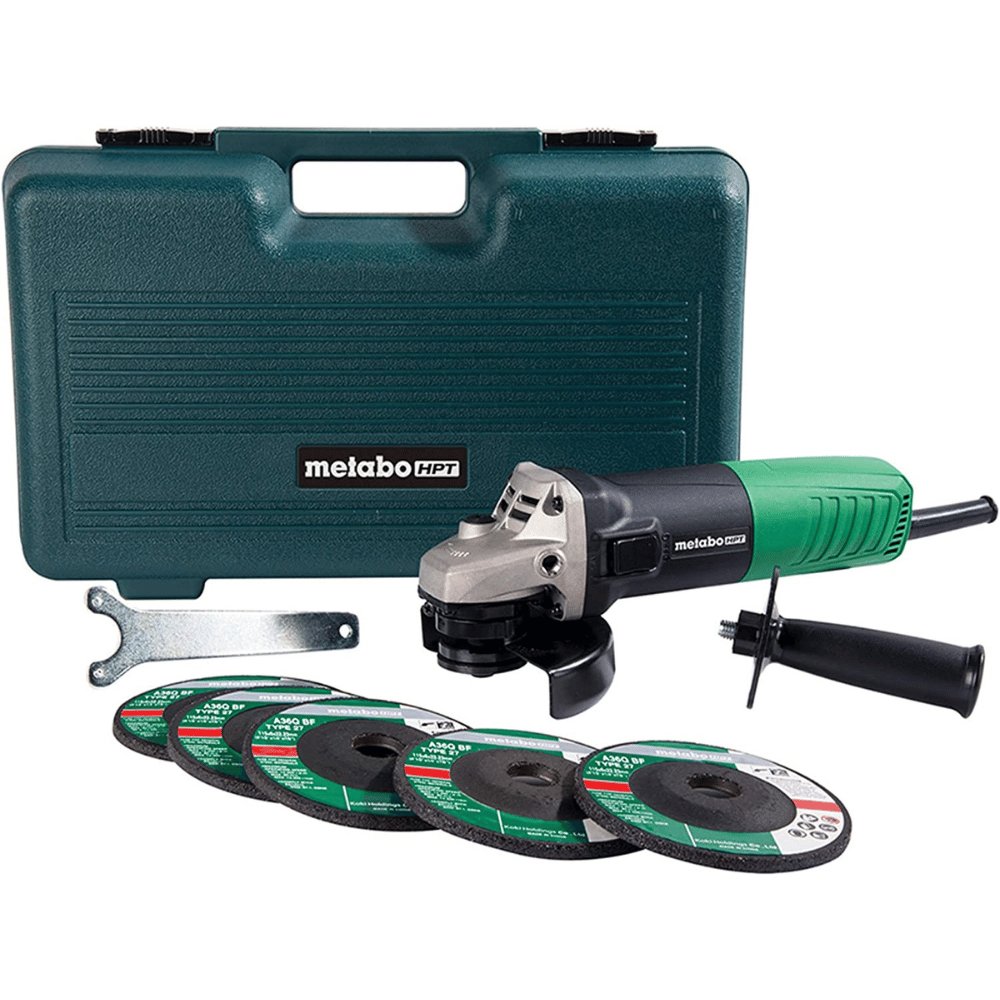
Key Features
- 6.2 amp motor
- Up to 10,000 RPM
- Comes with a case and 5 grinding wheels
Why It’s a Great Choice
Ready to get your DIY project done right?
Don’t let an outdated tool hold you back. Instead, reach for the Metabo HPT 4-1/2″ Angle Grinder and breathe new life into your home improvement routine.
With a spindle lock feature for quick and easy disc changes, a left-mounted slide switch with a quick-off feature, a forward-canted side handle for improved control and comfort (for both right and left-handed users!), a smaller grip to reduce fatigue, and a new labyrinth design for dust and debris durability, this angle grinder has got it all.
Plus, the low-profile gear case gets you into the tightest areas to get those hard-to-reach spots.
This Metabo HPT Angle Grinder is perfect for both DIYers and professionals alike – so stop hesitating and start grinding!
Best Compact Angle Grinder
BOSCH Corded 4-1/2-Inch 6 Amp Angle Grinder (1375A)
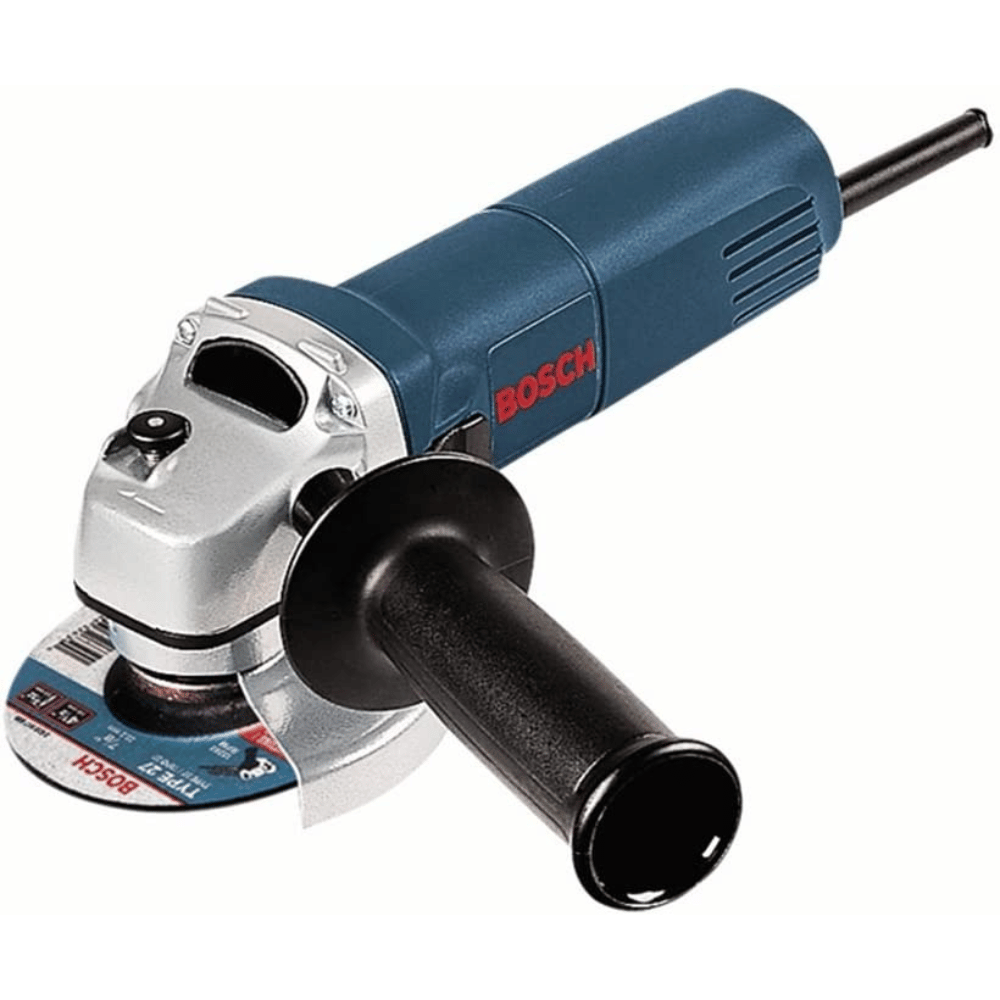
Key Features
- 6 Amp motor
- Up to 11,000 RPM
- Weighs only 3.75 lbs
Why It’s a Great Choice
Introducing the BOSCH Corded 4-1/2-Inch 6 Amp Angle Grinder – the perfect tool for DIYers and professionals alike who are looking for optimal convenience in a powerhouse of a machine!
Unbelievably lightweight at only 3.75 pounds, you’ll be able to take your grinder just about anywhere.
The efficient motor was designed with an incredibly small field diameter that makes grinding or cutting easier than ever before.
Not to mention, it features Bosch’s Service Minder Brush System so you never have to guess when maintenance is due – this smart little grinder will automatically give you a heads up, how convenient is that?
Need more precise control?
Utilizing its two-position side handle, you can switch from left to right seamlessly while maintaining accuracy and comfort in natural angles.
And with its hardened epoxy coating and sealed switch design, you don’t need to worry about dust or debris getting into your grinder; it’s like having your own personal guardian keeping things in tip-top shape.
So why wait any longer?
Get yourself the versatile, powerful, and convenient Bosch 4-1/2-Inch Angle Grinder today, and be ready for whatever comes tomorrow!
Best Multipurpose Angle Grinder
DEWALT 4-1/2-Inch to 6-Inch Angle Grinder (DWE43116)
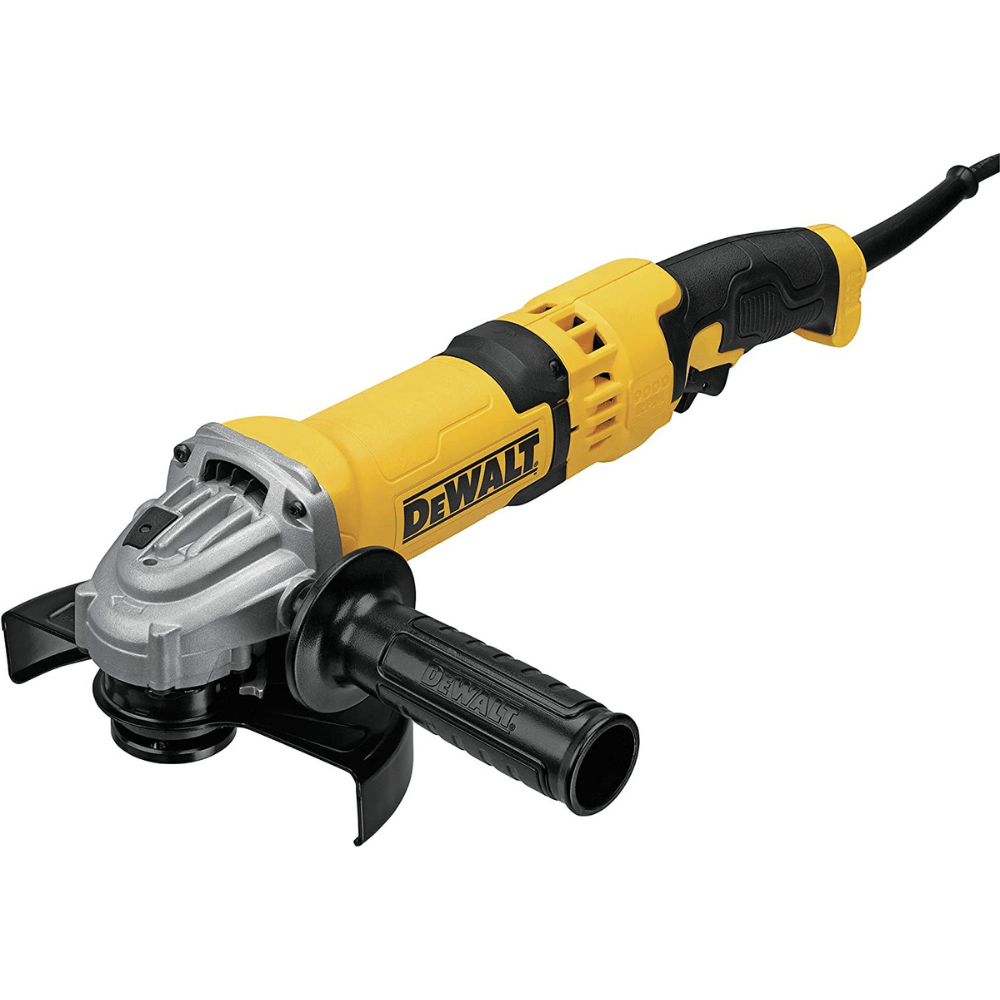
Key Features
- 13 amp motor
- Up to 9,000 RPM
- Accepts blades from 4-1/2″ to 6″
Why It’s a Great Choice
Tired of debris gumming up your projects?
Want to get the job done faster and easier?
Get the DEWALT Angle Grinder and you’ll never need to worry about dirt and dust again!
With its Dust Ejection System, this metal grinder will last for years as it has the capability of automatically eliminating damaging dust and debris particles that enter through air intake vents.
Plus, you can get the job done quickly with its 13 amp motor, which spins up to 9,000 RPM.
It’s compatible with wheels from 4-1/2″ to 6″, so you have plenty of options.
And the two-stage trigger ensures quick starts and prevents accidental starts if dropped.
So why wait?
Get your very own DEWALT Angle Grinder Tool today, and let this tough little tool make all your DIY or professional jobs easy breezy!
Best Angle Grinder on a Budget
PORTER-CABLE 4-1/2-Inch Angle Grinder (PC750AG)
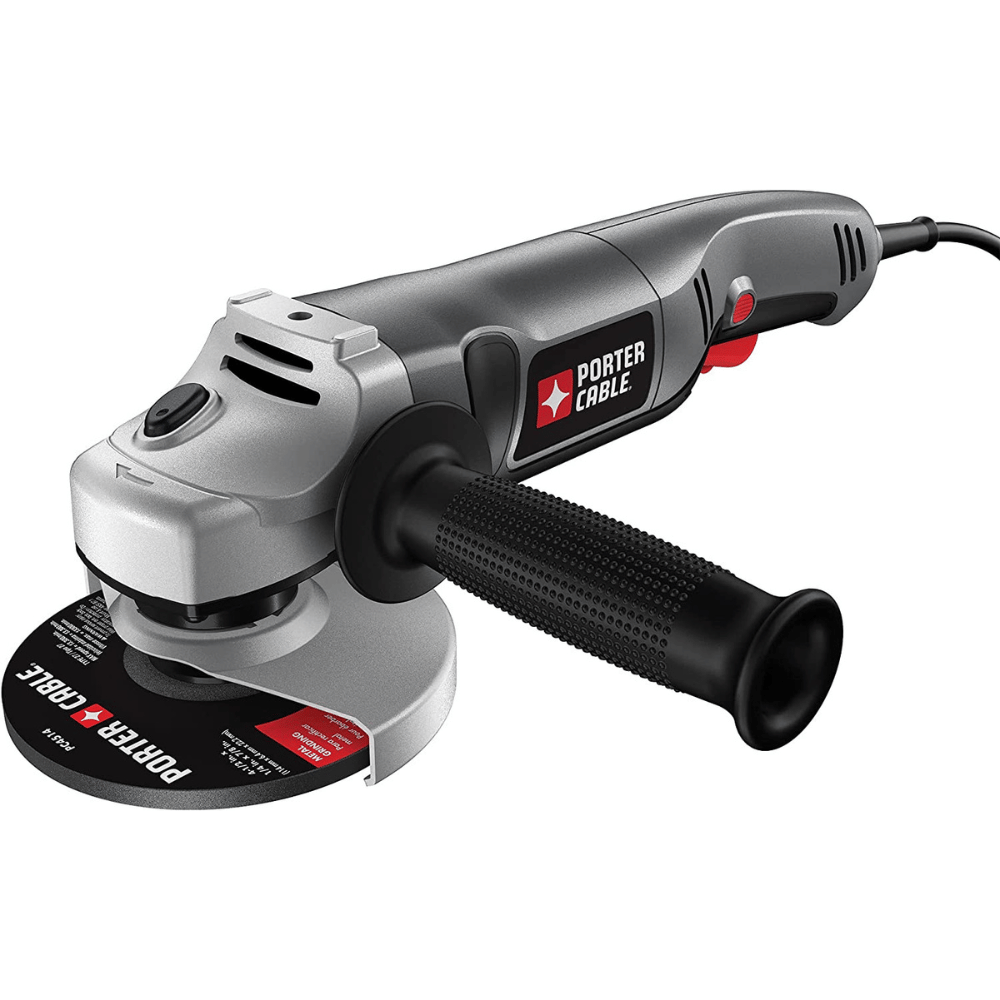
Key Features
- 7.5 amp motor
- Up to 10,000 RPM
- Cast metal gearbox
Why It’s a Great Choice
Do-it-yourself projects just got easier with the PORTER-CABLE 4-1/2-Inch Small Angle Grinder!
This handy tool has a power-packed punch, featuring a 7.5 amp motor that can spin up to 10,000 RPMs and a cast-metal gearbox designed with long-lasting performance in mind.
Plus, its three-position side handle allows for different cutting positions, making this grinder extra safe and versatile.
Not to mention the extended on/off trigger switch which even your gloved hands can easily access.
And when it’s time for wheel or accessory changes?
Just use the spindle lock!
Whether you’re a DIYer tackling tough tasks or are a professional who needs reliable results, this angle grinder helps make sure your job is done quickly and efficiently—so grab yours today and get going!
Buyer’s Guide to the Best Angle Grinders
Angle grinders can be a little intimidating if you’ve never used one before.
But don’t worry, we’re here to help!
In this section, we’ll answer the most commonly asked questions about corded angle grinders so you can shop with confidence.
By the end of this article, you’ll know everything you need to know about choosing the right angle grinder for your needs.
We’ll cover topics like power, speed, and safety features so you can make an informed purchase.
What is an angle grinder?
An angle grinder is a handheld power tool that is commonly used for cutting, grinding, and polishing a variety of materials such as metal, concrete, and stone. It consists of a motor that drives a spinning abrasive disc or cutting blade at a high speed, typically ranging from 5,000 to 11,000 revolutions per minute (RPM). The tool is designed to be held with one hand, while the other hand guides the workpiece. Angle grinders are available in both corded and cordless models, and can be fitted with a range of different attachments and accessories to perform various tasks. They are commonly used in construction, metalworking, and DIY projects.
What is an angle grinder used for?
An angle grinder is a versatile power tool that can be used for a variety of tasks. Some common uses of an angle grinder include:
- Cutting: Angle grinders can be used to cut through a variety of materials including metal, concrete, masonry, and tile.
- Grinding: The tool can be used to grind down rough edges and surfaces and to remove rust or paint.
- Polishing: Angle grinders can be fitted with polishing discs to polish and buff surfaces such as metal, stone, and concrete.
- Sanding: The tool can be fitted with sanding discs to smooth and remove rough edges from surfaces.
- Sharpening: Angle grinders can be used to sharpen a variety of tools such as lawnmower blades, axes, and knives.
- Removing mortar: Angle grinders can be used to remove old mortar between bricks or tiles before repointing.
- Sculpting: The tool can be used for carving and sculpting a range of materials including wood, stone, and metal.
- Cleaning: Angle grinders can be used to clean surfaces such as rusted metal or dirty concrete.
Overall, an angle grinder is a powerful and versatile tool that can be used for a variety of tasks in construction, metalworking, and DIY projects.
How do you use an angle grinder?
Using an angle grinder can be dangerous if not done properly, so it’s important to take the necessary safety precautions and follow these basic steps:
- Choose the right disc for the job: The type of disc you use will depend on the task you want to perform. Make sure to use a disc that is suitable for the material you are working with.
- Put on safety gear: Wear safety glasses or a face shield, earplugs or earmuffs, and work gloves to protect your eyes, ears, and hands from flying debris and loud noise.
- Secure the workpiece: Clamp or secure the workpiece to a stable surface to prevent it from moving during use.
- Position the angle grinder: Hold the angle grinder with both hands and make sure the disc is positioned perpendicular to the workpiece.
- Start the angle grinder: Press the trigger switch to start the motor and let the disc reach full speed before starting to work.
- Use the angle grinder: Move the angle grinder back and forth across the workpiece, applying light pressure to grind or cut through the material. Be careful not to apply too much pressure, which can cause the disc to overheat and wear out quickly.
- Turn off the angle grinder: Release the trigger switch to turn off the motor and let the disc come to a complete stop before setting the tool down.
- Remove safety gear: Remove your safety gear and clean up any debris before moving on to your next task.
Remember to always read the manufacturer’s instructions before using your angle grinder and follow all safety guidelines. If you are not comfortable using an angle grinder or have never used one before, it’s a good idea to seek guidance from a professional or an experienced user.
Is a corded angle grinder better than a cordless angle grinder?
Whether a corded or cordless grinder is better depends on your specific needs and intended use.
Corded models have the advantage of being more powerful than cordless grinders, as they are not limited by battery life and can run continuously without needing to be recharged. They are also generally less expensive than cordless models and can be used for heavier-duty tasks.
Cordless angle grinders, on the other hand, offer greater mobility and convenience as they do not require a power outlet. They are also easier to handle in tight spaces and can be used in locations where there is no access to electricity. With a brushless motor, cordless models can be a good choice for light-duty tasks and for users who prefer the convenience of a cordless tool.
In summary, if you require a high level of power and plan to use your angle grinder for heavy-duty tasks, a corded angle grinder is likely to be the better option. If you prioritize mobility and convenience and plan to use your angle grinder for lighter tasks or in remote locations, a cordless angle grinder may be the better choice.
What features should I look for in a good corded angle grinder?
When looking for a good corded angle grinder, there are several features to consider. Here are some important factors to keep in mind:
- Power: Choose an angle grinder with a high-powered motor, typically measured in amps or watts. This will ensure that the grinder can handle tough tasks and heavy use.
- Speed: Look for a variable speed angle grinder that will allow you to match the speed of the grinder to the task at hand.
- Size: Choose the right size grinder for your needs. Small grinders with blade sizes of 4.5 inches or 5 inches are suitable for light-duty work, while larger grinders with blade sizes of 7 inches or more are ideal for heavy-duty tasks.
- Comfort and Ergonomics: A good angle grinder should be comfortable to hold and easy to maneuver. Look for models with ergonomic handles and lightweight designs that reduce fatigue and make it easy to control the grinder.
- Dust management: If you’ll be using the angle grinder for cutting or grinding materials that produce a lot of dust, look for a model with a dust collection system or the ability to attach a dust collection shroud. This will help keep your workspace clean and reduce the risk of respiratory issues.
- Safety features: Look for safety features such as a safety guard to protect against accidental blade contact, a lock-on switch for continuous use, and overload protection to prevent damage to the motor.
- Durability: Choose a well-built angle grinder made from quality materials that will hold up to heavy use and last a long time.
Keep in mind that the best corded angle grinder for you will depend on your specific needs and the tasks you’ll be using it for. Make sure to read reviews, compare features, and choose a model that meets your requirements and budget.
How do you change the blade on an angle grinder?
Changing the blade on an angle grinder is a simple process that can be done in a few easy steps:
- Unplug the angle grinder: Make sure the tool is unplugged or the battery is removed to avoid any accidental activation.
- Remove the current blade: Use a wrench or spanner to loosen the blade retaining nut located in the center of the grinder. Once the nut is loose, remove it and take off the old blade.
- Install the new blade: Place the new blade onto the spindle, making sure that the directional arrow on the blade is facing the same way as the rotation arrow on the grinder. Tighten the retaining nut by turning it clockwise using the wrench or spanner.
- Check the blade for tightness: Give the blade a gentle tug to ensure that it is properly secured and tightened.
- Test the grinder: Turn the grinder on for a few seconds to check that the new blade is working properly and is securely fastened.
Remember to always refer to the manufacturer’s instructions for specific details on how to change the blade on your angle grinder, as the exact steps may vary depending on the model. It’s important to follow safety guidelines and use caution when handling blades and other accessories.
How do you grind concrete with an angle grinder?
Grinding concrete with an angle grinder can be a dusty and noisy process, so it’s important to take the necessary safety precautions and follow these basic steps:
- Put on safety gear: Wear safety glasses or a face shield, earplugs or earmuffs, and a respirator mask to protect your eyes, ears, and lungs from flying debris and dust.
- Choose the right disc: Use a diamond-tipped grinding disc that is suitable for concrete.
- Prepare the work area: Clear the work area of any debris or obstacles and cover nearby surfaces with plastic sheeting to protect them from dust.
- Secure the workpiece: Use clamps or other methods to secure the concrete surface you want to grind to prevent it from moving.
- Position the angle grinder: Hold the angle grinder with both hands and make sure the disc is positioned perpendicular to the concrete surface.
- Start the angle grinder: Press the trigger switch to start the motor and let the disc reach full speed before starting to work.
- Grind the concrete: Move the angle grinder back and forth across the concrete surface, applying light pressure to grind away the top layer of concrete. Be careful not to apply too much pressure or stay in one spot for too long, as this can cause the disc to overheat and wear out quickly.
- Check your progress: Stop grinding periodically to check your progress and make sure you are achieving the desired level of smoothness or roughness.
- Clean up the dust: Use a vacuum cleaner or dust extractor to clean up the dust and debris as you work.
- Turn off the angle grinder: Release the trigger switch to turn off the motor and let the disc come to a complete stop before setting the tool down.
Remember to always read the manufacturer’s instructions before using your angle grinder and follow all safety guidelines. If you are not comfortable using an angle grinder or have never used one before, it’s a good idea to seek guidance from a professional or an experienced user.
How do you sharpen mower blades with an angle grinder?
Sharpening mower blades with an angle grinder is a relatively simple process that can be done in a few steps:
- Remove the mower blade: Disconnect the spark plug wire to ensure the mower is not accidentally started while working. Use a wrench to remove the blade bolt and take off the blade from the mower deck.
- Clean the blade: Use a wire brush or scraper to remove any debris or buildup on the blade. This will help ensure a clean and accurate sharpening.
- Secure the blade: Use a vise or clamp to secure the blade in place, ensuring it does not move during sharpening.
- Choose the right angle: Determine the correct angle of the blade edge and select a grinding wheel with the same angle.
- Sharpen the blade: Hold the angle grinder at the correct angle to the blade edge and move it along the cutting edge, being careful not to apply too much pressure. Continue grinding until the edge is sharp and free of nicks or dents.
- Check the balance: Check the blade balance by placing it on a balancer or a thin rod. If one end is heavier, grind a little more from the opposite end until the blade is balanced.
- Reinstall the blade: Reattach the blade to the mower deck and tighten the bolt securely.
- Test the blade: Start the mower and test the blade for balance and proper operation.
Remember to always wear safety gear such as gloves, safety glasses or a face shield, and a respirator mask to protect yourself from flying debris and dust. It’s also important to follow the manufacturer’s instructions for your specific mower blade and angle grinder.
Can an angle grinder cut wood?
Yes, many angle grinders can be used to cut wood. However, it’s important to note that using an angle grinder for cutting wood requires a different type of blade than the one used for cutting metal or concrete. A wood-cutting blade has fewer teeth and a larger gullet, which helps to clear away sawdust and prevent the blade from becoming clogged.
What safety precautions should I take when using a corded angle grinder?
Using a corded angle grinder can be dangerous if proper safety precautions are not taken. Here are some important safety tips to follow:
- Wear protective gear: Always wear appropriate personal protective equipment, such as safety glasses or goggles, earplugs or earmuffs, a dust mask or respirator, gloves, and work boots.
- Inspect the grinder: Before use, check the angle grinder for any visible damage or defects, such as cracks or frayed cords. Make sure the power cord is not damaged or frayed.
- Use the correct wheel: Make sure to use the correct grinding wheel or cutting disc for the material you are working with. Using the wrong wheel can cause the grinder to overheat or the wheel to break and cause injury.
- Secure the workpiece: Clamp or secure the workpiece firmly to prevent it from moving or slipping during operation.
- Keep the work area clean: Keep the work area clean and free from debris or clutter. This can help prevent tripping hazards and reduce the risk of accidents.
- Maintain a safe distance: Keep a safe distance from other people and objects while using the grinder. Flying debris or sparks can cause injury or start a fire.
- Turn off the grinder before making adjustments: Before making any adjustments to the grinder or changing the wheel, switch off the power and unplug the grinder.
- Take breaks: Take regular breaks to avoid fatigue and maintain concentration. This can help prevent accidents caused by exhaustion or distraction.
- Store the grinder safely: After use, unplug the grinder and store it in a secure, dry location where it cannot be accessed by children or pets.
Remember to always read the manufacturer’s instructions before using your angle grinder and follow all safety guidelines. If you are not comfortable using an angle grinder or have never used one before, seek guidance from a professional or an experienced user.
Can a corded angle grinder be used with different blade sizes?
Yes, a corded angle grinder can be used with different blade sizes, depending on the type of work being done. The size of the blade or disc used with an angle grinder is determined by the arbor size of the grinder. Most angle grinders have either a 5/8-inch or 7/8-inch arbor size, and different blade sizes are available to fit these arbors.
When using different blade sizes with an angle grinder, it’s important to select the correct size and type of blade for the job. Using the wrong size or type of blade can result in poor performance or even cause the blade to break and cause injury.
Some common blade sizes for angle grinders include:
- 4.5-inch: This size is suitable for small to medium-sized cutting and grinding tasks, such as cutting metal or concrete.
- 5-inch: This size is suitable for cutting and grinding tasks that require a bit more power and durability, such as heavy-duty metal cutting or concrete grinding.
- 7-inch: This size is suitable for large-scale cutting and grinding tasks, such as cutting through thick metal or concrete.
Always make sure to select the appropriate blade size and type for the job at hand and follow the manufacturer’s instructions carefully. Before using a different blade size, make sure to check the arbor size of your angle grinder to ensure that the blade will fit securely and operate safely.
Choosing the Best Corded Angle Grinder for You
Congratulations! You’ve done your due diligence and found the best angle grinders for the job.
Whether you have an itch to scratch, a shape to cut, or just need something to make sparks fly we have you covered.
Our selection goes from top-notch entry-level options up to pro-grade power tools that will keep you inspired for years to come.
And don’t forget that wherever you land in between, quality and value come standard.
So what do you say?
Got an itch that needs scratching?
Click the links, whip out your wallet, and order your new corded angle grinder today!
Don’t worry about having too much fun – create something amazing!