Hammer Drill vs Rotary Hammer – What’s the Difference?

When it comes to taking on construction or DIY projects, having the right tools at your disposal can make all the difference. Among the array of power tools available, the hammer drill and rotary hammer stand out as essential choices for tasks that involve drilling into tough surfaces like concrete and masonry. Understanding the distinctions between these two tools is crucial for achieving efficient and accurate results in your projects.
In this article, we’ll explore the nuances of the hammer drill and rotary hammer, shedding light on their features, functions, and ideal applications. As we delve into their differences, you’ll gain insights into the varying levels of power, performance, and versatility that these tools offer. Whether you’re a DIY enthusiast or a professional contractor, making an informed decision between a hammer drill and a rotary hammer can streamline your work, boost productivity, and ensure the safety of your projects.
So, if you’re looking to select the right tool for the job, join us as we navigate the world of hammer drills and rotary hammers, helping you make a choice that aligns perfectly with your project’s demands and your expertise.
Hammer Drill: Features and Functions
When it comes to drilling into tough materials like concrete and masonry, the hammer drill is a tool that you’ll often find in the hands of DIYers and professionals alike. This versatile device combines the capabilities of a traditional drill with a unique hammering mechanism, making it well-suited for tasks that require a bit more force.
Design and Components
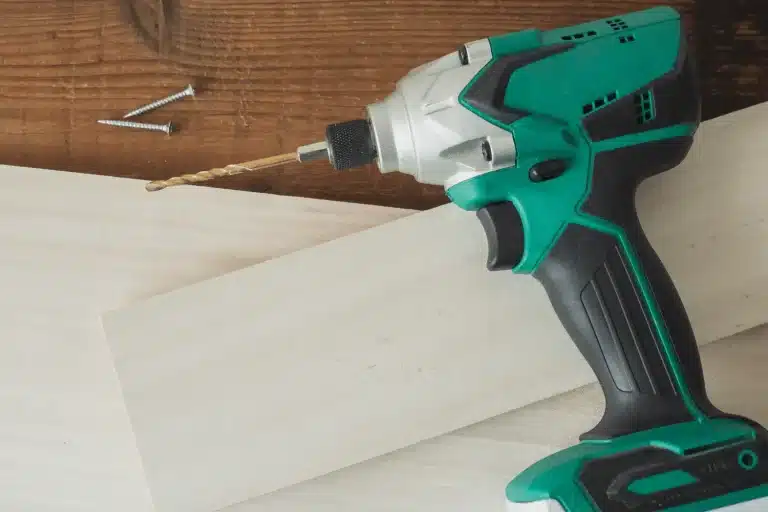
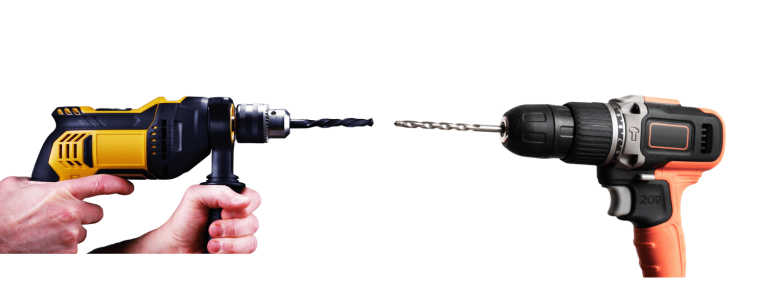
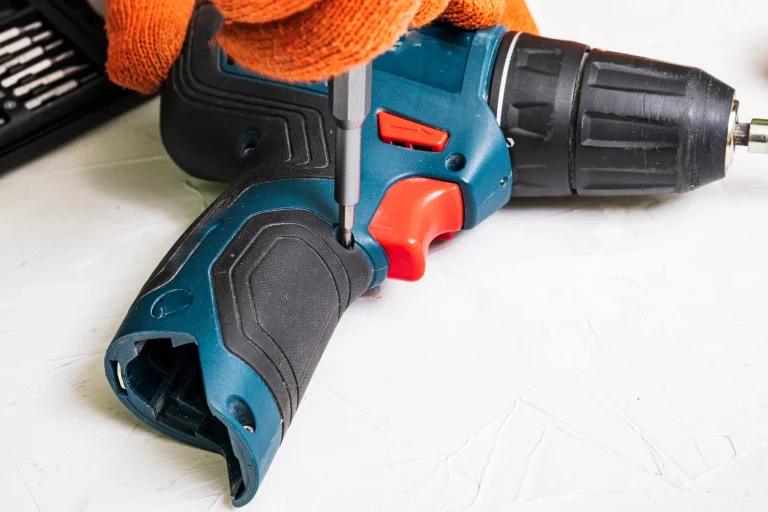
A hammer drill features a familiar handheld design with a motor, a chuck (the part that holds the drill bit), and a handle for easy maneuverability. What sets it apart is its internal hammering mechanism that delivers rapid and short thrusts in addition to the spinning motion of the drill bit. This dual-action approach allows the hammer drill to power through tough surfaces more effectively than a regular drill.
Working Principle
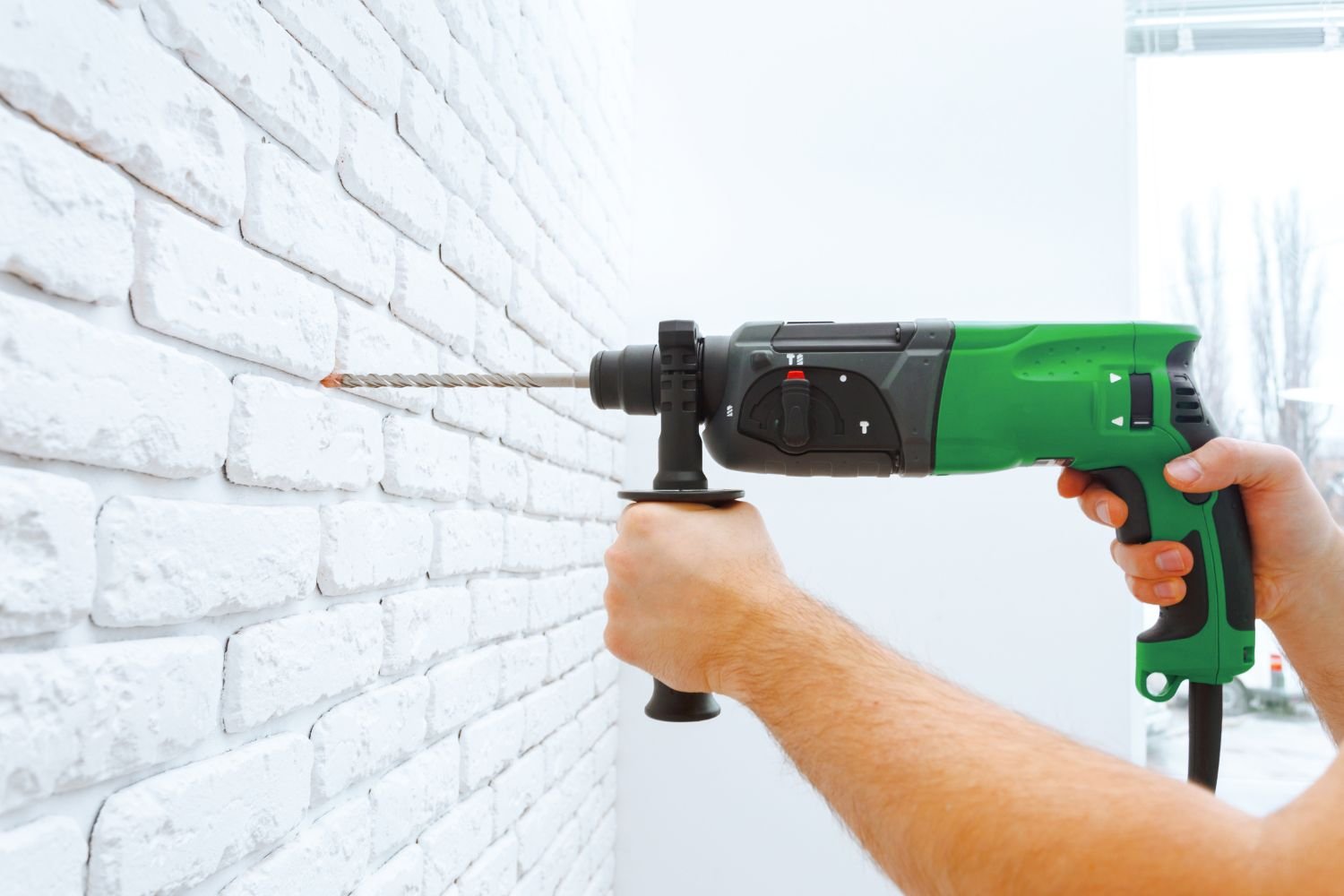
The hammer drill’s distinctive function involves a combination of rotation and rapid hammering. As the drill bit spins, the internal hammer mechanism strikes the back of the bit, creating small impacts. These impacts aid in breaking through solid materials by chipping away at them, reducing the need for excessive pressure from the user.
Applications
Hammer drills excel at tasks like drilling holes into concrete walls for anchors or driving screws into masonry surfaces. They are particularly useful when you need precise holes in harder materials, as their hammering function helps to prevent the bit from getting stuck or overwhelmed. For DIY enthusiasts tackling projects that involve occasional drilling into tough surfaces, the hammer drill’s balanced blend of drilling and hammering capabilities can be a valuable asset.
In the next section, we’ll delve into the world of rotary hammers, which take the hammering functionality to a whole new level, ideal for heavy-duty applications and more intense projects.
Rotary Hammer: Features and Functions
When the task at hand demands a higher level of power and efficiency for drilling through the toughest materials, the rotary hammer steps up to the plate. Designed with the needs of professionals and heavy-duty projects in mind, this tool takes drilling and chiseling to a whole new level.
Distinctive Design
The rotary hammer shares similarities with the hammer drill in its handheld design, but it boasts a more robust build to handle more challenging tasks. What sets it apart is the larger size and its capability to accommodate larger drill bits and chisels. This is essential for applications that demand bigger holes or deeper penetrations into hard surfaces.
Advanced Drilling Mechanism
The standout feature of the rotary hammer is its enhanced drilling mechanism. Unlike the hammer drill’s combination of rotation and short impacts, the rotary hammer uses a piston-driven system. This mechanism generates a more powerful and sustained hammering action, allowing the tool to rapidly break through concrete, brick, and stone with greater efficiency.
Chiseling Excellence
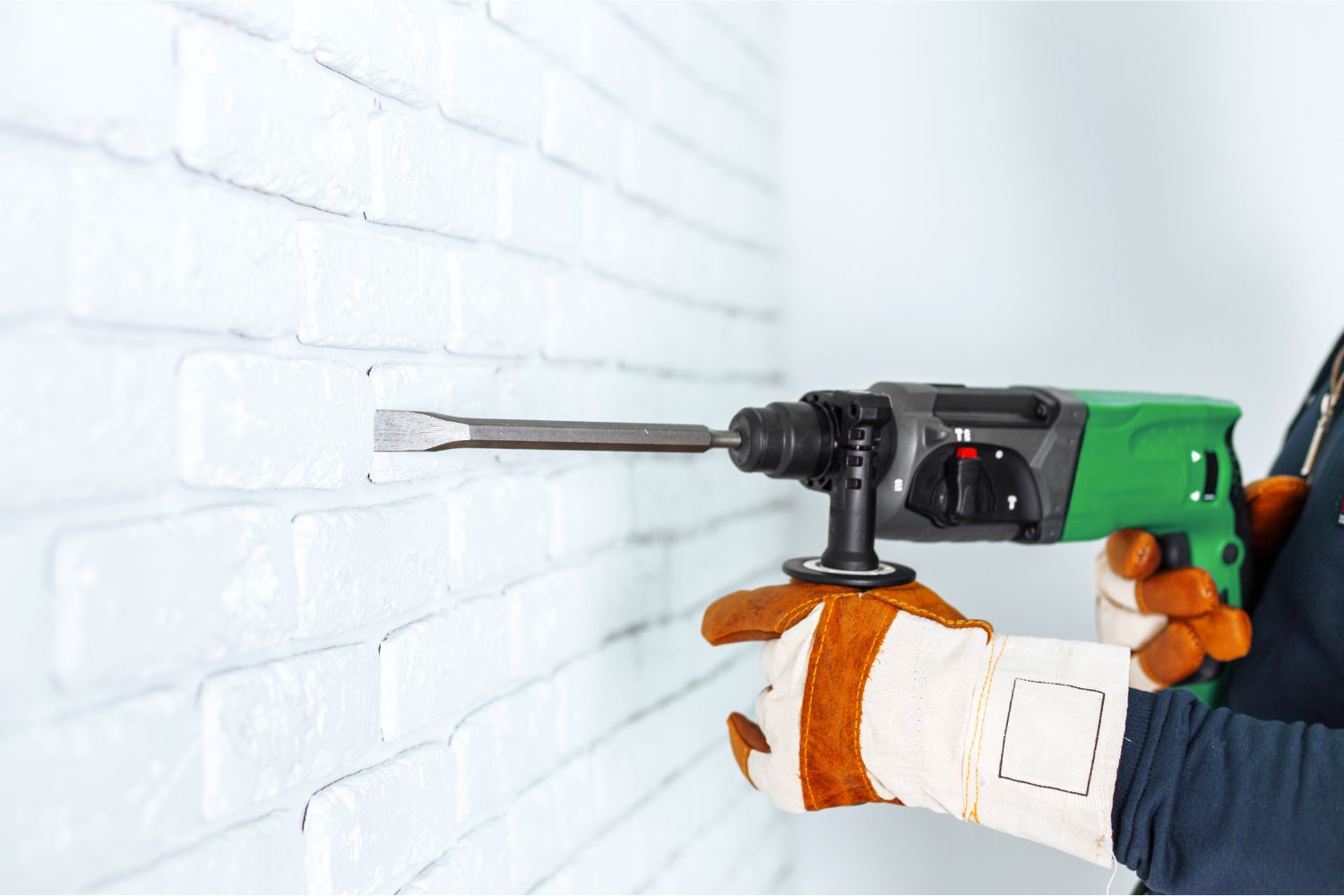
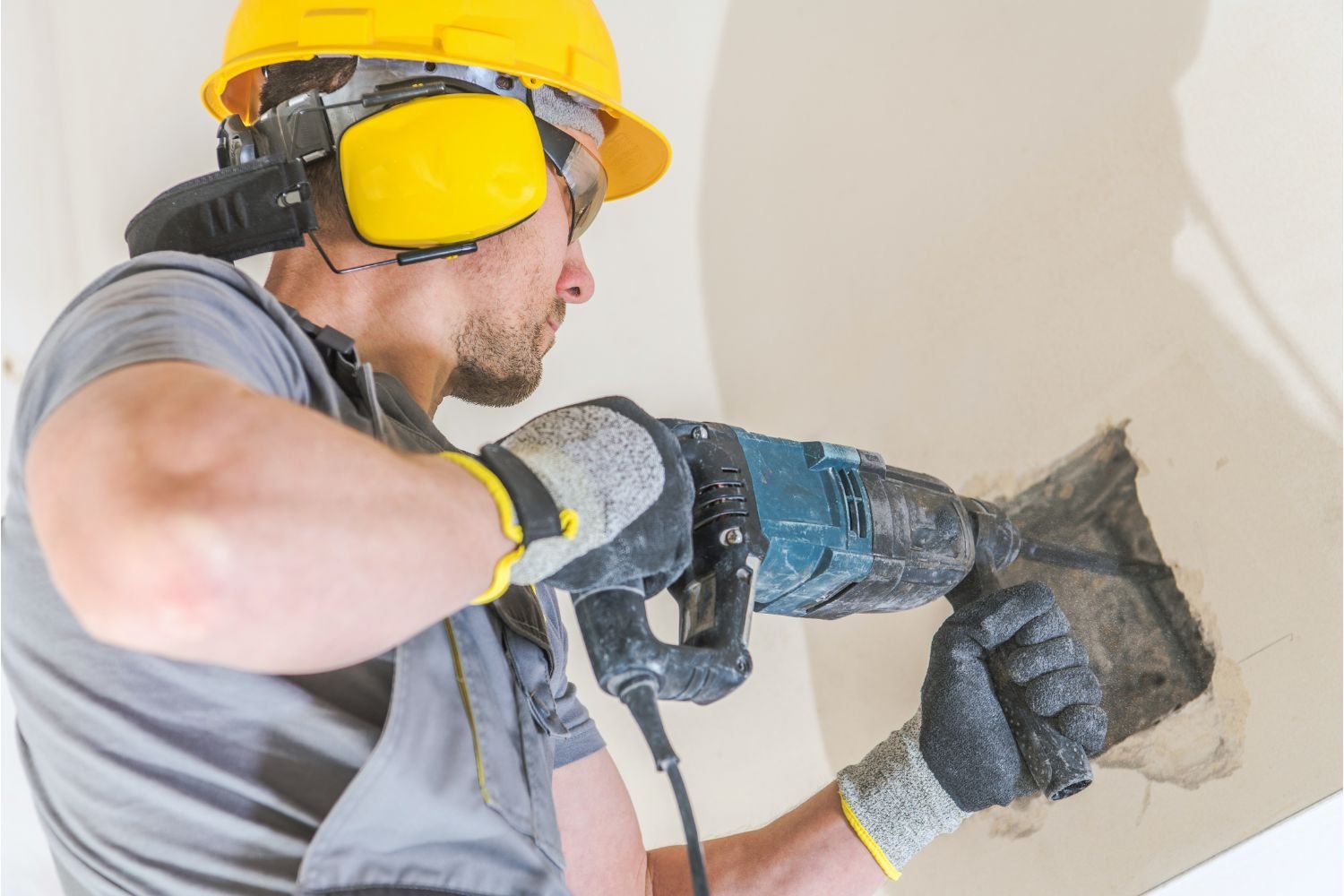
While both tools can perform chiseling tasks, the rotary hammer truly excels in this aspect. Its powerful piston-driven mechanism makes it the go-to choice for professionals who need to chisel away concrete, tile, or plaster. This makes the rotary hammer a preferred tool for construction sites and renovation projects where precision and speed are paramount.
Best Suited Applications
If you’re undertaking intensive construction or renovation projects that involve substantial drilling and chiseling into unforgiving materials, the rotary hammer is your ultimate companion. From drilling larger holes for plumbing and electrical work to breaking up concrete for foundation repair, the rotary hammer shines in scenarios where the job demands professional-grade performance.
As we move forward, we’ll unravel the key differences in power and performance between the hammer drill and the rotary hammer, providing insights into which tool suits specific project requirements.
Rotary Hammer vs Hammer Drill – Key Differences
When it comes to selecting the right power tool for your project, understanding the differences in power and performance between the hammer drill and rotary hammer is crucial. These distinctions directly impact your ability to tackle various tasks efficiently and effectively.
Power Ratings
One of the primary distinctions between these tools is their power ratings. Hammer drills generally have lower power ratings compared to rotary hammers. Rotary hammers are designed for heavy-duty tasks, featuring more potent motors that provide greater torque and higher impact energy. This means rotary hammers can take on tougher materials with ease, while hammer drills might struggle with prolonged use on dense surfaces.
Impact Energy
Impact energy, measured in joules, is a critical factor in breaking through tough materials. Rotary hammers have significantly higher impact energy due to their piston-driven mechanism, which delivers powerful blows to the bit. This allows them to drill faster and more efficiently into concrete, brick, and stone. Hammer drills, with their less intense hammering action, are better suited for lighter drilling tasks.
Drilling Capacity
The greater impact energy of rotary hammers also translates to larger drilling capacities. They can bore larger holes into hard surfaces more quickly than hammer drills, making them essential for construction tasks that involve various hole sizes.
Speed and Efficiency
Because of their enhanced power and impact energy, rotary hammers offer faster drilling speeds and greater efficiency in heavy-duty applications. On the other hand, hammer drills are suitable for lighter tasks that require a balance between drilling and hammering capabilities.
The power and performance disparities between hammer drills and rotary hammers determine their suitability for different project types. Understanding these differences empowers you to choose the right tool that aligns with your specific project demands, ultimately ensuring smoother and more successful outcomes. In the next section, we’ll delve into essential considerations for selecting the appropriate tool based on your project’s requirements and your expertise level.

Hammer Drill vs Rotary Hammer – Considerations for your Selection
Choosing between a hammer drill and a rotary hammer requires careful consideration of various factors. Your project’s scale, the materials you’re working with, your budget, and your experience level all play a role in determining the right tool for the job.
Project Scale
Assess the scope of your project. For smaller tasks or occasional DIY projects, a hammer drill might suffice. If you’re embarking on a large-scale construction or renovation project involving heavy masonry work, a rotary hammer is likely the more suitable choice.
Material Hardness
The hardness of the materials you’re drilling into matters. Hammer drills are better for softer materials like wood and light concrete, while rotary hammers excel with harder materials like reinforced concrete and stone.
Frequency of Use
Consider how often you’ll be using the tool. If you’re a professional contractor who routinely tackles tough jobs, investing in a rotary hammer might be wise. For infrequent use or occasional DIY tasks, a hammer drill can meet your needs without breaking the bank.
Budget
Your budget plays a significant role in your decision. Rotary hammers, due to their advanced technology and higher power, tend to be more expensive. If your budget is limited, a hammer drill might be a more cost-effective option while still providing satisfactory results for lighter tasks.
User Experience Level
Your familiarity with power tools matters. Hammer drills are generally easier to handle and suitable for beginners. Rotary hammers, with their increased power and complexity, are better suited for experienced users who can fully harness their capabilities.
Safety Considerations
Whichever tool you choose, prioritize safety. Both hammer drills and rotary hammers generate vibrations and dust, so wearing appropriate personal protective equipment (PPE), such as safety goggles, hearing protection, and a dust mask, is essential.
By taking these factors into account, you can make an informed decision that aligns with your project’s requirements and your level of expertise. Remember, the right tool can enhance your efficiency, ensure precise results, and contribute to the overall success of your construction or DIY endeavor.
Hammer Drill or Rotary Hammer?
In the realm of construction and DIY projects, the choice between a hammer drill and a rotary hammer holds significant weight. Armed with a clear understanding of their features, functions, and distinctions, you’re well-equipped to make a decision that elevates the quality and efficiency of your work.
Whether you’re tackling a home improvement task, constructing a new building, or engaged in a renovation project, the versatility of these tools can address your specific needs. Remember that the hammer drill’s balance between drilling and hammering proves valuable for various tasks, while the rotary hammer’s robust power excels in demanding applications.
Selecting the right tool involves assessing project scale, material hardness, frequency of use, budget, and your familiarity with power tools. By prioritizing safety and considering these factors, you can confidently choose a tool that enhances your productivity, ensures accurate results, and contributes to the success of your construction or DIY venture. With the right tool in hand, you’re poised to make your projects a testament to precision and craftsmanship.
FAQs
Q: What is the difference between a hammer drill and a rotary hammer?
A: The main difference between a hammer drill and a rotary hammer lies in their mechanisms. A hammer drill has a piston that moves back and forth to create a hammering action, allowing it to drill into hard surfaces like concrete. On the other hand, a rotary hammer uses a more powerful mechanism and combines both drilling and hammering actions to easily drill holes in concrete or masonry.
Q: What is a chuck?
A: A chuck is the part of the drill that holds the drill bit securely in place. It allows you to quickly and easily swap out different drill bits depending on your needs.
Q: Can a hammer drill be used to drill into concrete?
A: Yes, a hammer drill can be used to drill into concrete, but it may not be as effective as a rotary hammer. The hammering action of a hammer drill helps in drilling into harder materials, but for larger or tougher concrete surfaces, a rotary hammer is recommended.
Q: What is the difference between SDS and SDS-Plus?
A: SDS (Slotted Drive System) and SDS-Plus are two different types of chuck designs commonly used in rotary hammers and hammer drills. SDS-Plus is an improved version of the SDS system, offering more robust and secure grip for the drill bit. SDS-Plus is generally more commonly available and compatible with a wider range of drill bits.
Q: Which tool should I choose if I want to drill holes in concrete or masonry?
A: If you want to drill holes in concrete or masonry, it is recommended to get a rotary hammer. The powerful hammering action of a rotary hammer combined with its ability to drill into hard surfaces makes it the ideal tool for such tasks.
Q: Can a hammer drill be used for drilling holes in wood or metal?
A: Yes, a hammer drill can be used for drilling holes in wood or metal just like a regular drill. However, if you primarily need to drill into concrete or masonry, a rotary hammer would be a better choice.
Q: Is a rotary hammer more expensive than a hammer drill?
A: Yes, typically a rotary hammer is more expensive than a hammer drill. The extra power and capabilities of a rotary hammer make it a higher-end tool, which reflects in its price.
Q: Can a cordless rotary hammer be as powerful as a corded one?
A: Cordless rotary hammers have come a long way in terms of power and performance, but they may not be as powerful as their corded counterparts. Corded rotary hammers can provide more consistent power and generally have higher drilling speeds, making them more suitable for heavy-duty applications.
Q: What are SDS-Max and SDS-Plus bits?
A: SDS-Max and SDS-Plus are types of drill bit shanks that are specifically designed to fit into rotary hammers with corresponding chuck systems. SDS-Max bits are larger and more robust, capable of handling more demanding drilling tasks, while SDS-Plus bits are smaller and more versatile for general drilling applications.
Q: Which tool should I choose if I have a lot of holes to drill?
A: If you have a large number of holes to drill, it is recommended to use a rotary hammer. The combination of its drilling and hammering actions, along with its higher drilling speeds, can help you complete the task more efficiently and with less effort.