What is a Lathe Used For? Spinning a Masterpiece

A lathe is a remarkable and versatile tool that plays a vital role in shaping various materials. But what exactly is a lathe used for? In this informational article, we will explore the fundamental aspects of this ingenious machine and its wide-ranging applications.
At its core, a lathe is a mechanical device used to remove material from a workpiece, transforming it into a desired shape. Its history dates back centuries, evolving from simple hand-operated designs to sophisticated computer-controlled models found in modern manufacturing facilities.
From crafting precise metal components in the automotive and aerospace industries to creating intricate wooden designs in woodworking, a lathe serves as a crucial instrument in the hands of skilled artisans and engineers. Additionally, glassworkers also utilize specialized lathes to shape delicate glass pieces with exceptional precision.
Through this article, we will delve into the inner workings of a lathe, explore its various applications across different sectors, and highlight the safety measures necessary when using this powerful tool. Whether you’re a curious learner or an aspiring industry enthusiast, understanding what a lathe is used for can open up a world of innovative possibilities.
Understanding the Components of a Lathe Machine
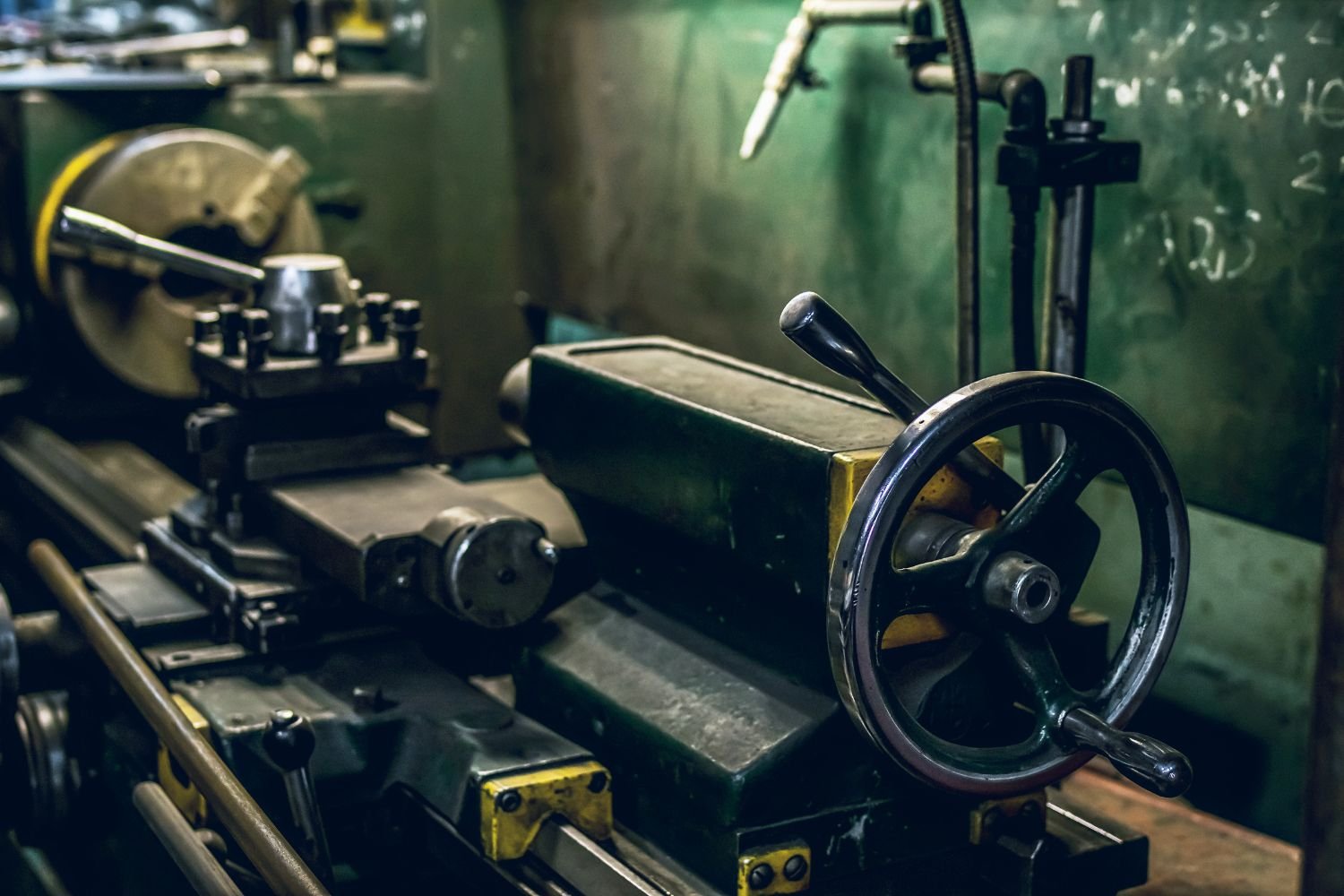
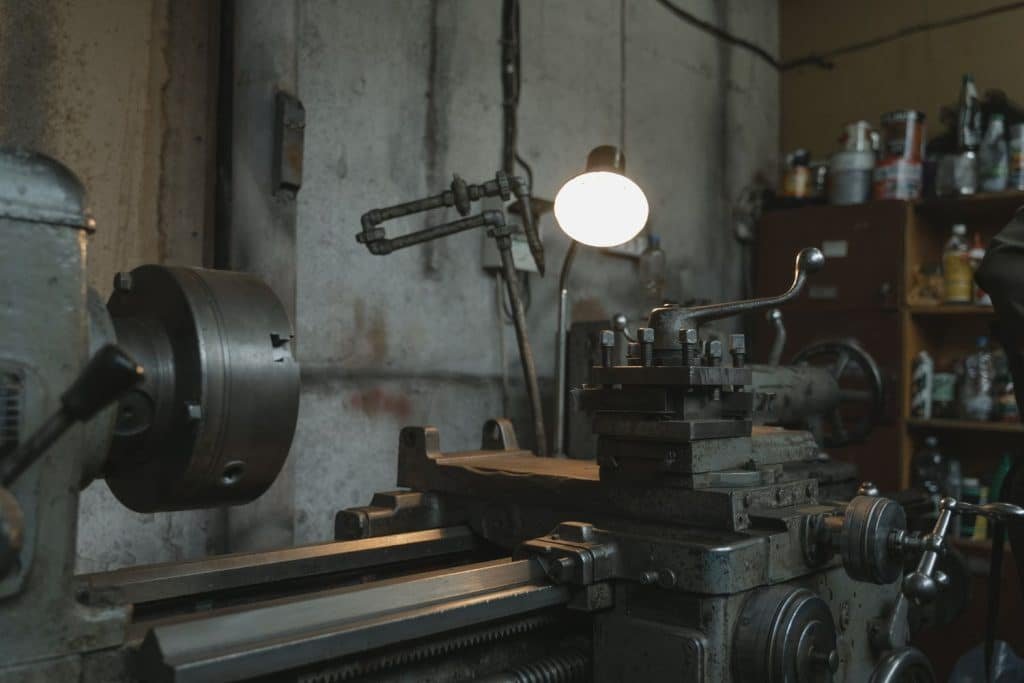
A lathe is a machine comprising several essential components that work together seamlessly to accomplish precise machining tasks. Let’s delve into the key components of a lathe and their functions:
Bed and Headstock
The bed is the foundation of the lathe, a sturdy horizontal base that provides stability and support to all other components. It is usually made of cast iron to ensure durability. The headstock, positioned at one end of the bed, houses the main spindle, which holds the workpiece securely in place. The spindle rotates at high speeds, allowing the workpiece to be shaped uniformly and accurately.
Tailstock and Toolpost
The tailstock is situated at the opposite end of the headstock and serves as the lathe’s support for longer workpieces. It can be adjusted along the bed’s length to accommodate various workpiece sizes. The tailstock also includes a quill, which can move towards or away from the headstock, facilitating precise drilling operations. On the other hand, the toolpost holds the cutting tools that shape the workpiece. It can be adjusted horizontally and vertically, enabling different cutting angles and depths.
Chuck and Spindle
The chuck is a crucial component that grips the workpiece firmly while it rotates during the lathe’s operation. It is mounted on the spindle and comes in various types, such as three-jaw and four-jaw chucks, each suitable for specific workpiece shapes and sizes. The spindle, driven by the lathe’s motor, imparts rotational motion to the chuck and, consequently, the workpiece.
Carriage and Cross-slide
The carriage is the moving part of the lathe that holds and traverses the cutting tool along the workpiece’s length. It rides along the bed’s guideways and can be locked at a specific position during machining. The cross-slide is mounted on the carriage and allows the tool to move perpendicular to the workpiece’s axis, enabling cutting across its diameter.
Understanding these key components of a lathe is essential for comprehending how this remarkable machine operates, allowing skilled operators to transform raw materials into precisely shaped objects that serve various industries.
How a Lathe Works
A lathe is a fascinating machine that operates on the principles of rotational machining, wherein material is removed from a workpiece to create the desired shape. Let’s explore how a lathe works, including the role of cutting tools and the various types of lathe operations involved:
Principles of Rotational Machining
At the heart of a lathe’s operation is the concept of rotational machining. The workpiece is securely mounted on the lathe’s spindle, which rotates at a controlled speed. As the workpiece turns, a cutting tool held firmly in the toolpost comes into contact with it, gradually removing material. This process is akin to a potter shaping clay on a spinning wheel, where precision and skill result in the desired form.
Role of Cutting Tools and Tool Holders
The cutting tool is a vital component of a lathe, responsible for shaping the workpiece. These tools come in various shapes and sizes, each suitable for specific machining tasks. They may include turning tools for straight profiles, facing tools for creating flat surfaces, and threading tools for cutting threads. The cutting tool is held securely in a tool holder, which attaches to the toolpost and can be adjusted to achieve the desired cutting angles and depths.
Different Types of Lathe Operations
A lathe offers a diverse range of machining operations, each suited to achieve different shapes and finishes on the workpiece. Some common types of lathe operations include:
- Turning: This operation involves removing material from the external surface of the workpiece to create a cylindrical shape, like shaping a wooden dowel.
- Facing: It is the process of cutting material from the end of the workpiece to create a flat surface, similar to squaring off the end of a metal rod.
- Drilling: The lathe can perform drilling operations by using the tailstock quill to make precise holes in the workpiece.
- Threading: This operation creates threads on cylindrical surfaces, like making screw threads on a metal rod.
By understanding the principles of rotational machining, the role of cutting tools, and the various lathe operations, one can grasp the versatility and significance of this remarkable tool in shaping different materials and meeting the needs of various industries.

Applications – What to Use a Lathe For
Lathe machines, with their versatility and precision, find indispensable use across a wide array of industries. Let’s explore some of the prominent applications of lathe machines in various sectors:
Metalworking Industry
Lathe machines are instrumental in the metalworking industry, facilitating several crucial operations:
- Turning and Facing Operations: Lathe machines excel at turning cylindrical workpieces, like creating perfectly round metal rods or shafts. They can also perform facing operations, ensuring smooth and flat surfaces on the end of a workpiece.
- Threading and Tapping: By using specialized cutting tools, lathe machines can cut precise threads on metal components, essential for manufacturing screws, bolts, and nuts.
- Knurling and Grooving: Lathe machines enable the knurling of metal surfaces, creating a textured pattern for better grip. Additionally, they can make grooves in workpieces, necessary for features like O-rings and snap rings.
Woodworking Industry
In the woodworking sector, lathe machines exhibit their finesse and artistry:
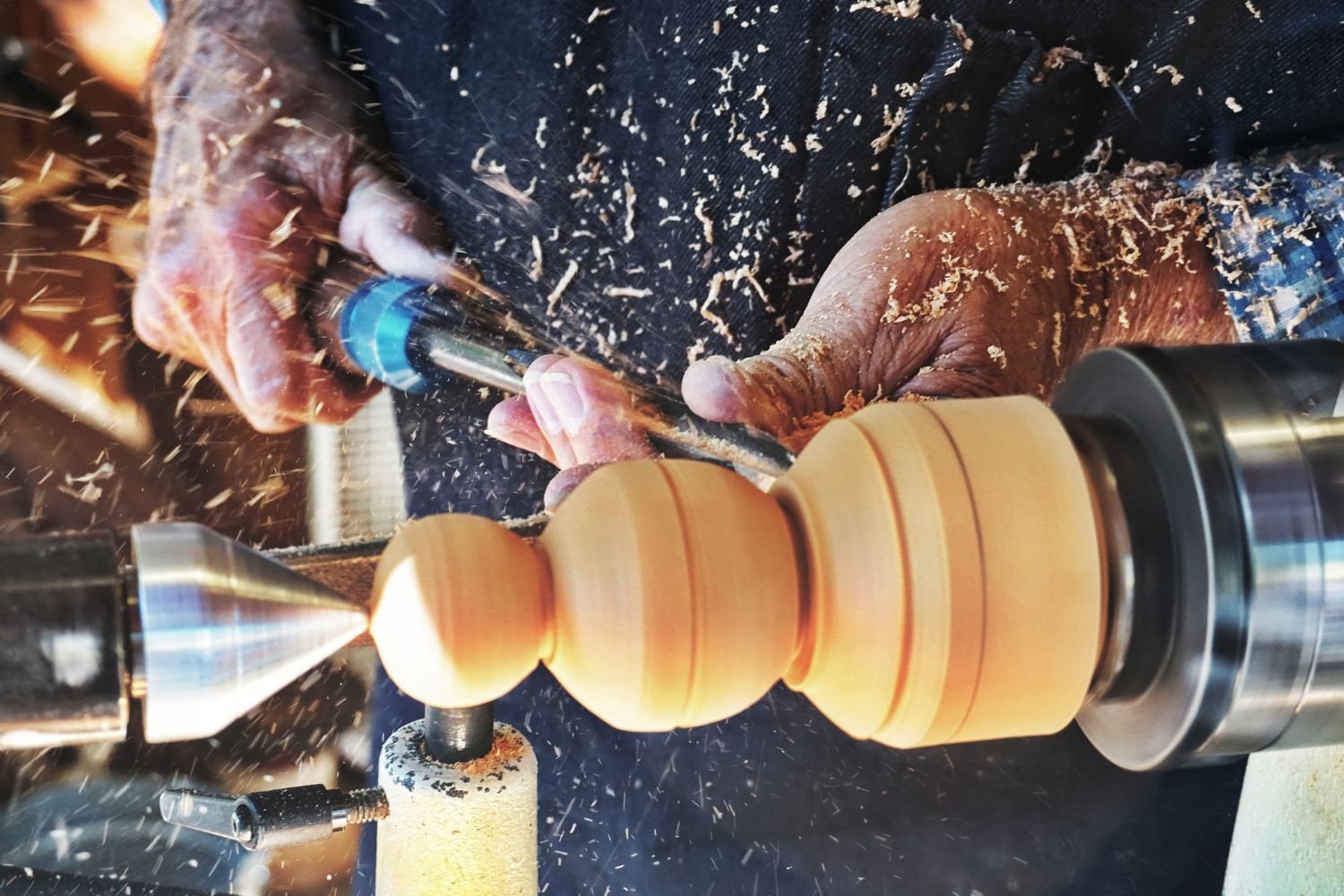
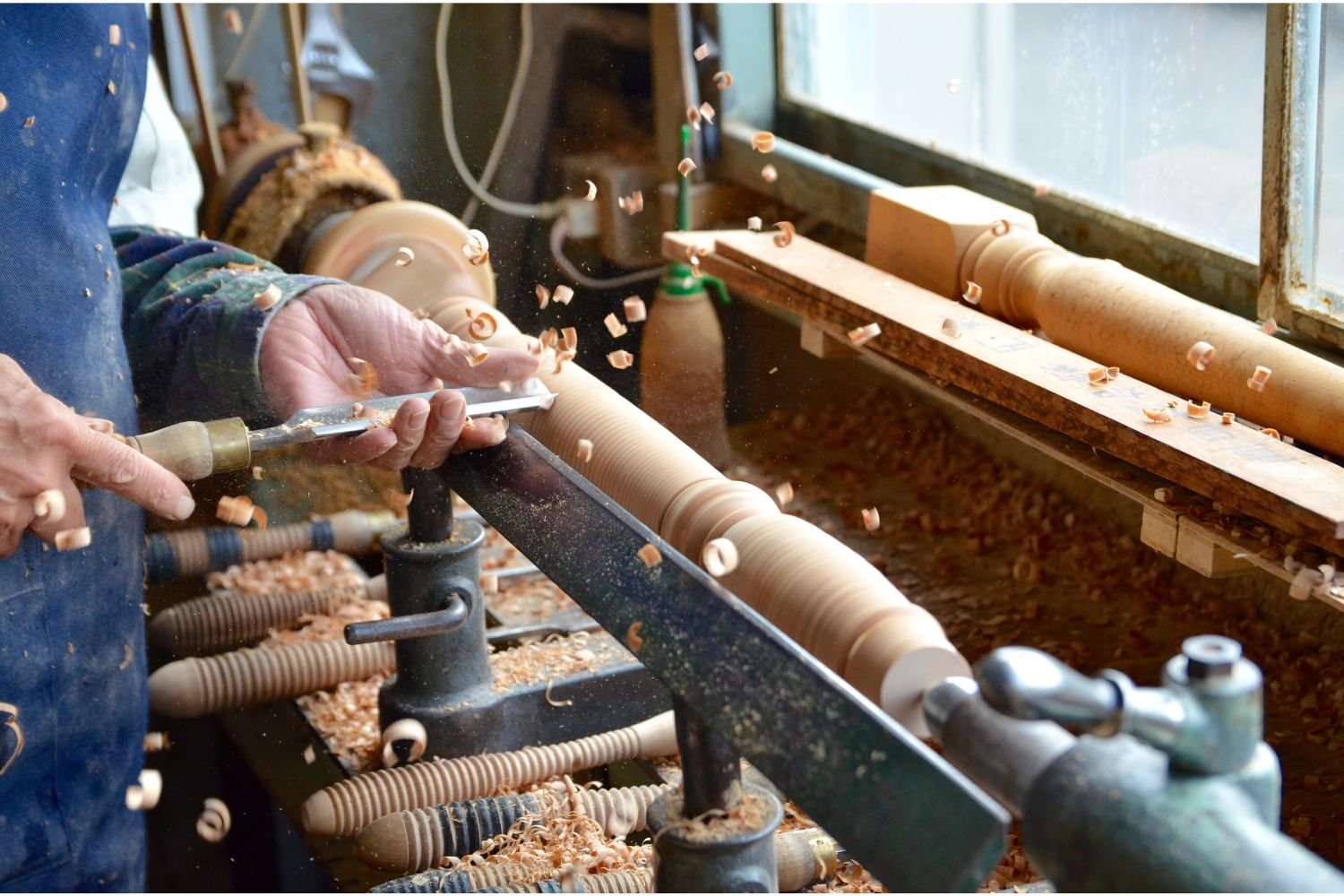
- Creating Cylindrical Shapes: Woodworkers utilize lathe machines to craft cylindrical objects like table legs, spindles, and handles with symmetrical precision.
- Crafting Decorative Elements: By skillfully manipulating the lathe, intricate designs and patterns can be carved into wood, adding decorative flourishes to furniture and artistic pieces.
- Turning Bowls and Plates: Lathe machines can shape large wooden workpieces into aesthetically pleasing bowls and plates, showcasing the beauty of natural wood grains.
Glassworking Industry
Glassworking artisans harness specialized lathe machines to create delicate glass designs:
- Forming Glass Tubes and Rods: Lathe machines aid in shaping glass tubes and rods, critical components in scientific apparatus and glass art.
- Glassblowing and Artistic Shaping: With the precision offered by lathe machines, glassblowers can shape molten glass into exquisite and intricate art pieces.
Automotive Industry
Lathe machines contribute significantly to the manufacturing of automotive components:
- Manufacturing Engine Components: Lathe machines are involved in producing engine parts like crankshafts, pistons, and camshafts, ensuring high precision and reliability.
- Producing Shafts and Axles: The automotive industry relies on lathe machines to create smooth and durable shafts and axles used in various vehicle systems.
- Precision Machining for Critical Parts: Certain critical components in automobiles require precise machining, a task at which lathe machines excel.
Aerospace Industry
Lathe machines play a crucial role in the aerospace sector, where precision is paramount:
- Machining Aircraft Components: Aerospace engineers use lathe machines to manufacture intricate parts for aircraft, ensuring safety and reliability.
- Balancing and Precision Work: Lathe machines contribute to the delicate balancing of aircraft components, ensuring optimal performance.
General Repair and Maintenance
Lathe machines serve essential functions in the field of repair and maintenance:
- Restoring Damaged Parts: By carefully removing damaged material and reshaping components, lathe machines aid in restoring worn-out parts to their original specifications.
- Modifying Existing Components: Lathe machines enable skilled technicians to modify and adapt existing components to suit specific requirements.
In these diverse industries, lathe machines stand as indispensable tools, offering precision, craftsmanship, and efficiency, ultimately shaping the world around us.
Advantages and Limitations of Lathe Machines for Wood and Metal
Lathe machines have earned their reputation as indispensable tools across various industries due to their numerous advantages. However, like any tool, they also come with certain limitations and challenges. Let’s explore the benefits of using lathe machines and the considerations to keep in mind during their operations.
Advantages of Using Lathes in Various Industries:
- Precision Machining: Lathe machines are renowned for their ability to achieve high levels of precision in shaping workpieces. This accuracy is vital in industries like aerospace and automotive, where even the slightest deviation can impact performance.
- Versatility: Lathes can work with a wide range of materials, including metals, wood, and glass. Their adaptability makes them suitable for multiple applications in diverse industries, from crafting intricate wood designs to manufacturing critical metal components.
- Efficiency and Time-saving: By automating the machining process, lathe machines increase productivity and reduce manual labor. They can quickly shape workpieces, thus saving valuable time and enhancing overall production efficiency.
- Cost-effectiveness: Despite their initial investment, lathe machines prove to be cost-effective in the long run. The precision they offer leads to reduced material wastage and fewer reworks, resulting in savings on raw materials and labor costs.
- Consistency and Reproducibility: Lathe machines can produce multiple identical workpieces with consistent quality, ensuring uniformity in mass production scenarios.
Limitations and Challenges Faced During Lathe Operations:
- Size and Weight Limitations: The size and weight of the workpiece that can be accommodated in a lathe are limited by the machine’s specifications. Oversized or extremely heavy workpieces may require specialized equipment.
- Complexity of Operations: While lathes excel at rotational machining, some intricate shapes and features may be challenging to achieve solely with a lathe. Additional processes or equipment might be needed for highly complex components.
- Skilled Operator Requirement: Operating a lathe machine effectively demands proper training and skill. Inaccurate setup or incorrect tool usage can lead to defective workpieces and wasted resources.
- Safety Concerns: Lathe machines involve rotating parts and sharp cutting tools, posing potential safety hazards to operators. Adequate safety measures, including proper training and protective gear, are essential to mitigate risks.
- Limited to Rotational Symmetry: Lathe machines are best suited for objects with rotational symmetry. As a result, non-symmetrical or irregularly shaped workpieces may require different machining methods.
Understanding both the advantages and limitations of lathe machines empowers industries to harness the full potential of this versatile tool while making informed decisions about their manufacturing processes. By maximizing the advantages and addressing the challenges, businesses can capitalize on the precision and efficiency that lathe machines bring to their operations.
Type of Lathe Machines
Lathe machines come in various types, each designed to cater to specific machining needs and industry requirements. Let’s explore the different types of lathe machines and their unique features:
Engine Lathe
Engine lathes, also known as center lathes, are one of the most common and traditional types of lathes. They are highly versatile and widely used for various turning operations. Engine lathes are manually operated and allow operators to adjust the cutting tools and workpiece positions easily. These machines are suitable for both small-scale workshops and large-scale manufacturing facilities.
CNC Lathe
CNC (Computer Numerical Control) lathes are a revolution in modern machining. These automated lathes are controlled by computer programs, enabling precise and complex machining operations. CNC lathes offer high levels of accuracy, repeatability, and efficiency, making them ideal for mass production and intricate components. Operators program the machine using CAD/CAM software, and the CNC lathe executes the instructions, producing consistent and accurate results.
Vertical Lathe
Vertical lathes, also known as vertical turning lathes (VTL), have a vertical orientation with the workpiece held upright. These lathes are suitable for large and heavy workpieces that may be challenging to handle on horizontal lathes. Vertical lathes often have integrated automation and are commonly used for machining cylindrical and ring-shaped workpieces, such as gears and wheels.
Speed Lathe
Speed lathes are designed for high-speed operations and are mainly used for light-duty work. These lathes have simple designs and are manually operated. Speed lathes are ideal for tasks like polishing, sanding, and drilling, where the focus is on achieving rapid rotations and quick results.
Capstan and Turret Lathe
Capstan and turret lathes are specialized machines used for high-volume production. They feature a revolving tool head, known as a turret, which holds multiple cutting tools. The turret allows for rapid tool changes, reducing setup time and enhancing productivity. These lathes excel at repetitive tasks, like turning, threading, and facing, making them valuable assets in industries with high production demands.
Each type of lathe machine offers distinct advantages, catering to a diverse range of machining requirements across various industries. The choice of lathe depends on factors such as the complexity of the components, production volume, and desired levels of automation. As technology continues to advance, lathe machines remain at the forefront of innovation, shaping industries and driving progress in precision engineering.
Final Thoughts
In conclusion, the lathe machine stands as a remarkable and essential tool in modern industries, contributing to the shaping of various materials with precision and efficiency. From metalworking and woodworking to glassworking and beyond, the lathe’s versatility knows no bounds, making it a cornerstone in manufacturing and craftsmanship.
The seamless rotational machining principles of a lathe, coupled with the skilled use of cutting tools, enable industries to create intricate components, essential for a myriad of applications. Its advantages, such as cost-effectiveness, consistency, and time-saving capabilities, make it a go-to solution for mass production and bespoke projects alike.