Straight or Angled Finish Nailer – Which Works Best?

Are you in the market for a new finish nailer but unsure whether to go with a straight or angled model? Look no further – we’ve got all the information you need to make an informed decision.
In this article, we’ll explore the pros and cons of both types of nailers, their suitability for different materials, ease of use, versatility, and maneuverability. We’ll also provide recommendations on popular models and nail sizes that work best for various projects.
Whether you’re a seasoned DIY enthusiast or a professional contractor, having control over your tools is essential. That’s why it’s crucial to choose the right finish nailer that will deliver precise results every time.
So let’s dive in and find out which one – straight or angled – is the best fit for your needs!
Key Takeaways
- Straight finish nailers are better for simple woodworking projects, while angled finish nailers are ideal for precise and intricate woodworking projects.
- Angled finish nailers can hold more nails in their magazine and provide superior holding power compared to straight finish nailers.
- Angled finish nailers allow for better access in tight corners or hard-to-reach areas, while straight finish nailers offer easy access in tight corners and accurate placement of nails.
- Angled finish nailers are ideal for tasks such as trim work, crown molding installation, and working with materials that require reaching tight spaces, while straight finish nailers are more suitable for simplicity and versatility.
Angled Finish Nailer vs Straight Finish Nailer
When it comes to choosing between a straight or angled finish nailer, there are distinct benefits to consider.
A straight finish nailer offers better access in tight corners and allows for precise placement, while an angled finish nailer is more versatile for working on different angles and surfaces.
Additionally, the size of the nails used should be taken into account as it can affect the overall strength and appearance of the finished project.
Depending on the specific task at hand, such as trim work or cabinet installation, certain nailers may be better suited than others.
Straight vs angled benefits
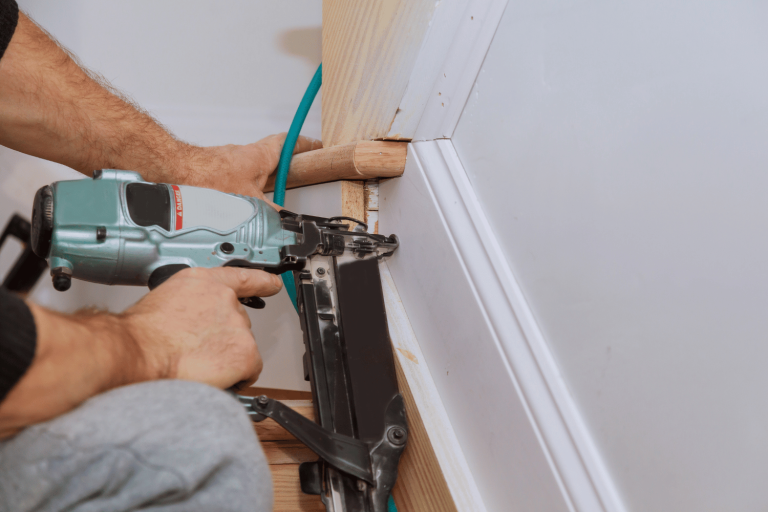
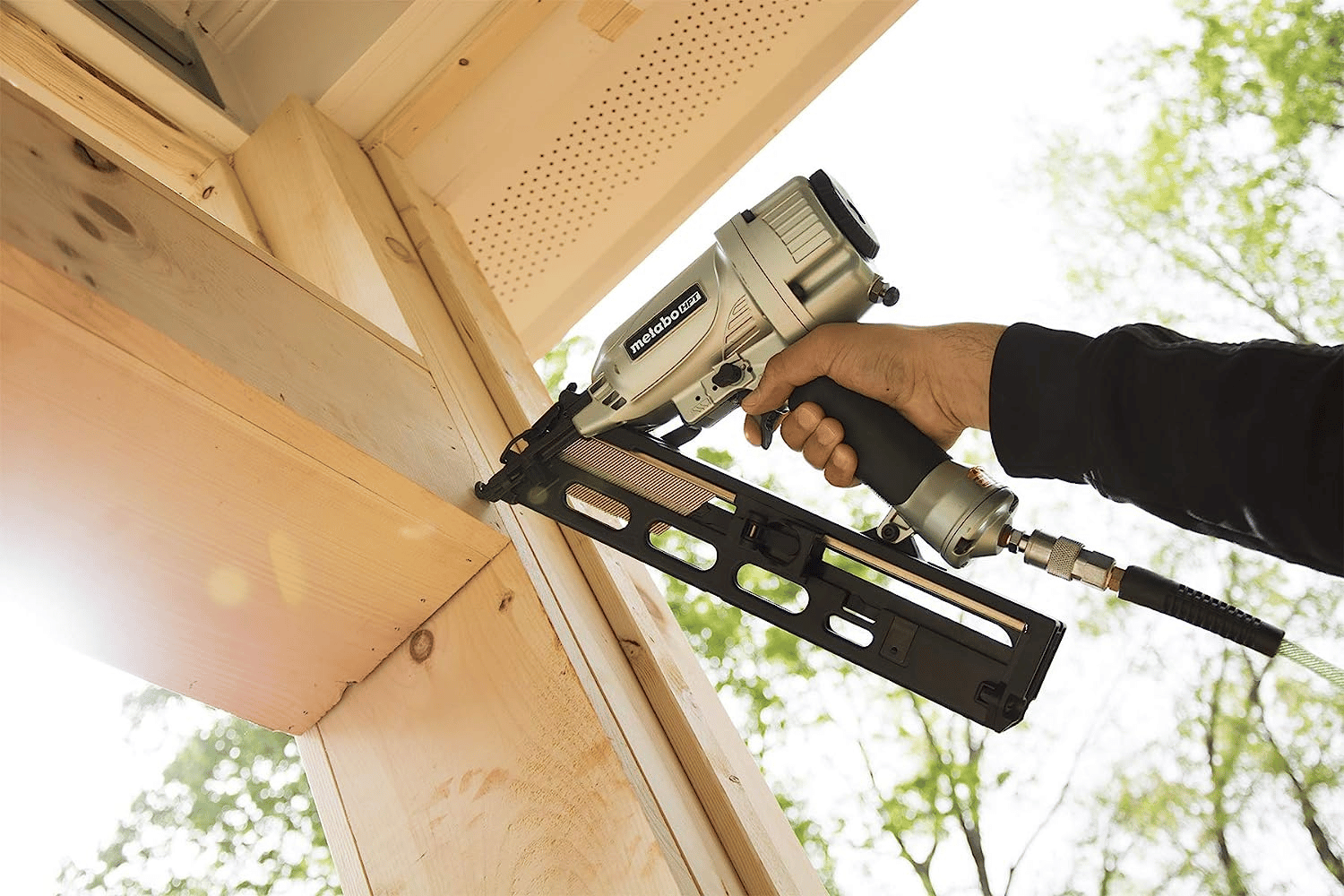
In your hands, an angled finish nailer effortlessly reaches into tight corners and angles, making it the perfect tool for precise and intricate woodworking projects. Unlike straight nailers, which require you to approach the workpiece head-on, angled nailers allow you to maneuver with ease. This flexibility is especially useful when working on finish projects that demand accuracy and control.
The angled design of these nailers also allows them to hold more nails in their magazine compared to straight nailers. This means less time spent reloading and more time focused on your project. Additionally, angled nails provide superior holding power due to their increased surface area.
When it comes to finish work, an angled finish nailer is undoubtedly the go-to choice for professionals who desire precision and efficiency. Transitioning into considering the appropriate nail size for your project, let’s explore how this factor can further enhance your woodworking experience.
Nail size considerations
Make your woodworking projects stand out by carefully considering the size of nails you choose, ensuring a flawless and impressive finished result. When it comes to nail size considerations, both straight finish nailers and angled finish nailers have their advantages. However, here are four key points to keep in mind when selecting the right nail size for your project using a nail gun:
- Compatibility: Straight finish nailers typically work with smaller gauge nails, while angled finish nailers can accommodate larger gauge nails.
- Holding power: Larger gauge nails provide increased holding power and are ideal for securing heavy materials or joints.
- Appearance: Smaller gauge nails create smaller holes, resulting in a more aesthetically pleasing finished look.
- Access: Angled finish nailers allow for better access in tight corners or hard-to-reach areas.
Consider these factors to determine the best nail size for your specific task.
In the next section, we’ll discuss the best nailers for specific tasks without compromising on quality or performance.
Best nailers for specific tasks
Choose the perfect nailer for your specific woodworking task to effortlessly drive nails into place, creating a seamless and professional finish. When it comes to selecting the best nailer for specific tasks, both straight finish nailers and angled finish nailers have their advantages.
Straight finish nailers are ideal for simple woodworking projects where precision is key. They allow you to easily access tight corners and ensure accurate placement of nails.
On the other hand, angled finish nailers are more versatile and can handle a wide range of tasks, including crown molding installation and framing work. They provide better maneuverability in tricky angles and offer increased holding power.
Consider the requirements of your project before choosing between these two types of nailers.
Transitioning into the next section about ‘pros and cons’, let’s explore the benefits and drawbacks of each option.
Pros and Cons
When considering the advantages of straight vs angled nailers, it’s important to weigh the pros and cons.
Straight nailers are beneficial because they allow for easy access in tight spaces and provide a more direct application of force.
On the other hand, angled nailers offer improved maneuverability and can be used in corners or at awkward angles.
When choosing the right nailer, consider the specific project requirements, such as accessibility and precision needed, to ensure optimal results.
Straight vs angled advantages
Get the job done faster and with ease by using an angled finish nailer – it offers better maneuverability and access to tight corners.
The angled design allows you to reach areas that a straight finish nailer can’t, making it ideal for intricate woodworking projects or installing trim in hard-to-reach places.
With an angled finish nailer, you can easily navigate around obstacles and get the perfect angle every time, without having to reposition yourself constantly. This saves both time and effort, allowing you to complete your tasks efficiently.
Additionally, the angled configuration of the nail gun provides better balance and reduces fatigue during extended use.
So when choosing the right nailer for your project, consider the advantages that an angled finish nailer brings – it’ll make your work smoother and more precise.
Choosing the right nailer
One important aspect to consider when selecting the appropriate tool is understanding the specific requirements of your project and how different nailers can address those needs.
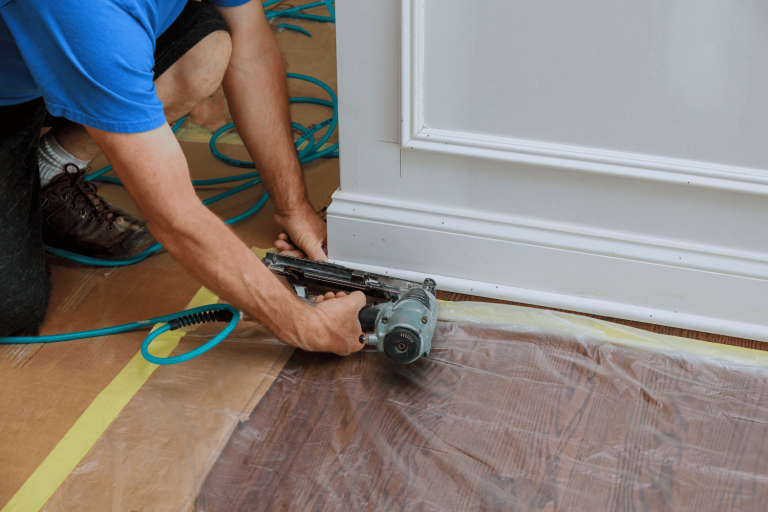
If you’re working on a project that requires precision and control, an angle finish nailer may be the better option for you. An angle finish nailer allows for easy access to tight corners and angles, making it ideal for tasks such as trim work or installing moldings.
On the other hand, if you’re looking for simplicity and versatility, a straight nailer might be more suitable. Straight nailers use straight nails, which provide a strong hold, especially when working with hardwoods or thicker materials. Additionally, straight nailers can accommodate larger nails than their angled counterparts, allowing for greater holding power in heavy-duty applications.
Considering these factors will help you determine which type of nailer best fits your specific project requirements.
Now let’s move on to discuss the suitability of these nailers for different materials…
Suitability for Different Materials
When it comes to material suitability, both angled and straight finish nailers have their advantages.
Angled finish nailers are ideal for working with materials such as crown molding or baseboards, where reaching tight spaces is necessary.
On the other hand, straight finish nailers are better suited for projects involving hardwood or softwood that require a more precise and accurate application.
So, depending on the type of material you’re working with, you can choose between an angled or straight finish nailer to ensure the best results in hard-to-reach spots.
Material suitability: Angled vs Straight
To ensure the perfect finish for your project, consider using an angled finish nailer instead of a straight one as it allows for easier maneuverability in tight corners and awkward angles. An angled nailer is specifically designed to drive nails at an angle, making it ideal for navigating tight spaces where a straight finish nailer may struggle. The type of nail used also plays a role in material suitability. Angled finish nailers typically use smaller gauge nails compared to straight ones, which can be beneficial when working with delicate materials like trim or molding. Take a look at the table below for a quick comparison:
| Straight Finish Nailer | Angled Finish Nailer |
|---|---|
| Limited maneuverability | Easier navigation in tight spaces |
| Larger gauge nails | Smaller gauge nails |
| Ideal for flat surfaces | Perfect for corners and angles |
Using an angled finish nailer not only allows you to work more efficiently but also gives you greater control over your project’s outcome. It is especially ideal for hard-to-reach spots where precision is crucial.
Ideal for hard-to-reach spots
Looking to tackle those hard-to-reach spots? An angled finish nailer is your secret weapon for precise and efficient work in tight corners and awkward angles.
Unlike a straight nail, which can be challenging to maneuver into tight spaces, an angled nail allows you to easily navigate around obstacles and reach areas that would otherwise be unreachable.
Whether you’re working on crown molding, baseboards, or any other finishing project, the angled finish nailer is ideal for ensuring a clean and professional-looking result.
When it comes to working in confined spaces or intricate designs, the angled finish nailer excels. Its design allows for greater control and accuracy, making it easier to achieve seamless joints and secure attachments.
So if you want complete mastery over your projects—whether big or small—the angled finish nailer is the tool of choice.
Transitioning into the next section about the ‘ease of use,’ using an angled finish nailer doesn’t just provide access to hard-to-reach spots; it also offers a user-friendly experience that will simplify your entire woodworking process.
Ease of Use
You’ll find that using either a straight or angled finish nailer is a breeze, making your projects a whole lot easier. The ease of use is one of the key reasons why these nail guns are so popular among DIY enthusiasts and professionals alike. Both the straight and angled nailer offer distinct advantages when it comes to maneuverability and control.
To help you understand the differences between the two, take a look at this handy table:
| Straight Nailer | Angled Nailer |
|---|---|
| Ideal for tight spaces | Great for corners |
| Requires less clearance | Can reach difficult angles |
| Easy to load with straight magazine | Versatile in multiple applications |
| Perfect for precision work | Provides better visibility |
Whether you’re working on intricate trim or tackling larger woodworking projects, both types of nail gun can deliver exceptional results. Now that we’ve covered ease of use, let’s explore the versatility and maneuverability these tools offer without missing a beat.
Versatility and Maneuverability
If you want a tool that can easily handle any job and give you the freedom to move around effortlessly, then it’s time to explore the impressive versatility and maneuverability of these nail guns.
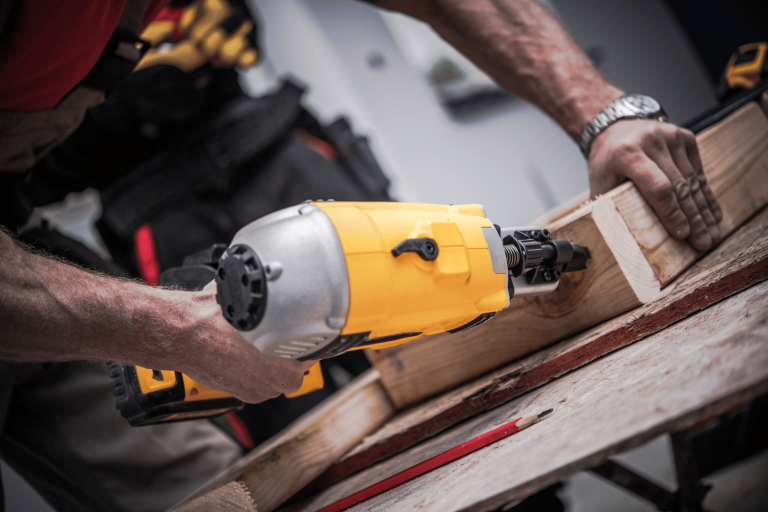
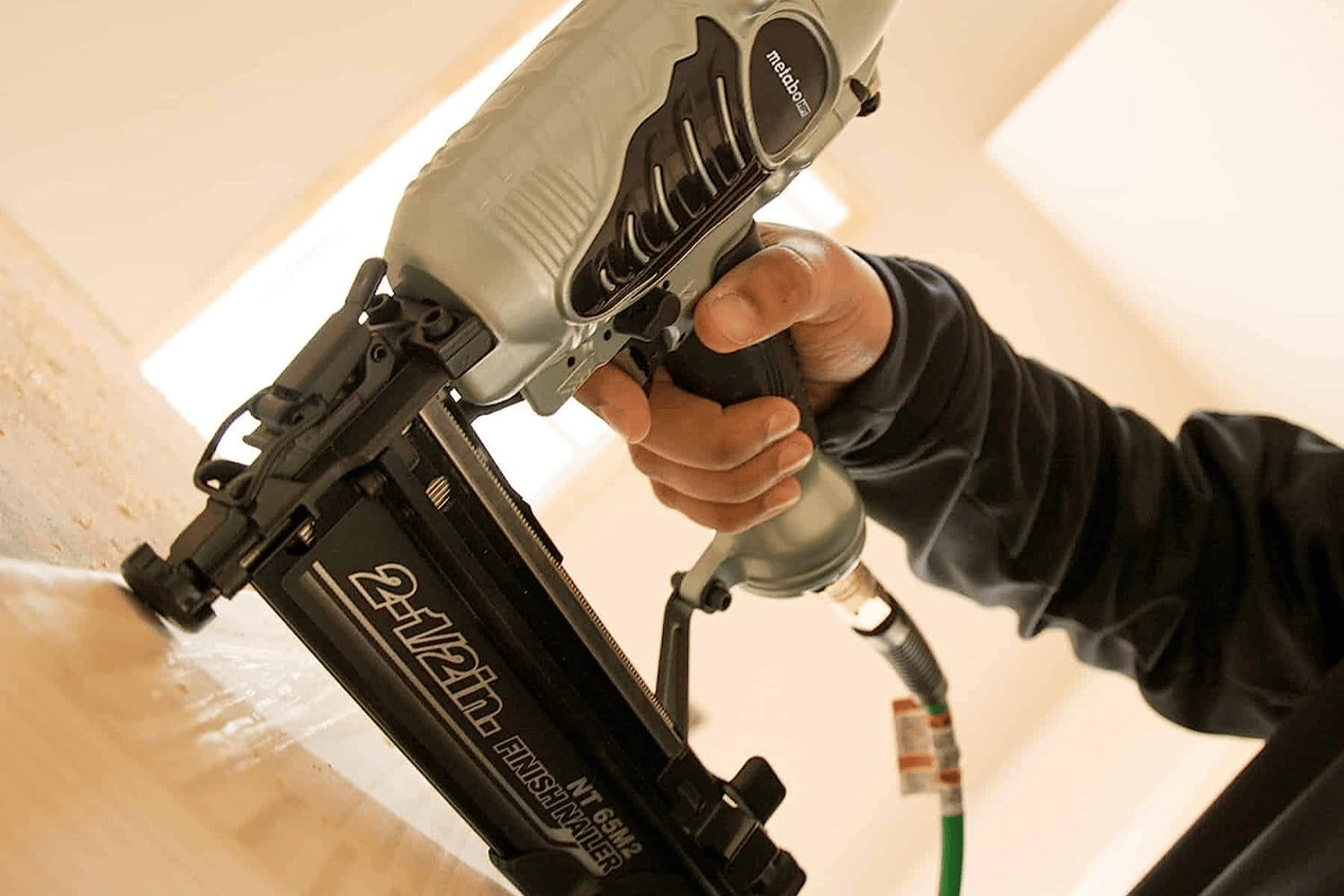
When it comes to versatility, both the angled finish nailer and straight finish nailer have their advantages. The angled finish nailer is designed with an angled magazine that allows for better access in tight spaces and corners. This makes it perfect for trim work, crown molding, and other intricate projects.
On the other hand, the straight finish nailer is more versatile when it comes to working on larger surfaces or when precision isn’t as crucial. It can handle thicker materials with ease.
Transitioning into the next section about recommended nail sizes, you’ll find that different types of nails are suited for specific tasks.
Nails Used – What’s the Difference in Finish Nail Size
Get ready to experience the power and precision of nail guns as you discover the perfect size nails for your upcoming projects. Whether you choose a straight finish nailer or an angled finish nailer, selecting the right size of nails is crucial for achieving professional results in your home improvement endeavors. Here are some recommended nail sizes to consider:
- 2-inch nails: Ideal for smaller trim pieces such as crown molding or chair rails.
- 2.5-inch nails: Perfect for attaching larger baseboards or door casings.
- 3-inch nails: Great for securing heavier materials like exterior trim or hardwood flooring.
- 4-inch nails: Recommended for structural work such as framing walls or building decks.
By using the appropriate nail sizes, you can ensure that your finish nailer will deliver precise and secure fastenings every time.
Now let’s explore some popular models that will help you take your projects to the next level.
Popular Models
Looking to elevate your home improvement game? Check out our picks of the best cordless finish nailer models that will revolutionize your projects.
So whether you choose an angled or straight model, these popular nail guns are sure to meet all your finishing needs with ease and efficiency.
Frequently Asked Questions
Can a straight finish nailer be used for angled applications?
No, a straight finish nailer cannot be used for angled applications. It is specifically designed to drive nails in a straight line. To handle angled applications, an angled finish nailer should be used instead.
What type of nails should be used with an angled finish nailer?
To use an angled finish nailer, you should use nails specifically designed for this type of tool. These nails have a unique shape that allows them to be easily driven into tight corners and angles.
Are angled finish nailers more expensive than straight finish nailers?
Angled finish nailers are generally more expensive than straight finish nailers. However, they offer a greater range of maneuverability and can access tight corners and angles with ease. It ultimately depends on your specific needs and budget.
Can a straight finish nailer be used for both trim work and framing?
Yes, a straight finish nailer can be used for both trim work and framing. It offers more versatility compared to an angled finish nailer, allowing you to tackle various projects with precision and ease.
What safety precautions should be taken when using a finish nailer, regardless of the type?
To ensure safety while using a finish nailer, regardless of the type, follow these precautions: always wear protective eyewear and gloves, keep your fingers clear of the nail’s path, and never point the tool at anyone.
Final Thoughts
When it comes to choosing between a straight or angled finish nailer, both have their advantages and disadvantages. The straight finish nailer is more versatile and maneuverable, making it easier to navigate tight spaces.
On the other hand, the angled finish nailer offers better access to corners and allows for faster nailing.
Ultimately, the choice depends on your specific needs and preferences. Consider the materials you’ll be working with, the ease of use, and recommended nail sizes before making your decision.