BOSCH GCM12SD vs Makita LS1219L: Which Miter Saw is Best?

In the world of precision cutting and woodworking, choosing the right miter saw can be pivotal to the success of a project.
Bosch and Makita, two powerhouses in the tool industry, offer miter saws that are both respected for their quality and performance.
This comparison review pits the Bosch GCM12SD against the Makita LS1219L, two saws that pack a punch with their advanced features and robust capabilities.
Whether you’re a professional contractor or a dedicated DIY enthusiast, understanding the nuances of these tools can help you make an informed decision that aligns with your specific needs.
Let’s dive into a detailed comparison to see which saw might be the right fit for your workshop.
💡TL;DR: The Bosch GCM12SD offers an axial glide system for tight spaces and superior dust collection, ideal for clean and maintenance-friendly work environments. On the other hand, the Makita LS1219L shines with its larger cutting capacity and user-friendly front bevel lock, suitable for larger projects and ease of use. Choose the Bosch for space efficiency and minimal cleanup, or go with the Makita for broader cuts and operational convenience.
Introducing Our Miter Saw Competitors
Bosch has been a mainstay in the power tool sector, renowned for innovative engineering and reliable performance. The Bosch GCM12SD compound miter saw stands out for its space-saving axial glide system and precision in varied cutting tasks. Technical specs of note include a 15 amp motor, 3800 RPM no-load speed, and dual-bevel capacity with large cutting dimensions.
Makita is known for its quality craftsmanship and durable tools. The LS1219L, and it’s little sibling, the Makita LS1019L, shines with its direct drive motor and large cutting capacity, making it a heavyweight in heavy-duty cutting jobs. It showcases a 15 amp motor, 3200 RPM, and a unique two-rail sliding system for a compact footprint.
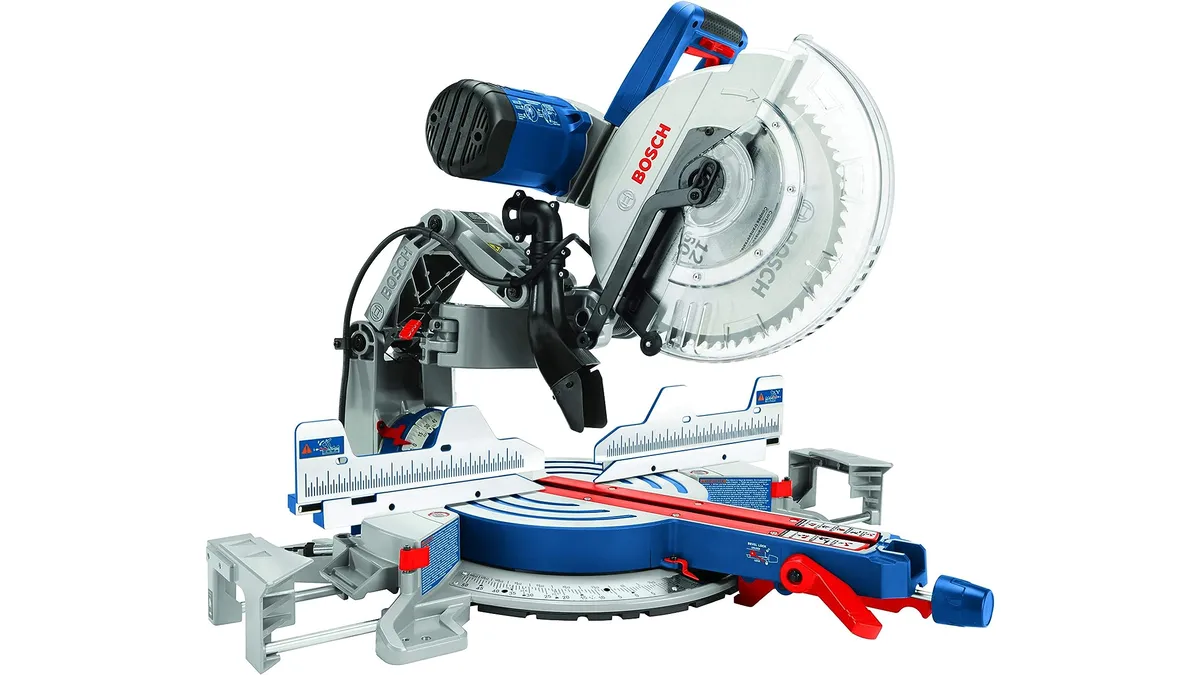
Bosch GCM12SD
- Pros:
- Axial glide system saves space
- Effective dust collection system
- No exposed grease joints for cleaner operation
- Robust 15 amp motor with 3800 RPM
- Cons:
- Potential blade wobble at 45° bevel cuts
- Riser issues when collapsing the unit
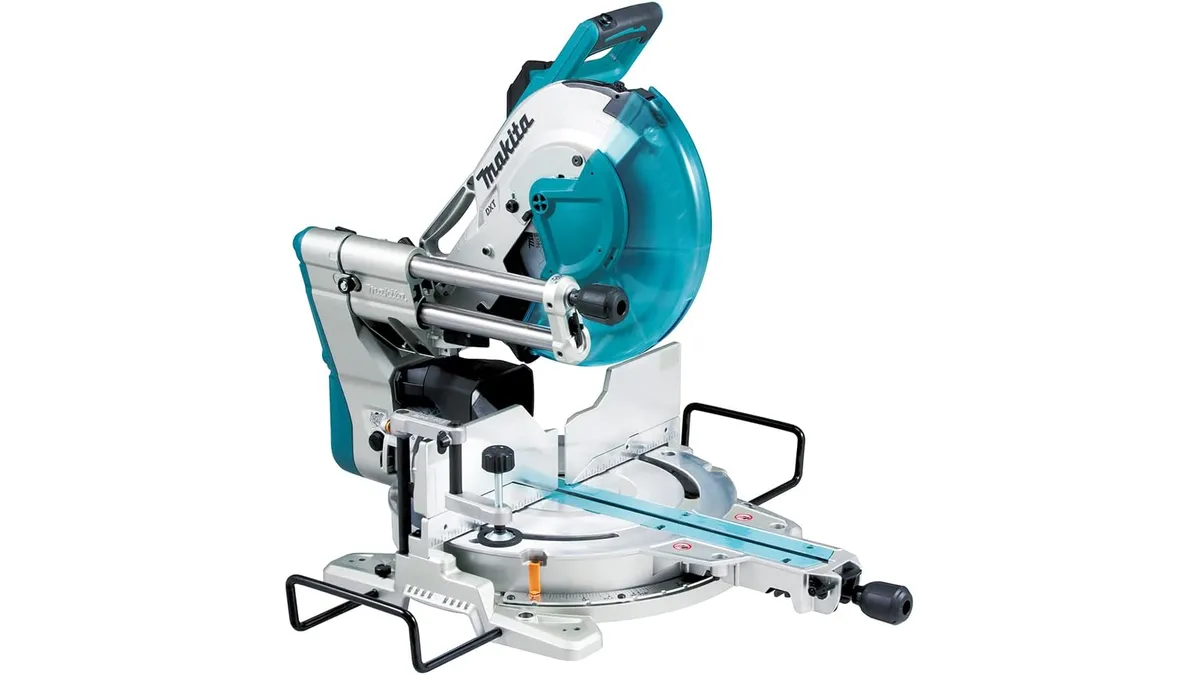
Makita LS1219L
- Pros:
- Large cut capacity of 17 inches
- Front bevel lock for convenience and safety
- Dual dust collection ports
- Powerful direct drive motor with 3200 RPM
- Cons:
- Comes with only one blade
- Less sturdy aluminum measurement scale
Head-to-Head
Motor Power and Speed
Both saws are equipped with a 15 amp motor, but the Bosch offers a higher no-load speed of 3800 RPM compared to Makita’s 3200 RPM. This might suggest the Bosch could deliver faster cuts, but the difference is likely negligible for most applications. Winner: Bosch (slightly)
Cutting Capacity
The Makita boasts a 17-inch cut capacity, surpassing the Bosch’s 14-inch cross-cut capacity. This larger capacity is beneficial for users dealing with wider materials. Winner: Makita
Sliding System Rail vs. Axial Glide System
Unique to the Bosch, the feature minimizes the saw’s footprint and eliminates the need for rear clearance. This design is particularly advantageous in tight spaces. The Makita’s two-steel rail sliding system is also compact and allows for operation flush against a wall. While each goes about it in a different way, both saws can slide without moving them away from the wall Winner: Tie
Dust Collection
While both saws emphasize dust collection, the Bosch has been particularly lauded for its efficiency in this area, suggesting a slight edge over the Makita. Winner: Bosch
Bevel Capacity
Both miter saws offer easy-to-use bevel controls and a range of 48 degrees left and right. However, the Makita’s front bevel lock is noted for its convenience and safety, making it slightly more user-friendly. Winner: Makita
Additional Features
The Bosch saw’s lack of exposed grease joints means less maintenance and a cleaner operation over time. This is a practical feature that doesn’t have a direct counterpart in the Makita saw. Winner: Bosch
Versatility with Blades
The Makita comes with a single blade and may require additional purchases for various applications, whereas this is not a highlighted issue with the Bosch. Winner: Bosch
In summary, both saws have their own set of advantages. The Bosch shines with its higher RPM, innovative axial glide system, and superior dust collection, making it ideal for space-conscious professionals who prioritize maintenance ease and cleanliness. The Makita excels with its larger cutting capacity and user-friendly bevel lock, catering to those who need to make broader cuts and prefer convenience in bevel adjustments.
Final Verdict
If you were to purchase either of these saws, I’m sure you’d be more than pleased. To find your true match, consider these:
Use the Bosch GCM12SD if:
- A clean workspace is a priority, and effective dust collection is a must.
- Maintenance ease is important to you, especially concerning the cleanliness of the saw components.
- You value slightly faster blade speed for potentially quicker cuts.
Use the Makita LS1219L if:
- You need to make larger and deeper cuts frequently.
- Front-access controls for safety and convenience are important to you.
- You require a robust motor that emphasizes smooth and powerful cuts.