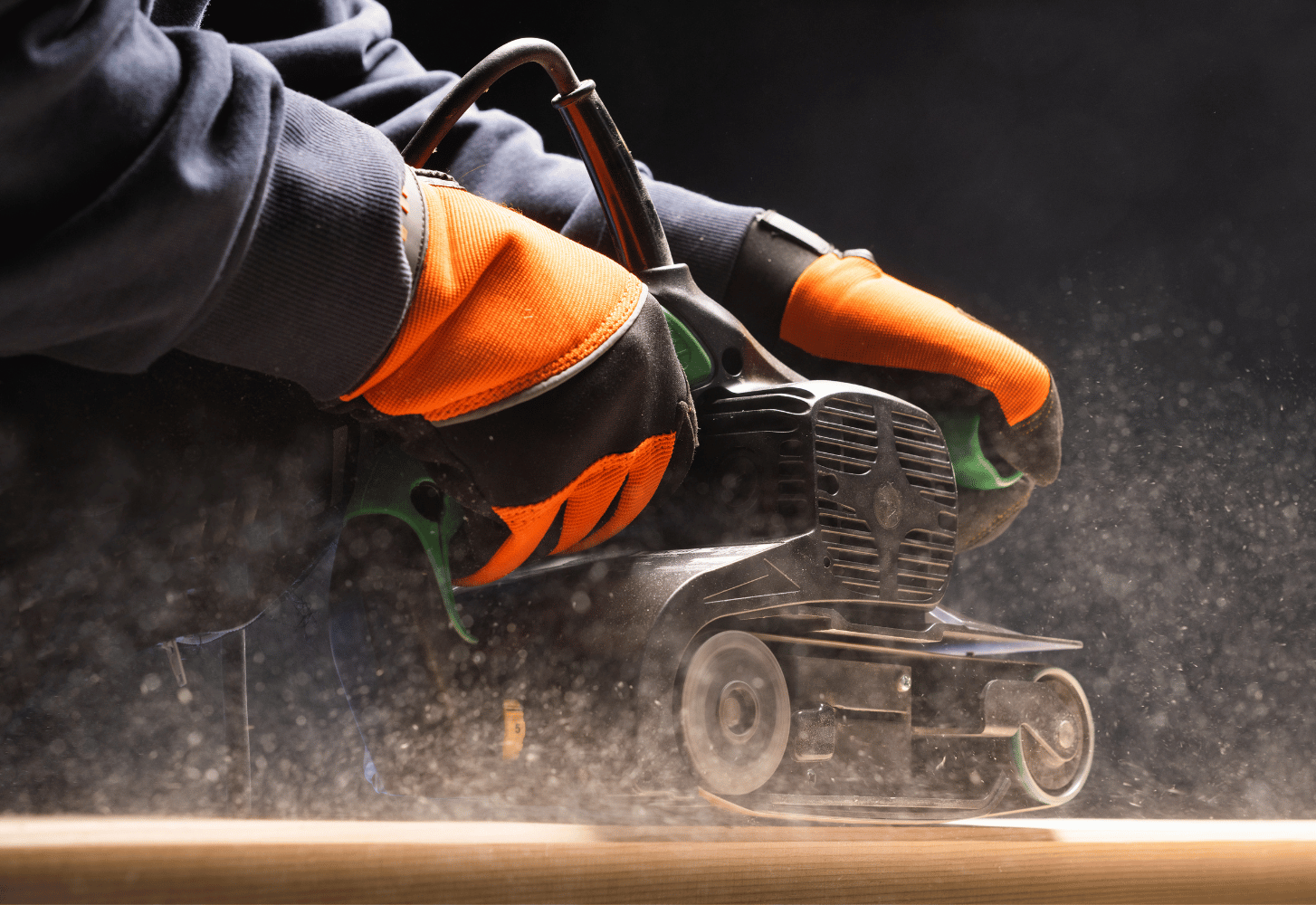
Best Belt Sander for a Smoother Ride

Are you tired of sanding the old-fashioned way?
Are your arms aching from hours and hours of laboriously sanding away at blocks of wood?
Before your next project, it’s time to look into finding the best belt sander.
This specialized tool can help take your DIY projects, carpentry endeavors, and contracting jobs to the next level.
Not only does sanding become easier and faster with this device, but you’ll be looking like a boss as soon as you get it in your hands.
Let’s talk about what makes a good belt sander so that when you head out to buy one, you know exactly what to look for!
How We Choose the Best Belt Sanders
You’re looking for a belt sander, but there are so many options out there.
How do you choose the best one?
With all of the different brands and features available, it’s hard to know where to start.
We’re here to help.
After reading through thousands of reviews on Amazon and comparing the features and specs of the top brands, we’ve narrowed it down to these belt sanders.
Whether you’re looking for a powerful machine or something lightweight and easy to use, we’ve got you covered.
Overall Winner – Best Belt Sander
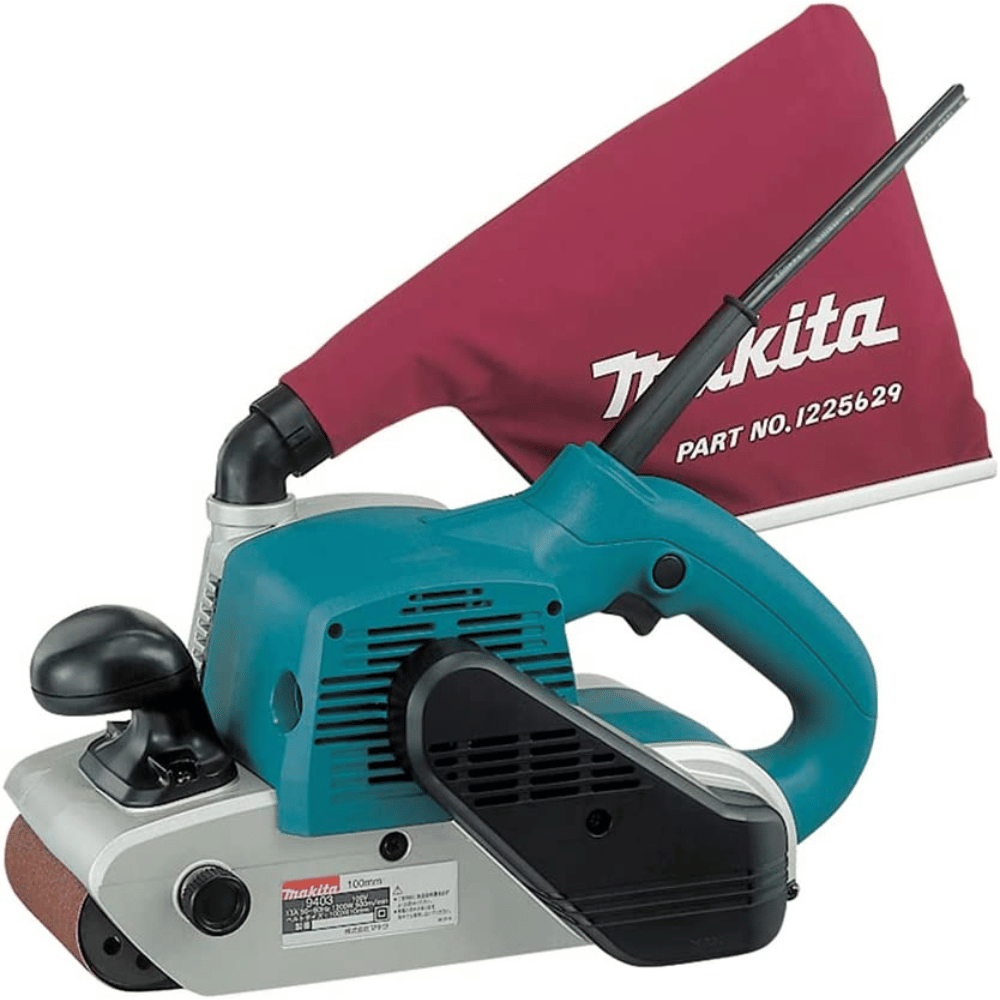
Makita 9403 Belt Sander
Key Features
- 4-inch wide belt
- 11 amp motor – 1,640 ft/min
- Only 84dB
Why It’s a Great Choice
This Makita Belt Sander is a powerful, speedy powerhouse designed to make your DIY and carpentry jobs faster and more efficient.
With an 11 AMP motor and an adjustable speed control ranging from 820-1,640 ft./min., you can take on any project and sand materials down in no time.
No one likes a noisy workshop, so they’ve paid extra attention to construction and sound levels: the labyrinth design of the Makita 9403 seals in motor and bearing components to protect them from dust, while reducing noise output down to 84dB.
It also features a replaceable ceramic wear plate, allowing easy maintenance and getting you back to sanding quickly.
Need to work in tight corners or against walls?
The 360° dust bag swivel system allows you to do just that without adding obstructions or hassle, allowing you to easily sand down all kinds of materials flush with any surface.
In other words – this sander really ‘sands’ away whatever ails you!
So stop wasting time hunting for the right tool – revamp your DIY projects with the Makita 9403 sander today!
Best Benchtop Belt Sander
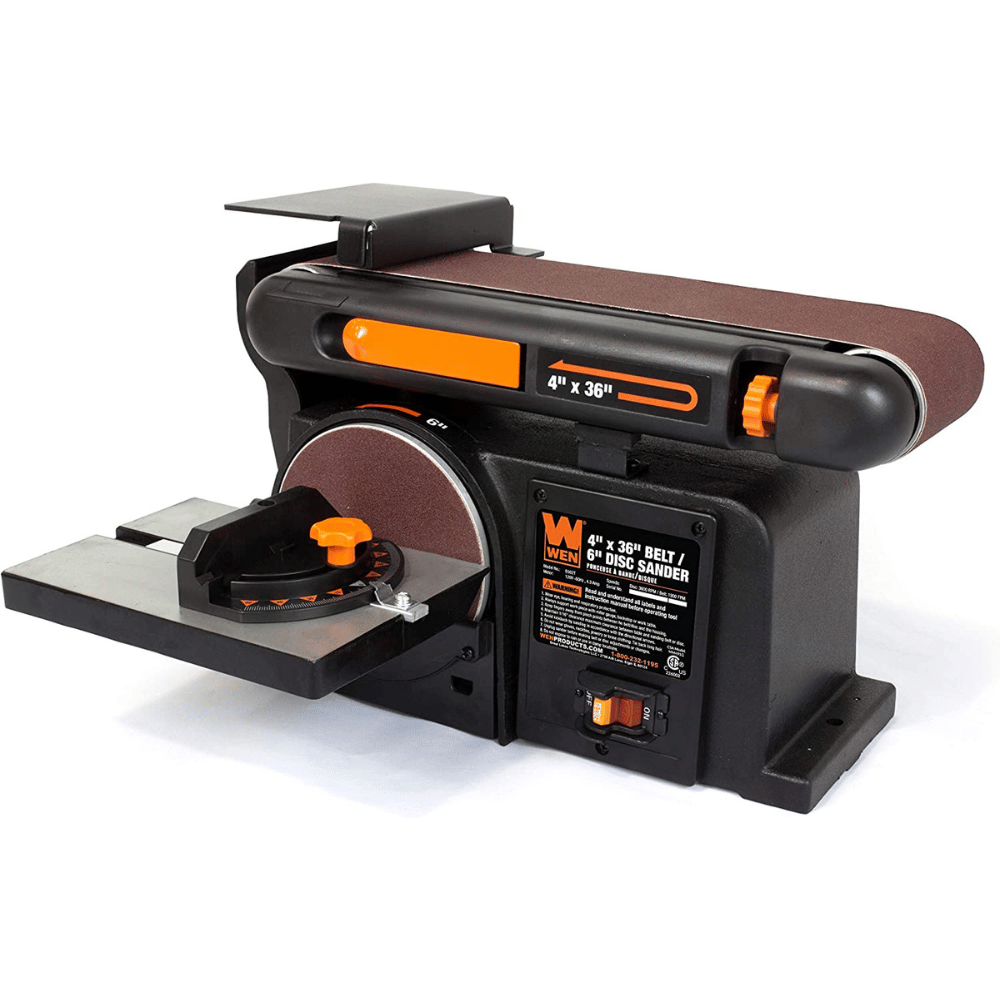
WEN 6502T Belt and Disc Sander
Key Features
- 4.3 amp motor spins up to 3,600 RPM
- 4″ x 36″ belt sander and 6″ disc sander
- Cast iron base
Why It’s a Great Choice
The WEN Belt Sander is the perfect pal for all of your DIY projects!
Whether you’re a woodworking guru, a construction master or just trying to tackle a tricky home improvement project, this beastly machine will have you sanding with ease.
With its 4.3 amp 1/2 HP motor, this powerful little panda is sure to get any job done…without bogging down in the process!
You’ll love how simple it is to change sandpaper grits with its tension release lever.
Plus, its adjustable belt lets you customize it for different workpieces and its heavy cast-iron base helps prevent vibrations for a nice smooth finish.
Not only does it come with a 2.25-inch dust port that can be connected to a dust extractor for easy cleanup but also comes equipped with all the goodies like a miter gauge and stop bar.
So don’t let those pesky projects keep you up late at night, get yourself the WEN Belt and Disc Sander today!
Best Belt Sander for Visibility
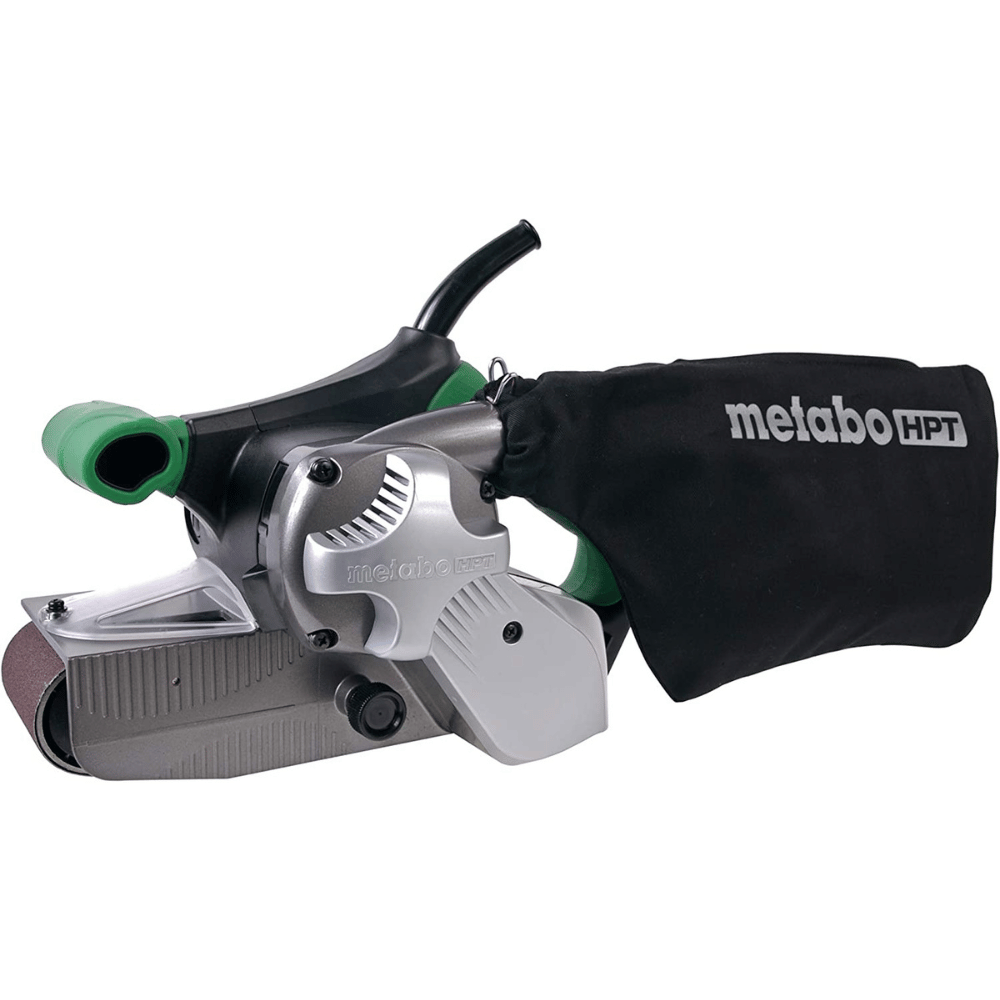
Metabo HPT Belt Sander (SB8V2)
Key Features
- 9 amp motor, 5-speed settings
- 3″ x 21″ belt
- Clear front cover for improved visibility
Why It’s a Great Choice
The Metabo HPT Corded Belt Sander is the perfect tool for any DIYer or carpenter ready to take their projects to the next level.
This sander takes precision and efficiency to new levels with its multiple features designed for a smooth and effortless sanding experience.
It offers a variable speed dial at the base of its handle finely tuned for maximum versatility in all your applications, from shaping wood around corners to touching up furniture surfaces.
The clear front cover allows you to keep your work area visible – no more accidental buffing off important pieces of your project!
Plus, this sander is so easy to manage thanks to its left-side mounted dust collection bag that makes quick corner sanding jobs a breeze while also reducing airborne particles – that’s one less mess you have to worry about!
Finally, our flush surface design is sure to give you fast and even results every time.
Whether you’re just getting started in woodworking or even an experienced expert, with this Metabo HPT Belt Sander, you’ll be ready for any challenge.
Best Cordless Belt Sander
RYOBI P450 One+ 18V Lithium Ion 3 x 18 inch Brushless Belt Sander
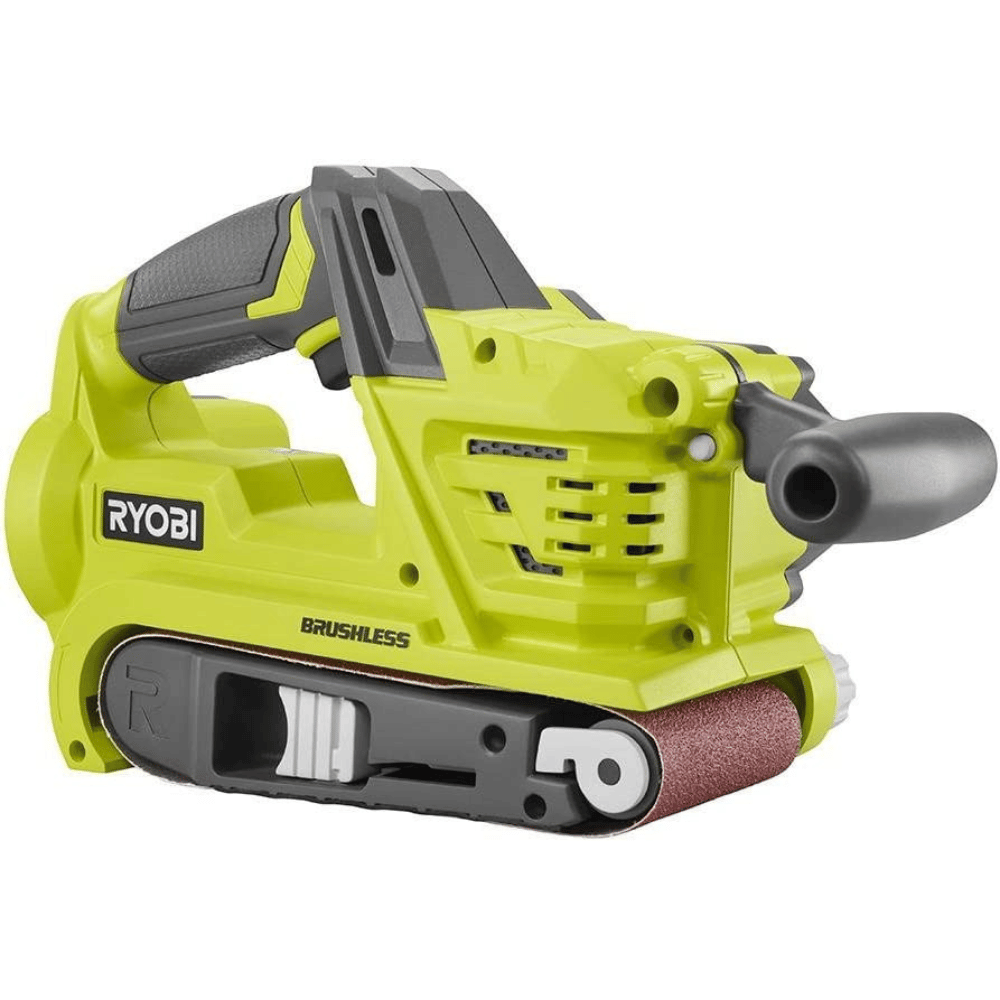
Key Features
- 18V Cordless brushless motor
- 850 ft/min sanding speed
- Adjustable pommel
Why It’s a Great Choice
Sanding projects don’t have to take a lifetime!
Introducing the RYOBI Belt Sander, the tool of choice for DIYers and carpenters who want to get the job done quickly.
With its brushless motor, this sander has greater runtime and lifetime than its brushed counterparts – so you can keep working without worrying about having enough power.
Included in the package is everything you need: a reusable dust bag and an 80-grit sanding belt, so you won’t have to worry about making any extra purchases.
The handle is covered in rubber molding so your grip stays comfortable even during longer projects.
And if that isn’t enough, you can adjust the pommel up to five different positions for maximum ergonomics.
Get ready to make carpentry quick, easy, and luxurious with the RYOBI Belt Sander!
Best Belt Sander on a Budget
Skil Belt Sander (7510-01)
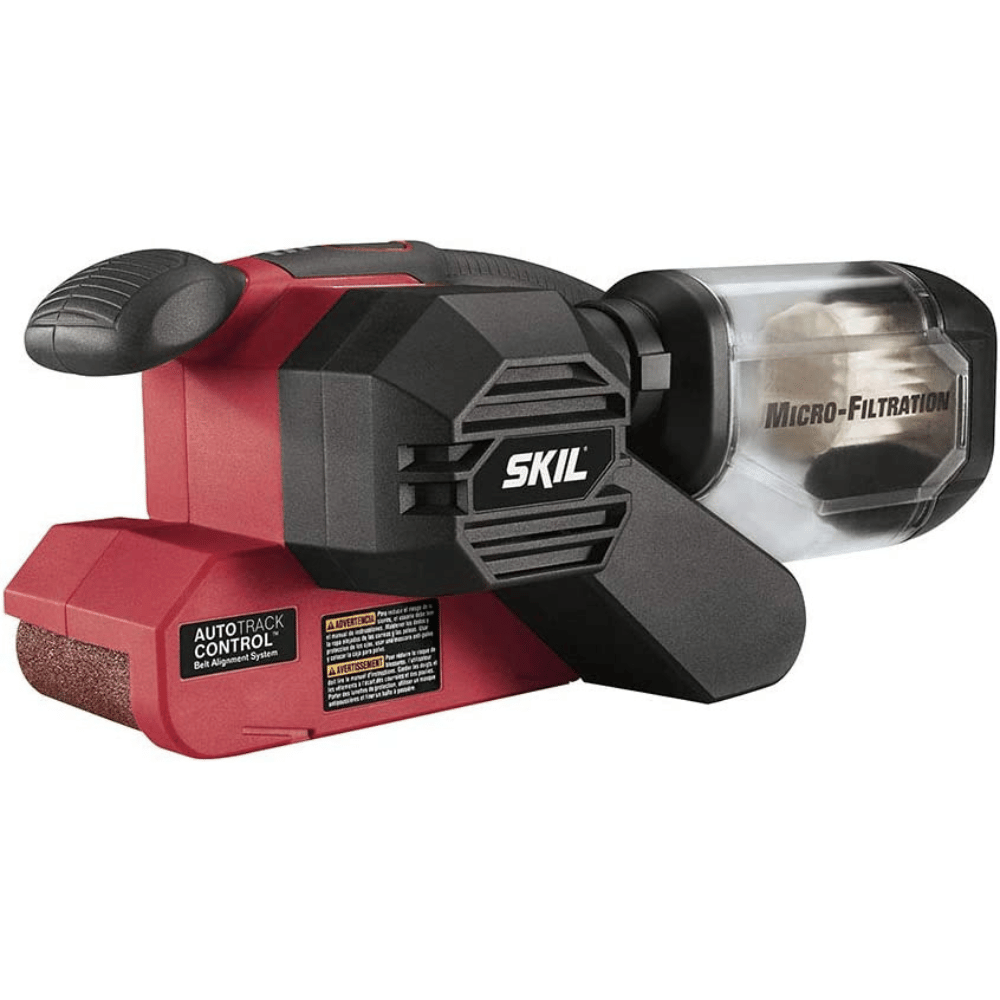
Key Features
- 6 amp motor
- 3″ x 18″ belt
- Auto track belt alignment
Why It’s a Great Choice
Are your sanding projects feeling a bit out of control?
With this Skil Corded Belt Sander, you can kiss those back-breaking days of sanding goodbye!
You won’t believe all the features packed into this sanding hero: it has a pressure control indicator that illuminates when you apply just the right amount of pressure—now you can get professional results without breaking a sweat.
Plus its patented auto-tracking belt system ensures your belt stays centered and the flush edge sanding design lets you sand right up to the edge.
And with single lever belt changes and an on/off trigger with a lock-on button, this sander is anything but a one-trick pony!
But don’t worry about breathing in clouds of sawdust—this sander also comes equipped with micro-filtration which captures and contains fine dust particles from your project.
So go ahead and take back control of your projects like you were meant to—with the trusty Skil Corded Belt Sander by your side!
Buyer’s Guide to the Best Belt Sanders
Shopping for a belt sander can be confusing because there are so many different models and features to choose from.
It’s hard to know which belt sander is the best for your needs.
Do you need a variable-speed model or a single-speed model?
What about the size of the belt?
We’ve created this FAQs section to help make shopping for a belt sander easier.
We’ve answered some of the most commonly asked questions, so you can find the perfect belt sander for your needs.
What is a belt sander?
A belt sander is a power tool that uses a rotating belt made of sandpaper to smooth and remove material from surfaces. Belt sanders come in various sizes and shapes, but all feature a motor that rotates the sanding belt. The sanding belt moves over two rollers, one of which is driven by the motor, while the other is free-spinning. Belt sanders are commonly used in woodworking, metalworking, and other applications where a large amount of material needs to be removed quickly and efficiently.
What is a belt sander used for?
A belt sander is used for smoothing and removing material from various surfaces, such as wood, metal, plastic, and others. It is commonly used in woodworking to shape and finish large wooden surfaces, such as tabletops, doors, and floors. A belt sander can also be used in metalworking to smooth out rough edges, remove rust, or prepare metal surfaces for painting or welding. They are also used for sanding and finishing surfaces in auto body repair and other industrial applications. In general, a belt sander is a versatile tool that can help to speed up the process of material removal and surface preparation in a wide range of applications.
What are the different types of belt sanders?
There are several different types of belt sanders, each with its unique features and intended uses. Here are some of the most common types:
- Handheld Belt Sander: These are the most common type of belt sander and are designed to be held in one hand. They are lightweight and portable, making them ideal for use on smaller projects or in tight spaces.
- Stationary Belt Sanders: These are larger and more powerful than handheld sanders, and they are designed to be used in a stationary position. They are commonly used in woodworking shops and can handle larger projects more efficiently.
- Benchtop Belt Sanders: These are a type of stationary sander that is mounted on a workbench or table. They are larger than handheld sanders but smaller than floor models, and they are suitable for medium-sized projects.
- Floor Belt Sanders: These are the largest and most powerful type of belt sander, and they are designed to be used on large projects, such as hardwood floors or decking. They are heavy and can be difficult to maneuver, but they are the most efficient type of belt sander for sanding large surfaces.
- Wide Belt Sander: These are specialized sanders that are designed for sanding wide surfaces, such as tabletops or doors. They are equipped with a wider sanding belt than other types of sanders, and they are capable of removing material quickly and efficiently.
- File Belt Sander: Also known as a mini belt sander, these are small and compact sanders that are designed for tight spaces or curved surfaces. They are commonly used in auto body repair and metalworking.
- Portable Belt Sander: These are cordless belt sanders that are ideal for outdoor or on-the-go projects. They are lightweight and easy to use but are not as powerful as corded models.
How do I use a belt sander?
Here are the general steps for using a belt sander:
- Prepare the workpiece: Make sure the surface you want to sand is clean and free of any dust, debris, or nails that could damage the belt or cause the sander to kick back.
- Adjust the belt tension: Most handheld belt sanders have a tension adjustment knob or lever that allows you to adjust the tension of the sanding belt. Make sure the belt is tight enough to prevent slipping but not too tight that it puts unnecessary strain on the motor.
- Turn on the sander: If your sander has variable speed control, start on a low-speed setting and gradually increase the speed as you become more comfortable with the tool.
- Hold the sander with both hands: To get the best control and avoid fatigue, grip the sander with both hands, with one hand on the trigger and the other on the front or rear handle.
- Move the sander along the workpiece: Hold the sander firmly and move it in a back-and-forth motion along the grain of the wood or in the direction of the metal to be sanded. Apply even pressure on the sander, but avoid pressing down too hard, as this can damage the workpiece.
- Check the progress: Stop sanding periodically to check your progress and make sure you are not removing too much material. Use a sanding block to finish up any areas that cannot be reached with the belt sander.
- Turn off the sander: When you are finished sanding, turn off the sander and wait for the sanding belt to come to a complete stop before setting it down.
- Clean the sander: Use a soft brush or cloth to clean the sander and remove any sawdust or debris from the belt and sander body.
Always follow the manufacturer’s instructions and take the necessary safety precautions when using a belt sander.
What are the benefits of using a belt sander?
There are several benefits to using a belt sander, including:
- Speed: A belt sander is designed to remove material quickly and efficiently, making them ideal for large projects or when time is of the essence.
- Efficiency: With a powerful motor and wide sanding belt, a belt sander can quickly smooth rough or uneven surfaces, saving time and effort compared to using traditional sandpaper.
- Versatility: A belt sander can be used on a wide range of materials, including wood, metal, plastics, and more, making them versatile tools for various applications.
- Precision: A belt sander can help achieve a smooth and even surface, which is essential for certain woodworking and metalworking applications.
- Control: A belt sander allow for precise control over the sanding process, enabling users to adjust the speed and pressure to achieve the desired results.
- Accessibility: A belt sander can reach tight spaces and angles that are difficult to access with other sanding tools.
- Consistency: A belt sander can produce consistent results, especially when used with the same grit of sandpaper throughout the project.
Overall, belt sanders are a powerful and versatile tool that can help make sanding and finishing projects quicker and easier.
What materials can be sanded with a belt sander?
Belt sanders can be used on a variety of materials, including:
- Wood: A belt sander is commonly used for sanding wooden surfaces, such as furniture, flooring, or cabinetry.
- Metal: A belt sander can be used for smoothing or shaping metal surfaces, such as sheet metal or metal pipes.
- Plastic: A belt sander can be used for smoothing or shaping plastic materials, such as PVC piping or plastic parts.
- Paint: A belt sander can be used for removing paint or other coatings from surfaces, such as walls or furniture.
- Veneer: A belt sander can be used for smoothing and shaping veneer surfaces, such as for furniture or cabinetry.
- Leather: A belt sander can be used for shaping and smoothing leather for various applications, such as for belts or bags.
- Fiberglass: A belt sander can be used for smoothing or shaping fiberglass materials, such as for boats or automotive parts.
Overall, belt sanders can be used on a wide range of materials, but it’s important to use the appropriate sanding belt and grit for each specific material to avoid damaging the surface.
What is the difference between a belt sander and an orbital sander?
The main difference between a belt sander and an orbital or disc sander is the type of motion they use to sand surfaces.
Belt sanders use a continuous loop of sandpaper or sanding belt that moves in a linear motion perpendicular to the work surface. This motion allows belt sanders to remove material quickly and efficiently, making them ideal for larger projects or for removing a lot of material quickly.
Orbital or disc sanders, on the other hand, use a circular motion to sand surfaces. This motion creates a more random pattern and is ideal for smoothing or finishing surfaces. Orbital sanders are generally used for smaller projects or for finishing work.
In addition to their motion, there are other differences between belt sanders and orbital sanders. Belt sanders are typically larger and more powerful than orbital sanders, and they are better suited for heavy-duty sanding tasks. They also tend to be louder and create more dust than orbital sanders.
Orbital sanders are generally lighter and more maneuverable than belt sanders, making them easier to use for longer periods. They also tend to produce less dust and are better suited for finishing work or for sanding smaller, more intricate surfaces.
Overall, the choice between a belt sander and an orbital or disc sander will depend on the type of project you are working on and the specific sanding needs of that project.
Can a belt sander be used for finishing work?
While belt sanders are typically used for heavier material removal and rough sanding, they can also be used for finishing work, depending on the project and the specific sanding needs.
For finishing work, it’s important to use finer grit sandpaper on the belt sander and to use a light touch to avoid removing too much material. Belt sanders can be useful for finishing large, flat surfaces such as tabletops, doors, or panels, but they may not be as effective for smaller or more intricate surfaces.
Additionally, it’s important to note that belt sanders tend to be more aggressive than other sanders, so it’s important to take extra care and avoid applying too much pressure when using a belt sander for finishing work. It’s also a good idea to do a test sanding on a small, inconspicuous area before proceeding with the entire surface to ensure that the finish is smooth and even.
Overall, while belt sanders may not be the ideal choice for all finishing work, they can be a useful tool in some cases, particularly for larger surfaces that require more material removal before finishing.
How do I clean and maintain my belt sander?
Proper maintenance and cleaning of your belt sander is important for ensuring its longevity and efficient performance. Here are some steps you can take to clean and maintain your belt sander:
- Turn off and unplug the sander: Before you begin cleaning your belt sander, make sure it’s turned off and unplugged to avoid any accidents.
- Remove the sanding belt: Remove the sanding belt from the sander and use a brush to remove any dust or debris that has accumulated on the belt or the sander’s surface.
- Clean the dust collection bag or system: If your belt sander has a dust bag or dust collection system, empty it and clean it thoroughly to ensure it’s working effectively.
- Lubricate the sander’s moving parts: Use a small amount of lubricant, such as WD-40 or a silicone-based lubricant, to lubricate the sander’s moving parts, including the motor and the rollers.
- Inspect the sanding belt: Inspect the sanding belt for any signs of wear or damage, such as tears or fraying. If the sanding belt is worn or damaged, replace it with a new one.
- Check the tension on the sanding belt: Make sure the sanding belt is tensioned correctly. If it’s too loose or too tight, adjust it accordingly to ensure smooth and efficient sanding.
- Store the sander properly: When you’re not using your belt sander, store it in a dry, cool place, and cover it to protect it from dust and debris.
By following these steps regularly, you can help ensure that your belt sander remains in good working condition for years to come.
What features should I look for when buying a belt sander?
When looking to buy a belt sander, here are some important features to consider:
- Size and weight: Consider the size and weight of the sander to ensure it’s comfortable for you to use, especially if you’re planning on using it for extended periods.
- Motor power: Look for a belt sander with a motor that’s powerful enough to handle the tasks you have in mind. Generally, the higher the motor power, the more effective the sander will be at removing material quickly.
- Variable speed control: Consider a belt sander that has variable speed control, allowing you to adjust the speed of the belt to suit the specific task at hand. This is particularly important for more delicate work, where you need to avoid damaging the surface.
- Dust collection: Consider a belt sander with a good dust collection system to keep your work area clean and reduce the amount of dust you’re exposed to.
- Belt size and type: The size and type of the sanding belt can affect the sander’s performance. Consider the size and type of sanding belts you’ll need for the projects you have in mind, and make sure the sander can accommodate them.
- Comfortable handle and grip: Look for a belt sander with a comfortable handle and grip that will allow you to use the tool for long periods without causing fatigue.
- Belt tracking: Ensure the belt sander has a belt tracking mechanism that will help keep the sanding belt aligned and running smoothly.
By considering these important features, you can choose a belt sander that will suit your specific needs and provide efficient and effective sanding performance.
Choosing the Best Belt Sander for You
Thanks to all the research we did, you’re now armed with the information you need to make an informed decision.
Do yourself a favor, and click on one of the great belt sander options we listed.
With a DIY project like yours there are no timeouts or instant replays, so let’s just say failure is not an option; you’re going to want to get it right the first time.
To that end, check the prices on Amazon now and invest in equipment to help ensure your project is a success and your neighbors don’t think you’d be better off joining their knitting clubs.
And no matter what you decide, let us know how it turns out!
Happy belt sanding everyone!