Best Angle Grinder to Get Back on Your Grind

Have you ever been in the middle of a DIY project and needed to grind something down or clean up an edge?
If so, then you know the importance of having a trusty angle grinder handy – it’s about as essential for DIY jobs as a hammer and saw!
Whether you’re just testing out your skills for the first time or have been grinding away for years, choosing the best angle grinder can make all the difference.
So let’s take a look at what makes a good angle grinder great—and find out exactly why these power tools are an essential addition to any workbench!
How We Choose the Best Angle Grinders
Are you tired of wasting time trying to sort through the hundreds of angle grinder options on Amazon?
No matter what features or specs you look for, it can be a huge challenge to find the right one.
Finding the right angle grinder is like finding a needle in a haystack – it’s nearly impossible and almost always ends up taking too much time, effort, and money.
Look no further than our curated collection of angle grinders, where we read through thousands of reviews to pick the best ones for you!
With our selection, you’ll get the perfect angle grinder for your job in no time.
Best Large Diameter Angle Grinder
DEWALT 7-Inch Angle Grinder Tool Kit (DW840K)
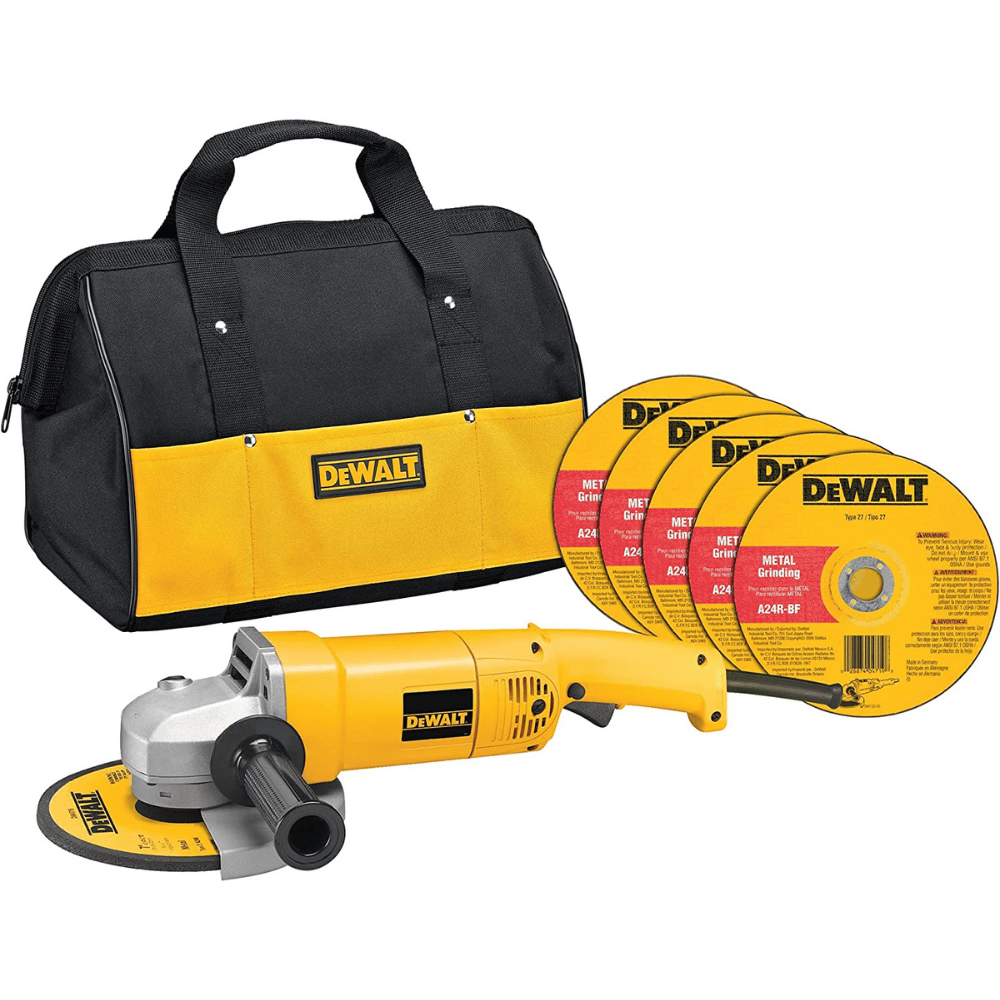
Key Features
- 13 Amp motor spins up to 8,000 RPM
- Compatible with 7-inch discs and accessories
- Weighs only 8 lbs
Why It’s a Great Choice
If you’re looking for a tool that can handle 7-inch grinding applications like a boss, then look no further than this DEWALT Angle Grinder!
This powerful 13.0 Amp AC/DC grinder boasts an impressive 8,000 rpm motor that provides all the grunt work with none of the fuss.
The adjustable guard directs sparks away from your workspace, meaning you can stay focused on your DIY project!
With its rear handle design for greater comfort and control, this metal grinder also allows for single-wrench bit changes thanks to its convenient spindle lock button.
What’s more, it offers extended motor life due to its sealed ball and roller bearings, and its external brush caps make servicing a breeze.
Get the job done quickly and easily with this trusty angle grinder from DEWALT!
Best Pneumatic Die Grinder
JET JAT-403 Pneumatic Right-Angle Die Grinder (505403)
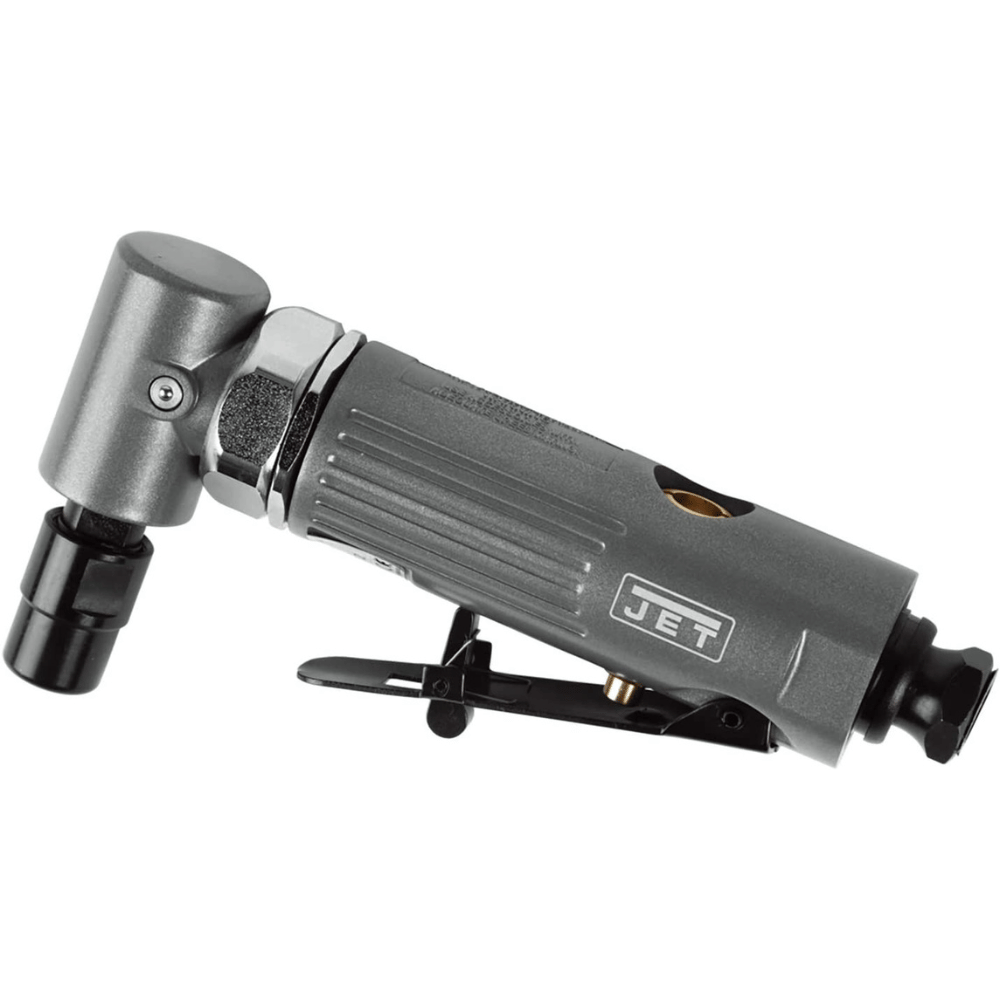
Key Features
- Spins at up to 22,000 RPM
- 1/4-inch anvil
- Built-in air regulator
Why It’s a Great Choice
The JET JAT-403 Pneumatic Right-Angle Die Grinder is the perfect combination of precision and power!
Don’t be fooled by its small size – this powerful grinder can roar up to a whopping 22,000 RPM.
Need even more control?
The built-in air regulator will give you all the precision you need.
Plus, the right-angle head design makes it ideal for reaching those tight or angled grinding areas so you can get your project done right.
Not to mention – it’s fancy as heck too!
JET has incorporated a special safety throttle lock to help prevent accidental engagement, that way you don’t have to worry about snafus while using this bad boy.
And with its sealed ball bearing design, this small angle grinder keeps out any contaminants and makes sure your machine runs smoothly for years on end.
Whether you’re a professional looking for the cream of the crop or a DIYer ready to take on any challenge, become a power user with the JET JAT–403 Pneumatic Right-Angle Die Grinder!
Best Angle Grinder on a Budget
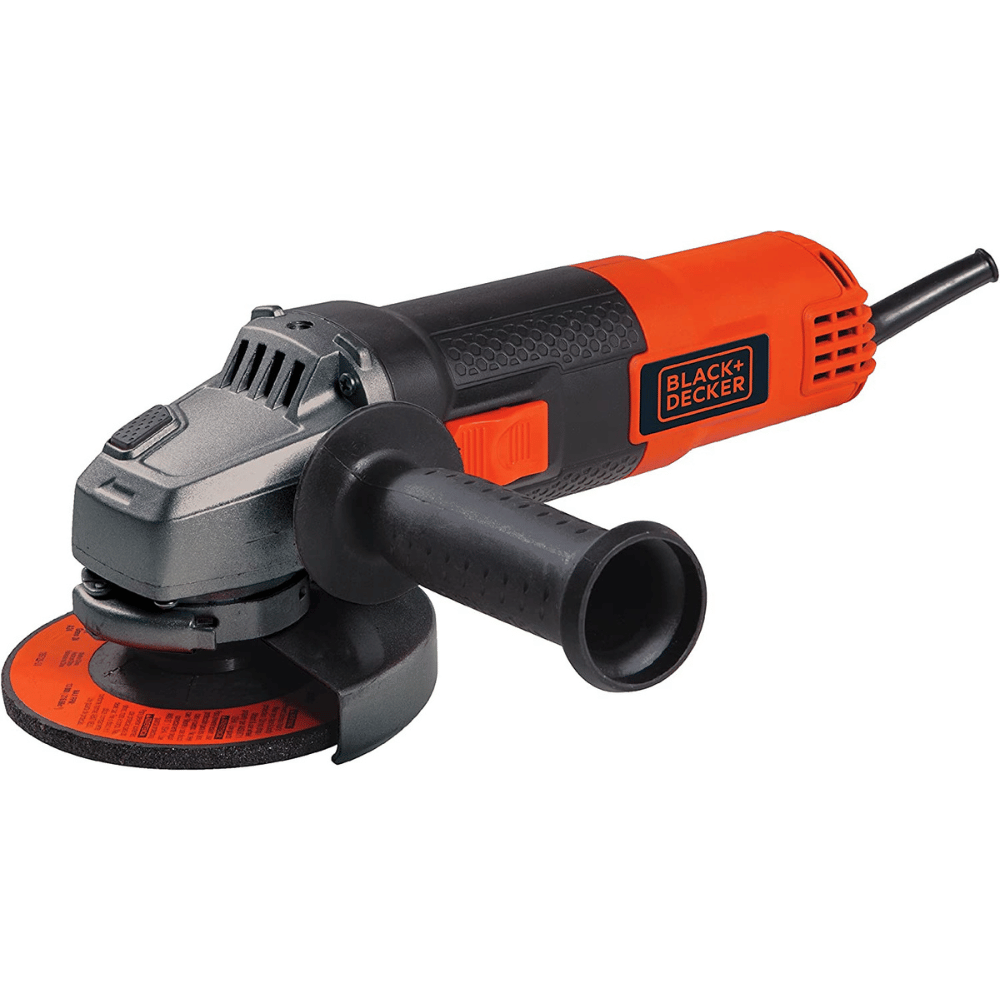
BLACK+DECKER 4-1/2-Inch Angle Grinder (BDEG400)
Key Features
- 6 amp motor spins to 10,000 RPM
- Uses 4-1/2″ grinding discs
- 3-position side handle
Why It’s a Great Choice
The BLACK+DECKER Angle Grinder is your DIY answer to a long day of grinding and finishing.
With its 3-position side handle, this grinder ensures you’ll finish fast with incredible comfort and control.
Its durable metal gear case is designed for strength and longevity, while a narrow body gives you a comfortable grip when you’re hard at work.
Plus, it’s equipped with an easy-to-use one-touch release switch that powers it down quickly, for convenience when the job is done.
If you’re looking for the most reliable tools on the market, there’s no need to look beyond BLACK+DECKER.
This Angle Grinder is just what the expert (or novice) DIYer needs to get through those tough tasks!
So don’t delay – pick up yours today!
Best Cordless Angle Grinder
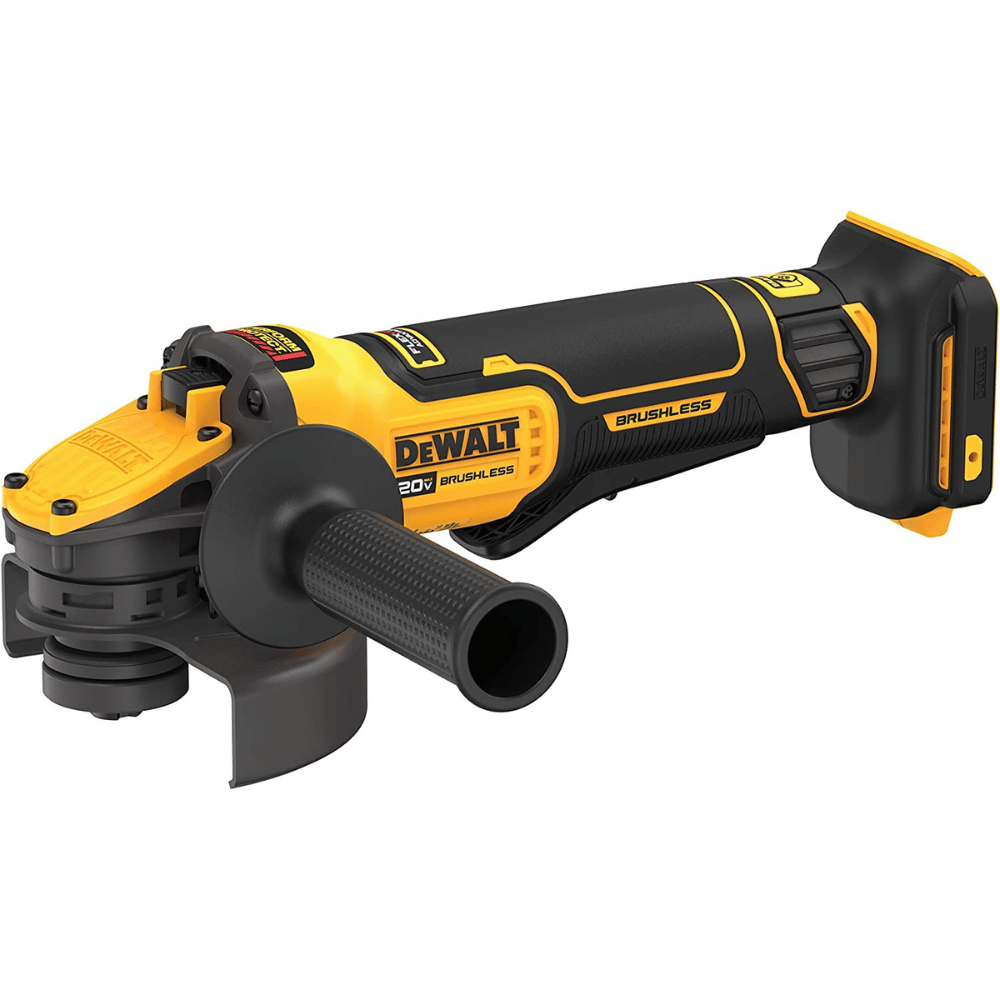
DEWALT FLEXVOLT ADVANTAGE 20V MAX* 4-1/2 – 5-inch Angle Grinder (DCG416B)
Key Features
- Compatible with DeWALT 20V MAX or FLEXVOLT battery (not included)
- Brushless motor spins at up to 9,000 RPM
- Can use 4-1/2″ – 5″ discs
Why It’s a Great Choice
Are you ready to take your DIY projects to the next level?
The DEWALT FLEXVOLT ADVANTAGE 20V MAX* Angle Grinder packs a punch with up to 54% more power when powered by FLEXVOLT batteries!
They make sure this power is used safely though – it’s equipped with the E-CLUTCH that automatically shuts down the motor in under a tenth of a second if a pinch or stall is detected.
And, if the unexpected happens and a power outage occurs, simply cycle the trigger switch to switch it back on.
DEWALT errs on the side of caution when it comes to tool safety, which is why their KICKBACK BRAKE engages with maximum force when it detects those binds ups.
Plus, bring your tool management into the 21st century with the Tool Connect Chip and Site Manager app.
This handy piece of technology keeps tabs on your angle grinder and other connected tools from anywhere – how’s that for convenience?
With all these features, you can get professional results for any project without thinking twice about safety or security.
So grab your DEWALT FLEXVOLT ADVANTAGE 20V MAX* Angle Grinder and let’s get started!
Best Air-Powered Angle Grinder
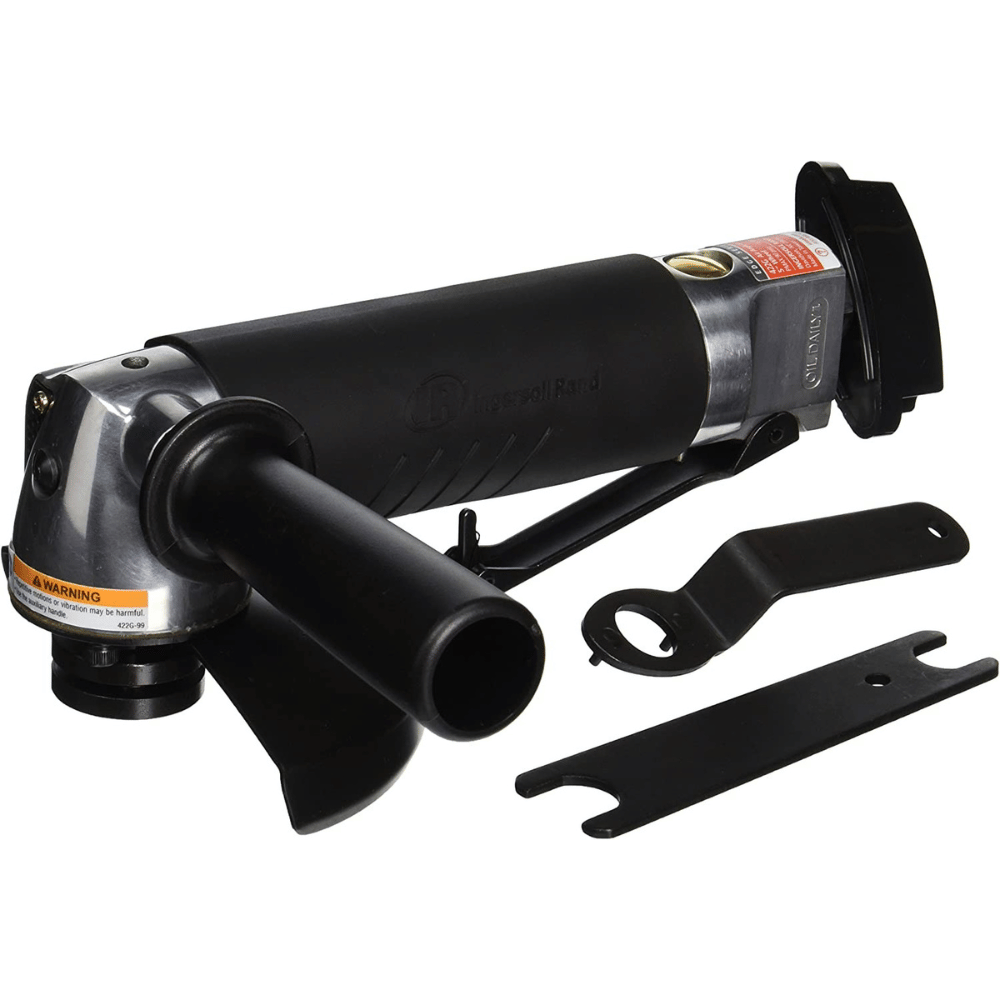
Ingersoll Rand Edge Series 5-Inch Angle Grinder (422G)
Key Features
- 1 HP motor spins to 12,000 RPM
- Accepts 5″ discs and wheels
- Weighs 4.1 lbs
Why It’s a Great Choice
Discover the ultimate power of precision with Ingersoll Rand’s Edge Series 5″ Air Angle Grinder – designed to make each job easier, quicker, and more enjoyable.
Changing the game with its unique motor controller that virtually eliminates over-speeding, plus a locking lever and tease throttle for optimal control, this variable speed angle grinder should be your go-to tool whenever you need that extra special touch.
Every component, mechanism, and function has been rigorously tested to provide long-lasting performance time and time again – so you know it’ll grind through rust removal, automotive bodywork fabrication, metal dressing, or weld prep without breaking a sweat.
With an ergonomic grip that reduces vibration while you work, this might just be the hardest worker in your toolkit!
Pick up yours today and handle all your metalworking needs like never before.
Buyer’s Guide to the Best Angle Grinders
Finding the best angle grinder to meet your needs can be tricky.
There are so many types and brands, it’s hard to know which one is right for you.
Trying out all the different grinders will take up precious time and energy – and in the end, you still might not pick the perfect one for your project.
Put an end to the grinding confusion with these FAQs!
We’ll help you sort through all the features, benefits, and costs so you can find the right angle grinder for your needs.
What are the different types of angle grinders?
There are two main types of angle grinders:
- Electric Angle Grinders: Most angle grinders are powered by electricity. They can be corded or cordless, and have a wide range of size options, including 4.5-inch, 5-inch, 6-inch, and 7-inch.
- Pneumatic Angle Grinders: These are powered by compressed air and are typically lighter and smaller than electric angle grinders. They are often used in automotive and metalworking applications where a smaller tool is needed for precision work.
What are angle grinders used for?
Angle grinders are versatile power tools that can be used for a variety of tasks, including:
- Grinding and smoothing surfaces: Angle grinders can be used to smooth rough surfaces or remove excess material from a workpiece.
- Cutting: With the right blade or disc, angle grinders can cut through metal, masonry, tile, and other materials.
- Polishing and buffing: Angle grinders can be used to polish and buff metal surfaces to a smooth finish.
- Sharpening tools: Angle grinders can be used to sharpen blades and tools, such as axes, shovels, and lawnmower blades.
- Removing rust and paint: Angle grinders with a wire brush or abrasive disc can be used to remove rust, paint, and other surface coatings.
- Mortar removal: Angle grinders with a diamond blade can be used to remove mortar from between bricks or tiles.
- Carving and shaping: Angle grinders can be used to carve and shape wood, stone, and other materials.
Overall, angle grinders are incredibly versatile tools that are useful for a wide range of applications in metalworking, construction, woodworking, and other industries.
What is the difference between an angle grinder and a cutoff tool?
Angle grinders and cutoff tools are both handheld power tools that are used to cut and grind materials, but they have some important differences:
- Blade size: Angle grinders typically have larger blades, ranging from 4.5 inches to 9 inches in diameter, while cutoff tools have smaller blades, usually 2 inches or less.
- Cutting depth: Angle grinders can cut deeper into materials than cutoff tools, making them better suited for tasks such as cutting metal pipes and rebar.
- Speed: Angle grinders operate at higher speeds than cutoff tools, allowing them to remove material more quickly.
- Precision: Cutoff tools are more precise than angle grinders and are often used for cutting small or delicate materials.
- Safety: Angle grinders can be more dangerous than cutoff tools due to their larger blades and higher speeds, so it’s important to use proper safety precautions when using them.
Overall, angle grinders and cutoff tools are both useful tools for cutting and grinding materials, but the choice between them depends on the specific task at hand.
How do I choose the right size angle grinder for my project?
Choosing the right size angle grinder for your project depends on a few factors, including the size of the material you’ll be working with and the specific task you need to perform. Here are some general guidelines:
- Blade size: The size of the blade or disc on an angle grinder will determine the depth of cut you can achieve. Smaller blades, such as 4.5-inch or 5-inch, are better for lighter tasks, while larger blades, such as 7-inch or 9-inch, are better for heavier-duty work.
- Motor power: The power of the motor on an angle grinder will affect its cutting and grinding ability. For heavy-duty tasks, you’ll want a higher-powered motor, while a lower-powered motor is sufficient for lighter tasks.
- Speed: The speed of an angle grinder is measured in revolutions per minute (RPM). Higher speeds are better for cutting and grinding harder materials, while lower speeds are better for softer materials.
- Comfort and control: Consider the weight and ergonomics of the angle grinder you’re considering. For longer projects, a lighter, more comfortable tool will be easier to use and control.
Overall, consider the specific task you need to perform and the size and type of material you’ll be working with when choosing the right size angle grinder for your project. If you’re unsure, consult the manufacturer’s recommendations or seek the advice of a professional.
What is the best way to use an angle grinder safely?
Using an angle grinder safely is crucial to avoid injury or damage to the tool or workpiece. Here are some tips to help you use an angle grinder safely:
- Wear appropriate safety gear: Always wear eye protection, gloves, and a face mask or respirator when using an angle grinder.
- Check the tool and accessories: Before using the tool, check that the disc or blade is securely attached and in good condition. Also, check that the tool’s guards are in place and functioning properly.
- Secure the workpiece: Make sure the workpiece is firmly secured before you start using the angle grinder.
- Use the correct disc or blade: Use the right disc or blade for the task at hand, and ensure it’s compatible with your tool.
- Hold the tool properly: Hold the angle grinder with both hands and keep a firm grip on the tool.
- Position the tool correctly: Position the angle grinder so that the blade or disc is perpendicular to the workpiece.
- Start slowly: Start the tool at a low speed and gradually increase the speed as needed.
- Avoid overheating: Don’t use the tool for too long without taking a break, as this can cause the tool to overheat.
- Keep the work area clean: Remove debris and other objects from the work area to avoid accidents.
- Turn off the tool properly: After using the angle grinder, turn off the tool and unplug it from the power source.
Overall, using an angle grinder safely requires caution, attention to detail, and proper technique. If you’re unsure how to use the tool safely, seek the advice of a professional or consult the manufacturer’s instructions.
What is the difference between a corded and cordless angle grinder?
The main difference between corded and cordless angle grinders is how they are powered. Corded angle grinders are powered by electricity from a power outlet, while cordless angle grinders are powered by a rechargeable battery.
Here are some other differences between the two types of angle grinders:
- Power output: Corded grinders typically have higher power output than cordless models, since they can draw more electricity from the power outlet. Cordless grinders have a limited power output based on the capacity of their battery.
- Run time: Cordless grinders are limited by the run time of their battery, which can range from 30 minutes to a few hours, depending on the model and usage. Corded grinders can be used continuously as long as they are plugged in.
- Mobility: Cordless models offer more mobility than corded models since they don’t require a power outlet. However, they can be heavier than corded models due to the battery.
- Maintenance: A cordless angle grinder requires periodic battery maintenance, including recharging and replacement of worn-out batteries. A corded angle grinder generally requires less maintenance.
- Price: Cordless angle grinders are typically more expensive than corded models, due to the added cost of the battery and charger.
Overall, the choice between corded and cordless angle grinders depends on your specific needs and preferences. If you need a tool with more power output and continuous use, a corded angle grinder may be a better choice. If you need mobility and convenience, a cordless angle grinder may be a better fit.
How do I prevent kickback when using an angle grinder?
Kickback is a dangerous and potentially deadly situation that can occur when using many angle grinders. Here are some tips to help prevent kickback:
- Use the right disc or blade: Use the correct disc or blade for the task at hand, and ensure it’s compatible with your tool.
- Position the tool correctly: Position the angle grinder so that the blade or disc is perpendicular to the workpiece.
- Secure the workpiece: Make sure the workpiece is firmly secured before you start using the angle grinder.
- Keep a firm grip on the tool: Hold the angle grinder with both hands and keep a firm grip on the tool.
- Don’t force the tool: Let the tool do the work, and don’t apply excessive pressure or force.
- Avoid binding: Don’t let the blade or disc get stuck or bound in the workpiece, as this can cause kickback.
- Watch for warning signs: If you notice the tool is vibrating excessively or making unusual noises, stop using it immediately.
- Use a lower speed: Use a lower speed setting when starting the tool, and gradually increase the speed as needed.
- Use the tool in a controlled manner: Avoid sudden or jerky movements when using the tool, and keep the tool under control at all times.
Overall, preventing kickback when using an angle grinder requires caution, attention to detail, and proper technique. If you’re unsure how to use the tool safely, seek the advice of a professional or consult the manufacturer’s instructions.
What is the difference between a grinding wheel and a flap disc?
A grinding wheel and a flap disc are two different types of abrasive tools used for grinding, sanding, and polishing. Here are some of the differences between the two:
- Material removal: A grinding wheel is designed for heavy material removal, while a flap disc is designed for lighter material removal and finishing.
- Shape: Grinding wheels are flat, while flap discs have a slight curvature to them.
- Durability: Grinding wheels are typically more durable than flap discs and can last longer.
- Versatility: A flap disc is more versatile than a grinding wheel and can be used for a wider variety of tasks, such as grinding, sanding, and polishing.
- Finish quality: Flap discs generally provide a smoother finish than grinding wheels, which can leave more visible grinding marks.
- Heat generation: Flap discs generate less heat than grinding wheels, making them a better choice for use on heat-sensitive materials.
- Price: Flap discs are generally more expensive than grinding wheels, due to their versatility and greater surface area.
Overall, the choice between a grinding wheel and a flap disc depends on the specific task you need to perform. Grinding wheels are best suited for heavy material removal, while flap discs are better for lighter material removal and finishing.
Are the sparks from an angle grinder dangerous?
The sparks produced by an angle grinder are not inherently dangerous, but they can become a hazard if they come into contact with flammable materials or ignite combustible materials. Here are some safety tips to help minimize the risk of sparks causing harm:
- Work in a safe area: Always work in a safe and well-ventilated area, away from flammable materials such as wood shavings, sawdust, and gasoline.
- Wear protective gear: Always wear appropriate personal protective equipment, such as safety goggles, a face shield, gloves, and long-sleeved clothing, to protect yourself from sparks and debris.
- Use the right tool and accessories: Use the right type of angle grinder and the appropriate accessories for the job.
- Keep the work area clean: Keep the work area clean and free of debris to minimize the risk of sparks coming into contact with combustible materials.
- Use a fire extinguisher: Have a fire extinguisher readily available in case of an emergency.
- Avoid grinding magnesium: Avoid grinding materials that are highly flammable, such as magnesium, as they can create sparks that are difficult to control.
Overall, the sparks produced by an angle grinder are not inherently dangerous, but it’s important to take precautions to minimize the risk of sparks causing harm. Always follow the manufacturer’s instructions and use common sense when working with power tools.
What are some common problems I might encounter when using an angle grinder?
Here are some common problems that you might encounter when using an angle grinder:
- Overheating: Angle grinders can overheat, which can cause the tool to shut off or become damaged. To avoid overheating, allow the tool to cool down between uses, and avoid using it for long periods.
- Dust and debris: Angle grinders produce a lot of dust and debris, which can be a health hazard if inhaled. To avoid this, wear a dust mask and work in a well-ventilated area.
- Vibration: The vibration produced by angle grinders can cause hand fatigue and numbness, and may lead to long-term injury. Use the tool with both hands and take frequent breaks to avoid vibration-related injuries.
- Kickback: Angle grinders can experience kickback, which can be dangerous and cause serious injury. To avoid kickback, use the right type of disc or blade, and always secure the workpiece before grinding.
- Disc breakage: Grinding discs can break or shatter, which can be dangerous. Inspect the wheel before use and replace it if it appears damaged or worn.
- Power supply issues: Corded angle grinders can experience power supply issues, such as overheating or power surges, which can damage the tool. Use a high-quality extension cord and avoid using the tool in wet or humid conditions.
- Cordless battery life: A cordless angle grinder can have limited battery life, which can be frustrating if you need to use the tool for extended periods. Use a high-quality battery and consider carrying a spare battery with you.
Overall, by being aware of these common problems and taking appropriate precautions, you can minimize the risk of encountering issues when using an angle grinder.
Do I need a variable speed angle grinder?
Whether or not you need a variable speed angle grinder depends on the type of work you will be doing. Here are some factors to consider:
- Material: If you will be working with a variety of materials, such as metal, wood, or plastic, a variable-speed angle grinder can be beneficial. This allows you to adjust the speed of the tool to match the material you are working with, which can result in better results and less damage to the material.
- Precision: If you need to do precision work, such as grinding or polishing small surfaces, a variable-speed grinder can be useful. The ability to adjust the speed can give you greater control over the tool, resulting in a more precise finish.
- Cost: Variable-speed angle grinders are typically more expensive than single-speed models. If you don’t anticipate needing additional speed control, a single-speed model may be a better choice for you.
- Experience: If you are an experienced user of angle grinders, you may find that you don’t need a variable speed model. However, if you are new to using angle grinders, or if you will be working with unfamiliar materials, a variable speed model can help you avoid damaging the material or the tool.
In summary, variable-speed angle grinders can be beneficial if you need to work with a variety of materials, require precision work, or are new to using angle grinders. However, if you have experience with angle grinders and don’t anticipate needing additional speed control, a single-speed model may be sufficient.
Choosing the Best Angle Grinder for You
After weeks of researching all the different brands and types of angle grinders that are available, it’s time to make a decision.
With our list here, we’re sure you can find one that’s just right for you.
And when you’re ready to purchase, click the links to check prices on Amazon and order yours now–you’ll have it in no time!
So get out there and put your new angle grinder to work!
Whatever hefty task needs tackling, you can be sure your trusty sidekick will take care of it.
Get out the safety goggles, turn up the music, and say goodbye to whatever has been holding you back from truly crushing your projects.
So go forth and conquer with your very own angle grinder!
It may just be the single most important power tool in your arsenal.