Best Hand Planer: Master the Details

Are you looking for a hand planer to add a precise finish to your woodworking projects?
As a master craftsperson, you know that it all starts with high-performance tools.
If you want to produce professional results every time, then finding the right planer can make all the difference.
Besides, who wants choppy edges and rough surfaces when they could be deriving smooth satisfaction from their work?
With today’s range of available hand planers, it can seem like an overwhelming task when trying to choose just one.
But don’t worry – here at TopTierTool we have done the research so that all our readers can get up close and personal with some of the top tips for selecting a grade even higher than “just fine”!
How We Choose the Best Hand Planers
Buying any power tools, let alone an electric hand planer, can be a daunting task.
With so many models to choose from, how do you know which one is the best for you?
It can be hard to figure out which features are important and which ones you don’t need.
And with such a wide price range, it’s hard to know if you’re getting a good deal or not.
We’ve done the hard work for you.
We read through thousands of reviews on Amazon and compared the features and specs of dozens of models to narrow it down to these choices for the best electric hand planers on the market.
Whether you’re looking for a basic model or something more advanced, we’ve got you covered.
Overall Winner – Best Electric Planer
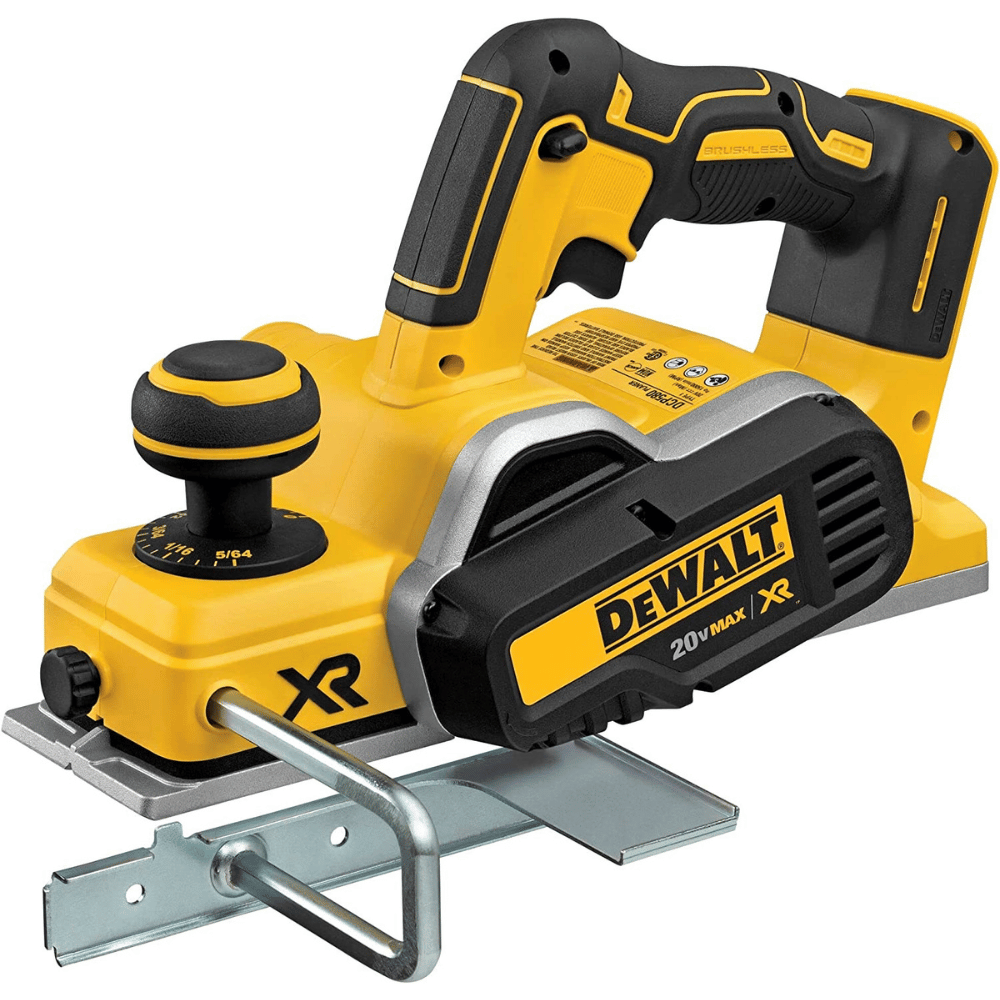
DEWALT 20V MAX Planer (DCP580B)
Key Features
- 20V Brushless Motor
- 30,000 Cuts per Minute
- 5/64″ maximum cutting depth
Why It’s a Great Choice
Woodworkers, prepare to be amazed by the DEWALT 20V MAX Planer.
This powerful planer is packed with features making mundane tasks easier than ever.
Its brushless motor provides superior power that allows for over 30,000 cuts per minute, giving you a fast removal rate and a very smooth surface on any project.
With its calibrated depth adjustment knob set to 1/256-inch increments and a maximum depth of cut at 5/64-inch, you can have precise cuts every time.
And don’t worry about your work surface; the integrated kickstand lets your rest the planer without fear of gouging or scratching the material.
And if you need to do some chamfering – fear not – the precision machined groove in the front shoe ensures perfect edge chamfering too!
So why wait? Get yourself the DEWALT 20V MAX Planer where accuracy meets power in one sleek machine.
Best Planer for Middle Starts
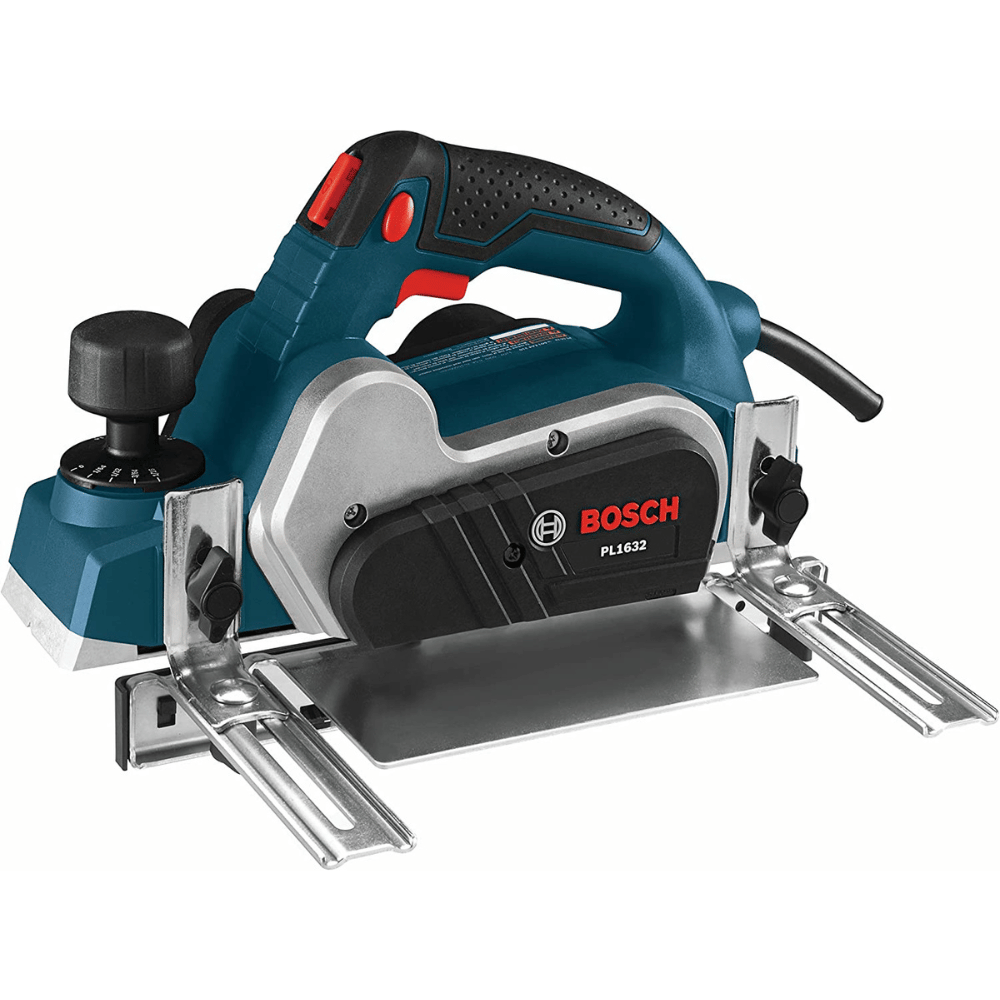
Bosch 6.5 Amp 3-1/4″ Hand Planer (PL1632)
Key Features
- 6.5 Amp motor
- 16,500 RPM
- Dual-mount guide fence
Why It’s a Great Choice
Woodworkers, you deserve the very best in power tools.
That’s why Bosch presents the 6.5 Amp 3-1/4″ Hand Planer.
This is a planer that features a powerful 6.5 Amp rating and 16,500 RPM speed for fast material removal and a smooth finish in both soft and hardwoods.
Additionally, the tool has been designed with a spring-loaded stand which elevates the tool to protect the blade as well as provide ample resting space while in use.
Moreover, dual-mount guide fences with protective shields enable steady planing of door edges, complete with plastic overshoe to prevent the marring of door faces – perfect for those meticulous finishing touches!
Finally, it comes with separately etched inch and metric depth scales making it easy to adjust planing depth quickly.
All this power is comfortably directed with an optimally angled handle for forward motion coupled with a soft grip for comfort during use – check off all your woodworking tasks without breaking a sweat!
Upgrade your workspace today with Bosch’s 6.5 Amp 3-1/4″ Hand Planer – the perfect companion to make all your great projects even better!
Best Planer on a Budget
PORTER-CABLE Hand Planer, 6-Amp, 5/64-Inch (PC60THP)

Key Features
- 6 Amp motor
- 16,500 RPM
- 5/64″ maximum cutting depth
Why It’s a Great Choice
Strong and reliable craftsmanship starts with the right tools, and that’s exactly what you’ll get with the PORTER-CABLE Hand Planer.
This planer can tackle any woodworking challenge, featuring a heavy-duty 6 AMP motor to smooth-cut even the hardest materials.
It also provides 16,500 RPM for unparalleled material removal, making it perfect for intricate tasks requiring precision.
With its overmold depth knob featuring 10 positive steps and three chamfering grooves for edge chamfering capacities, you’ll be able to smoothly control this tool at every stage of your project.
And it’s 11.5” cast aluminum shoe will provide added control and better-finished quality for all your projects.
Crafted with the highest standards in mind, the PORTER-CABLE Hand Planer is an essential piece of equipment in any professional or serious hobbyist workshop.
Get reliability and precision on every project with PORTER-CABLE’s Hand Planer!
Best Ergonomics in a Hand Planer
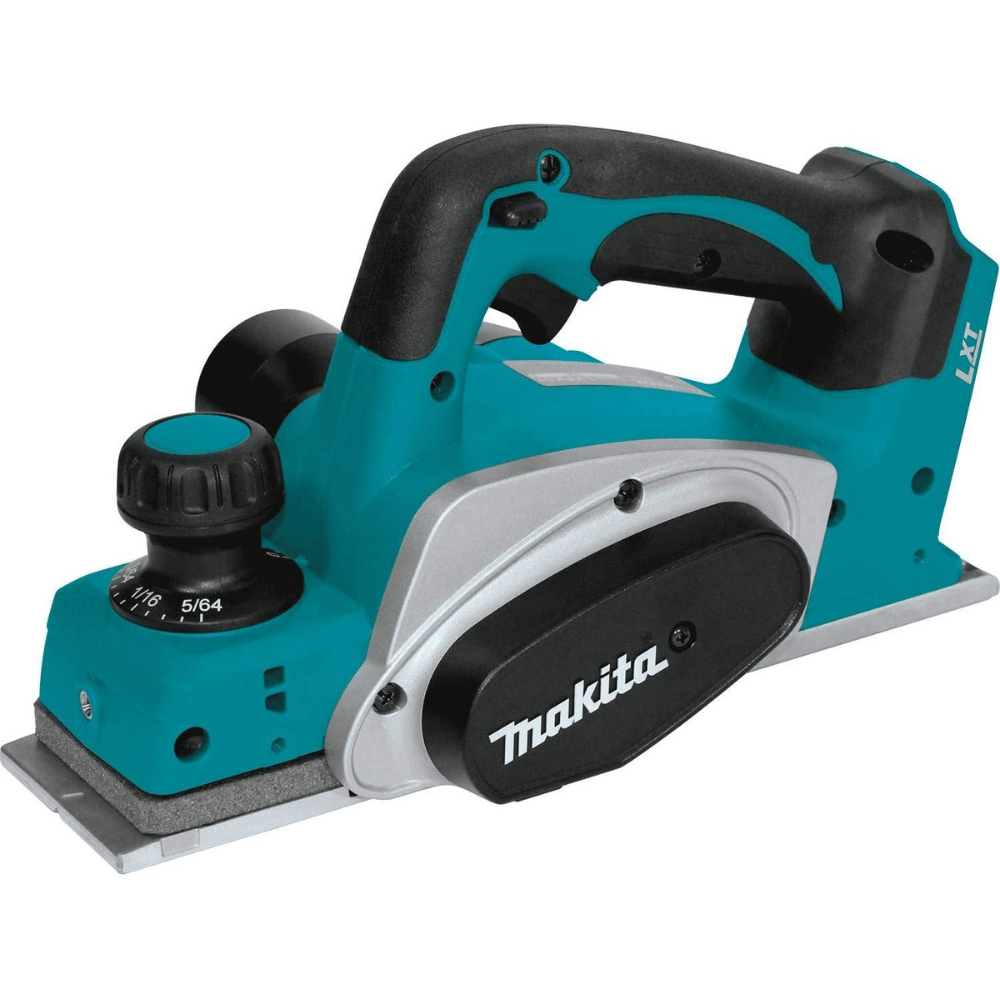
Makita 18V LXT Lithium-Ion Cordless 3-1/4-Inch Planer (XPK01Z)
Key Features
- 18V cordless, bare tool only
- 14,000 RPM
- 5/64″ maximum cutting depth
Why It’s a Great Choice
Introducing the Makita 18V LXT Lithium-Ion Cordless 3-1/4-Inch Planer, an invaluable tool for any professional woodworker looking for a versatile, reliable, and powerful planer.
This tool features a 2-blade cutter head with double-edge carbide blades for amazing performance and a smooth finish, allowing you to plane up to 3-1/4” wide and 5/64” deep in a single pass.
Packed into its compact 7.4 lb body is a 14,000 RPM motor engineered to deliver fast stock removal while giving you superior levels of control over your project.
With its ergonomically centered balanced design, along with a rubberized soft grip on both the front and rear handles, using this planer is a comfortable and enjoyable experience that can be tailored to meet any level of precision needed.
The Makita 18V LXT Lithium-Ion Cordless 3-1/4-Inch Planer offers top-grade results without any of the hassles that come with working with traditional bulky planers.
Get yours today and experience the difference for yourself!
Best Planer for a Clean Workspace
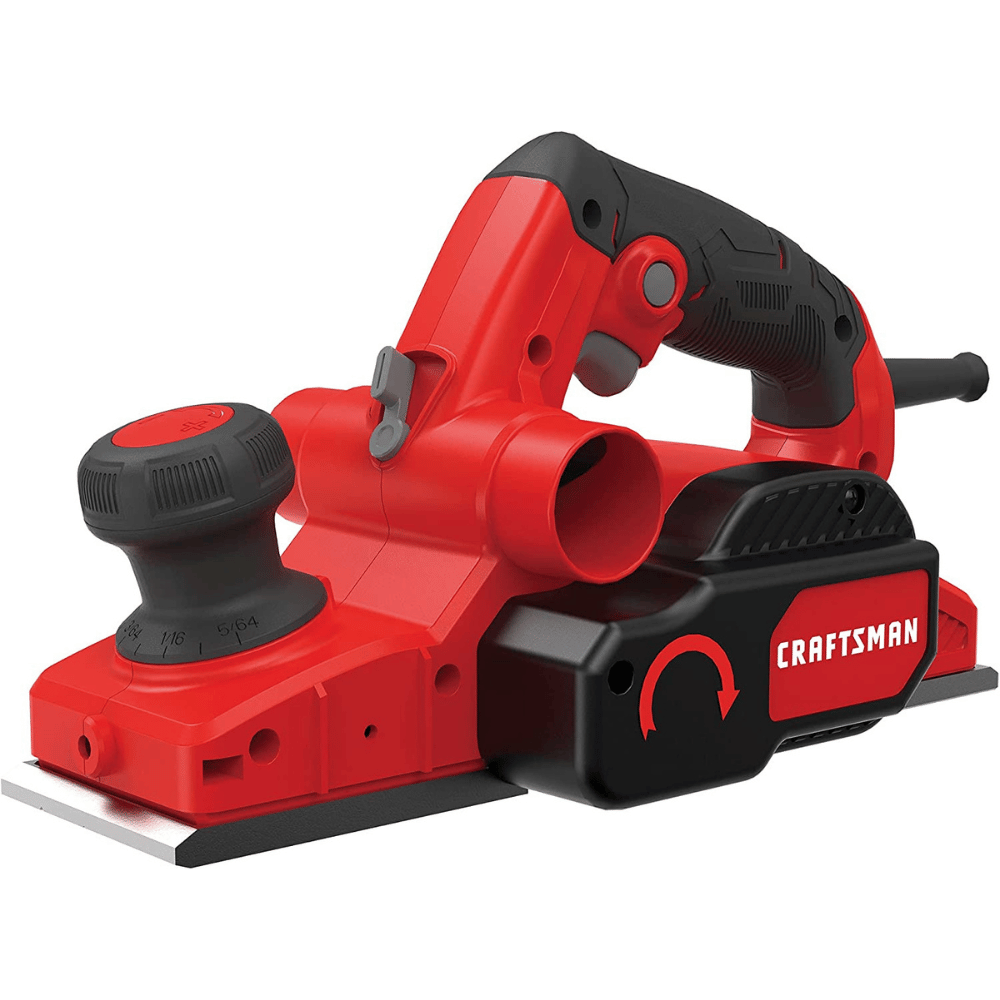
CRAFTSMAN 6-Amp, 5/64-Inch Hand Planer (CMEW300)
Key Features
- 6 Amp motor
- 16,500 RPM
- 5/64″ maximum cutting depth
Why It’s a Great Choice
CRAFTSMAN’s 6-Amp, 5/64-Inch Hand Planer is the perfect tool for any woodworker.
Boasting a dual-side dust extractor that allows users to maintain a cleaner workspace, the planer ensures smoother cuts and faster material removal.
And with added control and better quality finish, it’s no wonder why this planer is the ideal choice for anyone looking to get the job done right.
Craftsman has always been dedicated to providing high-quality tools that make your life easier and this planer is no exception.
Get exceptional performance and craftsmanship with CRAFTSMAN’s 6-Amp, 5/64-Inch Hand Planer.
Buyer’s Guide to the Best Electric Hand Planers
People are often overwhelmed when shopping for an electric hand planer because there are so many different models and brands available.
It can be tough to know which model is right for you, especially if you’re not familiar with the terminology that’s used to describe these tools.
We’ve put together a list of the most commonly asked questions about electric hand planers, along with answers from our team of experts.
By reading this guide, you’ll be able to narrow down your options and find the perfect tool for your needs.
What is an electric hand planer?
An electric hand planer is a power tool used in woodworking for shaping, smoothing, and removing material from wooden surfaces. It is an electric version of the traditional hand plane, and it operates by spinning a cutting blade rapidly to shave off small amounts of wood.
Electric hand planers typically consist of a motorized unit with a handle for gripping and a flat, adjustable cutting blade. The blade is mounted on a rotating drum, and it protrudes from the bottom of the planer. The cutting depth can be adjusted by moving the blade up or down, allowing the user to remove a specific amount of material from the surface.
Electric hand planers are commonly used for tasks such as trimming doors, shaping and smoothing rough lumber, and leveling uneven surfaces. They can be used on a variety of wooden surfaces, including hardwoods, softwoods, and plywood.
It is important to note that electric hand planers are powerful tools that can remove a lot of material quickly, so they should be used with caution. Users should always wear protective gear, such as safety glasses and hearing protection, and follow the manufacturer’s instructions carefully to ensure safe and effective operation.
How does an electric plane work?
An electric plane, also known as a power planer, is a woodworking tool that works by using a rapidly spinning cutting blade to remove thin layers of material from a wooden surface. Here’s how an electric planer typically works:
- Adjust the depth: The first step in using an electric planer is to adjust the blade depth. This is typically done by turning a knob or lever that controls the position of the blade relative to the base of the planer. The cutting depth determines how much material will be removed with each pass of the planer.
- Set the planer on the surface: Once the depth of cut has been set, the planer is placed on the wooden surface to be worked on. The user grips the planer by the handles on either side and guides it across the surface, keeping it level and moving it in a smooth, continuous motion.
- Power up the tool: The electric motor inside the planer is activated, causing the blade to spin rapidly. As the blade passes over the wooden surface, it shaves off a thin layer of material.
- Repeat until the desired result is achieved: The user continues to guide the planer back and forth over the surface until the desired result is achieved. Depending on the thickness of the wood and the depth of cut, multiple passes may be required to achieve the desired result.
Overall, an electric planer is a powerful tool that allows woodworkers to quickly and accurately shape, smooth and level wooden surfaces. It is important to follow the manufacturer’s instructions carefully and wear appropriate safety gear when using an electric planer.
What is the difference between bench planes and block planes?
Bench planes and block planes are both types of hand planes used in woodworking, but they have different sizes, shapes, and purposes.
A bench plane is larger and heavier than block planes and is designed for flattening and smoothing large surfaces like tabletops, doors, and panels. They typically range in length from 9 inches to 22 inches and have a blade width of 2 inches to 3 inches. Bench planes are commonly categorized by number, with the most common being the No. 4 smoothing plane, the No. 5 jack plane, and the No. 7 jointer plane.
Block planes, on the other hand, are smaller and lighter than bench planes and are designed for smaller, more intricate work. They are typically used for chamfering, trimming, and shaping small pieces of wood, as well as for removing sharp edges and smoothing end grain. Block planes are usually around 6 inches long and have a blade width of 1-3/8 inches to 2 inches. A block plane comes in several different designs, including a low-angle block plane, a standard-angle block plane, and an adjustable mouth block plane.
Overall, bench planes are designed for larger-scale work, while block planes are designed for smaller, more precise work. Both types of planes can be useful in a woodworking shop, but the choice of which one to use will depend on the specific task at hand.
How do I choose the right type of blades for my electric hand plane?
Choosing the right type of blades for your electric hand plane is important to ensure optimal performance and achieve the desired results. Here are some factors to consider when selecting blades for your electric hand plane:
- Blade type: The first thing to consider is the type of blade that is compatible with your electric hand plane. Different models of hand planes use different types of blades, so it is important to check the manufacturer’s specifications or consult the user manual to determine which blades are compatible.
- Blade size: The size of the blade is another important consideration. Blades come in various widths, typically ranging from 2-1/2 to 3-1/4 inches, and the size of the blade will determine the width of the cut.
- Blade material: Blades can be made from various materials, including high-speed steel (HSS), tungsten carbide, and diamond. HSS blades are the most common and are suitable for most woodworking applications. Tungsten carbide blades are more durable and can be used for working with hardwoods or other tough materials. Diamond blades are the most durable and are typically used for cutting abrasive materials like concrete and masonry.
- Blade quality: The quality of the blade is also important. Higher-quality blades will hold a sharper edge for longer and will produce smoother cuts with less tear-out.
- Blade angle: The angle of the blade, or the bevel angle, is another important factor to consider. Most blades have a bevel angle of 25 degrees, but some models may have a different angle. A lower bevel angle will produce a sharper edge and a smoother cut, but it may also be more prone to chipping or dulling quickly.
Overall, when selecting blades for your electric hand plane, consider the type, size, material, quality, and angle of the blade to ensure optimal performance and achieve the desired results.
What types of adjustments can I make to an electric hand plane?
Electric hand planes offer several adjustments that can be made to customize the tool to the specific job and to ensure optimal performance. Here are some of the most common adjustments that can be made:
- Depth of cut: The depth of cut refers to how much material is removed by the blade in a single pass. Most electric hand planes have a depth adjustment knob or lever that allows the user to set the depth of cut. This can be adjusted depending on the thickness of the material being worked on and the desired level of removal.
- Cutting speed: Some electric hand planes allow the user to adjust the cutting speed. This can be useful when working with different types of wood or other materials. Slower speeds are better for harder woods, while faster speeds are more effective on softer woods.
- Blade alignment: The blade should be aligned parallel to the sole of the planer. Misaligned blades can result in uneven cuts or damage to the tool. Most electric hand planes allow for the blade to be adjusted to ensure proper alignment.
- Blade sharpening: A sharp blade is essential for optimal performance. Most electric hand planes have replaceable blades, and some models allow for easy blade removal and replacement. Blades can be sharpened using a sharpening stone or other sharpening tools.
- Dust collection: Electric hand planes can create a lot of sawdust, which can be messy and make it difficult to see the work surface. Some electric hand planes come with a dust collection bag or port that can be attached to a dust collection system.
Overall, adjusting an electric hand plane can help ensure optimal performance and make the tool more effective for specific jobs. Consult the manufacturer’s instructions or user manual for specific instructions on adjusting your electric hand plane.
Does the size of an electric hand plane affect its performance?
Yes, the size of an electric hand plane can affect its performance, although it may depend on the specific task at hand. Generally, larger electric hand planes are better suited for larger jobs and can remove material more quickly, while smaller electric hand planes are better suited for smaller jobs or for more detailed work where precision is important.
The size of the electric hand plane can also affect the weight of the tool, which can impact how comfortable it is to use over an extended period. Larger electric hand planes may be heavier and more difficult to maneuver, while smaller electric hand planes may be lighter and easier to handle.
In addition to size, other factors that can affect the performance of an electric hand plane include the power of the motor, the quality of the blade, and the overall build quality of the tool. These factors can all impact how effectively and efficiently the tool can remove material and produce smooth, even cuts.
Ultimately, the size of an electric hand plane should be chosen based on the specific job or task at hand, as well as the user’s comfort level with the tool. Larger electric hand planes may be better for larger jobs or more experienced users, while smaller electric hand planes may be better for more detailed work or for users who are less experienced with the tool.
Are electric hand planers suitable for beginners?
Electric planers can be suitable for beginners, but it depends on the level of experience and comfort with power tools. If a beginner has some experience with power tools and has used hand planes before, they may find an electric hand planer to be a useful addition to their toolkit. However, if a beginner has little to no experience with power tools, they may find an electric hand planer to be intimidating and difficult to use.
One advantage of electric hand planers is that they can be easier to use than traditional hand planes because they require less physical effort to push the blade through the wood. However, electric hand planers do require some skill and technique to use effectively, and beginners should take the time to practice and become comfortable with the tool before using it on more complex projects.
Overall, if a beginner has some experience with power tools and is interested in woodworking or DIY projects, an electric hand planer can be a useful tool to add to their toolkit. However, beginners should take the time to learn how to use the tool properly and practice on simpler projects before tackling more complex jobs. Additionally, beginners should always follow the manufacturer’s instructions and safety guidelines to ensure the safe and effective use of the tool.
Is it easy to change the blades on an electric hand plane?
Changing the blades on an electric hand plane is generally a straightforward process and can be done relatively easily with the right tools and instructions. Most electric hand planes have a mechanism that allows the user to easily remove and replace the blades, usually involving the use of screws or a locking lever. Some models may require the use of a special tool or wrench to remove the blades.
Here are some general steps to change the blades on an electric hand plane:
- Turn off and unplug the electric hand plane.
- Locate the blade holding mechanism, which may be a lever or screws, and loosen it to release the blade.
- Remove the old blade and inspect it for any signs of damage or wear.
- Insert the new blade into the blade holding mechanism, making sure it is properly aligned and secured.
- Tighten the blade holding mechanism to lock the blade in place.
- Turn on the electric hand plane and adjust the depth of the cut as needed.
It’s important to note that different models of electric hand planes may have slightly different blade-changing mechanisms, so it’s always a good idea to consult the manufacturer’s instructions or user manual for specific instructions on changing the blades on your particular tool. Additionally, always take the necessary safety precautions when changing blades, including wearing gloves and eye protection to protect against accidental cuts or debris.
Are there any tips or tricks that can help me achieve better results with my electric hand planer?
Yes, several tips and tricks can help you achieve better results with your electric hand planer:
- Keep the blades sharp: Dull blades can produce uneven cuts and tear out the wood fibers. Keep the blades sharp by regularly sharpening or replacing them.
- Adjust the depth of cut: Adjust the depth of cut to match the thickness of the material you are working with. This will help you remove material evenly and prevent over-cutting.
- Use a consistent speed: Try to maintain a consistent speed when using the electric hand planer. Moving too quickly or too slowly can affect the quality of the cut.
- Follow the grain: Always work with the grain of the wood to prevent tear-out and produce a smoother finish.
- Take multiple passes: Depending on the depth of cut and the material you are working with, it may be necessary to take multiple passes to achieve the desired result. Take your time and work methodically.
- Use support: When planing thin or narrow pieces of wood, use support to prevent the wood from flexing or bending during the cut.
- Sand the surface: After planing, sand the surface with progressively finer grit sandpaper to remove any tool marks and produce a smooth finish.
- Practice on scrap material: If you are new to using an electric hand planer, practice on scrap material before working on your final project. This will help you get a feel for the tool and improve your technique.
By following these tips and practicing regularly, you can improve your results with an electric hand planer and produce high-quality, professional-looking projects.
Choosing the Best Electric Hand Planer for You
While researching a good electric hand planer was challenging, we’ve done the hard work for you and opted to feature five of the very best on the market today.
Of course, each has its unique features and benefits, so it’s important to select the one that best suits your needs.
Regardless of which one you choose, all provide reliable performance at an accurate depth rating and offer long-term durability.
Ultimately, no matter which of these five electric hand planers you decide on, know that you’re able to confidently rely on it at any level — regardless of your skill set.
Ready to make your purchase?
Click the provided links to check prices on Amazon and order yours now!