Laser Guide vs DeWalt XPS Shadow Line Guide for Miter Saw

When using a miter saw to make precision cuts, having an accurate guide system is crucial. Two popular options have become commonplace – laser guides that project a beam onto the workpiece, and shadow guides like DeWalt’s XPS system that cast a blade shadow.
This article will dive into how these guidance systems work, their advantages and drawbacks, which saw models they are compatible with, and their usefulness for different cutting scenarios. Whether you’re outfitting a new miter saw or seeking to upgrade an existing one, understanding laser and shadow guides is key to enhancing cut accuracy.
Understanding the Intricacies of Laser Guides

What Exactly is a Laser Guide?
At its core, a laser guide is an innovative tool designed to enhance the precision of cuts. By projecting a vivid laser line onto the material set for cutting, it offers users a clear visual reference. This not only ensures accurate alignment but also boosts the user’s confidence in making consistent and precise cuts.
Diving Deeper: How Does It Function?
The underpinnings of a laser guide rest on diode laser technology. This technology allows the guide to produce either a red or green beam. Red lasers are more common due to their cost-effectiveness, but green lasers are gaining popularity since they tend to be more visible to the human eye, especially in brighter conditions.
Integrating Laser Guides with Miter Saws
Miter saws, given their need for precision, have greatly benefited from the advent of laser guides. Today’s market sees a proliferation of miter saws that either come pre-equipped with integrated laser systems or are designed to be compatible with aftermarket laser guide installations. This flexibility allows both professional woodworkers and DIY enthusiasts to upgrade their existing tools or invest in new ones to ensure their cuts are both accurate and repeatable.
Breaking Down the DeWalt XPS Shadow Line Guide
What is the XPS System?
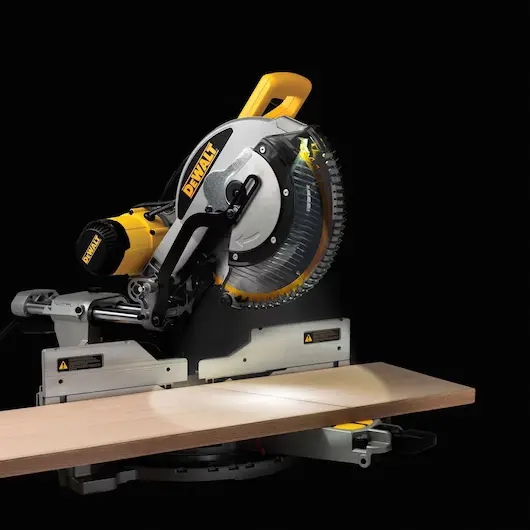
The DeWalt XPS Shadow Line Guide, often simply called the XPS system, is a unique feature designed to help with cutting precision. Instead of using a laser, like many guides do, the XPS system uses a different approach: it casts a shadow of the saw blade right onto the material you’re planning to cut.
How is this Different from Other Guides?
Most guides rely on lasers to show where a cut will be made. The XPS system, however, uses the actual shadow of the saw blade. This means the shadow’s size and shape match the blade perfectly, showing you precisely where the blade will cut through the material.
Using the XPS System in Miter Saws
If you have a DeWalt miter saw, there’s good news! Many of their miter saws come with the XPS system already built-in, the most common being the DWS780. This makes the cutting process much more straightforward since you have a clear guide every time you make a cut.
Pros and Cons – Lasers
Pros
- Visibility: Laser guides are a boon in dimly lit workspaces. They provide a clear line of light, making it easier to see the intended cut line even in low light conditions.
- Accuracy: Lasers offer the benefit of precision. With proper setup, you can adjust them to ensure the laser line aligns perfectly with the blade’s cutting path, ensuring exact cuts.
- Compatibility: One of the great things about laser guides is their versatility. Many miter saw models on the market either come with lasers or can be easily equipped with an aftermarket laser, giving users a wide range of options.
Cons
- Calibration: One downside to lasers is that they can drift from their original setting over time. This means that occasionally, they may need adjustments to ensure they align perfectly with the blade’s cut.
- Brightness Issues: In very brightly lit conditions, like direct sunlight, the visibility of a laser can decrease. This might make it harder to see the guide line on the material.
- Power Requirement: Some lasers run on separate batteries rather than the saw’s main power. This means you might find yourself changing out batteries now and then, which can be inconvenient.
Pros and Cons – Shadow Lines
Pros
- No Calibration: Unlike lasers, shadow lines don’t require constant checks and adjustments. The shadow you see is always a direct representation of the blade, making setup quick and easy.
- Power Simplicity: One of the conveniences of the shadow line system is that it uses the same power source as the saw itself. This eliminates the need for additional batteries or power sources.
- Accuracy: Shadow lines show the entire width of the blade, not just a single line. This is especially handy when considering the thickness or kerf of the blade, helping to ensure your cuts are precisely where you want them.
Cons
- Lighting Dependency: If you’re working in a very brightly lit area, the shadow might become less distinct, which can make it harder to see the exact cut line.
- Brand Limitation: Currently, the shadow line system is exclusive to DeWalt miter saws. This means if you’re loyal to another brand or have another model, you won’t have this feature available.
- Blade Dependency: The shadow is created by the blade itself. So, if there are any changes or issues with the blade, like warping or bending, it can affect the accuracy of the shadow line.
Use Cases and Suitability of Lasers
Ideal Scenarios
For those who often work in workshops with inconsistent lighting—whether it be because of changing natural light or the absence of steady electrical lighting—laser guides can be a game changer. The distinct line they project can provide clarity even in fluctuating light conditions. Additionally, for craftsmen or hobbyists who switch between various miter saws, lasers are a great choice due to their broad compatibility. This adaptability makes them a versatile tool across different saw setups.
Miter Saw Compatibility
Laser guides are widely recognized for their universal fit. Many of the leading miter saw brands offer models that come with built-in laser guides. Even if your current miter saw doesn’t have a built-in laser, there’s a good chance you can find an aftermarket laser guide to fit it. This flexibility means that whether you’re looking to buy a new saw or upgrade an old one, there’s likely a laser solution that fits your needs.
Use Cases and Suitability of LED Shadow Lines
Best Scenarios
LED Shadow Lines shine the most in workshops with consistent lighting. If you’ve set up your workspace to have even and stable lighting, this system can provide incredibly accurate cut lines without the inconsistencies that might arise from fluctuating light conditions. Furthermore, if you’re someone who swears by the quality and reliability of DeWalt tools, the shadow line system further complements that brand loyalty, offering a seamless experience that’s consistent with DeWalt’s commitment to quality.
Miter Saw Compatibility
The LED Shadow Line system, while advanced and accurate, comes with a caveat—it’s not universally available across all brands and models. Currently, this innovative system is exclusive to specific DeWalt miter saw models. So, while it might be a compelling feature, it requires a commitment to the DeWalt brand, at least in terms of your miter saw choice.
How Do Lasers Hold Up?
Lifespan
Laser guides are designed for durability. On average, they can last several years. However, the actual lifespan can vary based on how frequently the saw is used and under what conditions. If the saw is used daily for heavy-duty projects, the laser might wear out faster than if it’s used occasionally for weekend DIY projects.
Maintenance
Taking care of your laser guide will ensure it continues to function accurately and has a prolonged life. It’s essential to periodically check the laser for calibration to make sure it’s still aligned with the blade’s cutting path. Dust and debris can accumulate on the laser lens, which might diffuse the light or make the guide line less clear; hence, regular cleaning of the lens is recommended. Additionally, for lasers that rely on batteries, remembering to replace them is crucial to prevent the laser from becoming dim or unreliable.
Maintenance and Lifespan of Shadow Line Systems
Longevity
The longevity of shadow line systems largely depends on the lifespan of the saw’s LED light source. LEDs are known for their long-lasting nature, often outlasting traditional bulbs by a wide margin. In many cases, the LED can last as long as the saw itself, providing years of reliable service.
Maintenance
Shadow line systems require some maintenance to ensure their continued effectiveness. One of the primary things to monitor is the saw blade. It’s essential to keep it clean from resin, sap, and other build-ups, as these can distort the shadow and affect accuracy. Regularly inspect the blade for warping or damage, as any changes to its shape will directly impact the shadow’s representation. As for the LED light source that produces the shadow, it’s incredibly durable, but nothing lasts forever. Over time, if you notice the shadow becoming dim or inconsistent, it might be time to check and possibly replace the LED light.
Cost and Value of Lasers
Price Range
Laser guides come in a wide range of prices, which can vary significantly based on the brand, model compatibility, and features it offers. While some affordable laser guides are accessible to hobbyists and those on a budget, there are also high-end versions with advanced features and enhanced durability, which come with a higher price tag.
Value
When considering the overall value of adding a laser guide to your miter saw, it’s undeniable that it offers a substantial accuracy boost. For many users, the price of a laser guide is a small investment in comparison to the benefits of increased precision and confidence it brings. Whether you’re a professional or a DIY enthusiast, having that visual reference can significantly improve the quality of cuts, making the investment in a laser guide worthwhile.
Cost and Value of Shadow Line Systems
Price
The beauty of the shadow line system, particularly the DeWalt XPS, is that the cost is already integrated into the saw’s overall price. This means users don’t need to spend extra to enjoy this advanced feature. It comes as part of the package when you buy a compatible DeWalt miter saw.
Value
The shadow line system’s value proposition is strong, particularly for those who prioritize accuracy above all else. The system eliminates many of the variables that might cause errors in other guidance systems, offering a direct representation of where the blade will cut. For professionals and serious woodworkers, this precision is invaluable. However, to truly benefit from this system, one must be prepared to commit to the DeWalt brand. While this might be a limitation for some, the unmatched accuracy and integration of the shadow line system can justify the investment in the DeWalt ecosystem for many.
Final Thoughts
Miter saw guidance systems are extremely useful for boosting cut precision. Both laser and shadow guides have pros and cons, suiting different brands, workshops, and user needs. Laser flexibility counters the exclusivity of DeWalt’s XPS system. For any miter saw owner seeking to step up their accuracy game, understanding these options is the first cut to making an informed upgrading decision.