What Is a Miter Saw? Enhance Your Power Tool Knowledge

Do you have a passion for woodworking? Are you tired of struggling with inaccurate cuts? It’s time to liberate yourself from frustration and embrace the power of a miter saw.
This versatile tool will revolutionize your woodworking projects, allowing you to achieve precise and angled cuts effortlessly. Say goodbye to guesswork and hello to efficiency.
In this article, we will explore the ins and outs of a miter saw, empowering you to take your craftsmanship to new heights.
Key Takeaways
- A miter saw is a versatile power tool for precise angled cuts.
- It can make miters and crosscuts in wood, metal, or plastic.
- Miter saws come in various sizes and configurations to suit different cutting capacities.
- A miter saw allows for precise bevel cuts by tilting the blade.
Understanding the Basics of a Miter Saw – It’s More than Just a Circular Saw
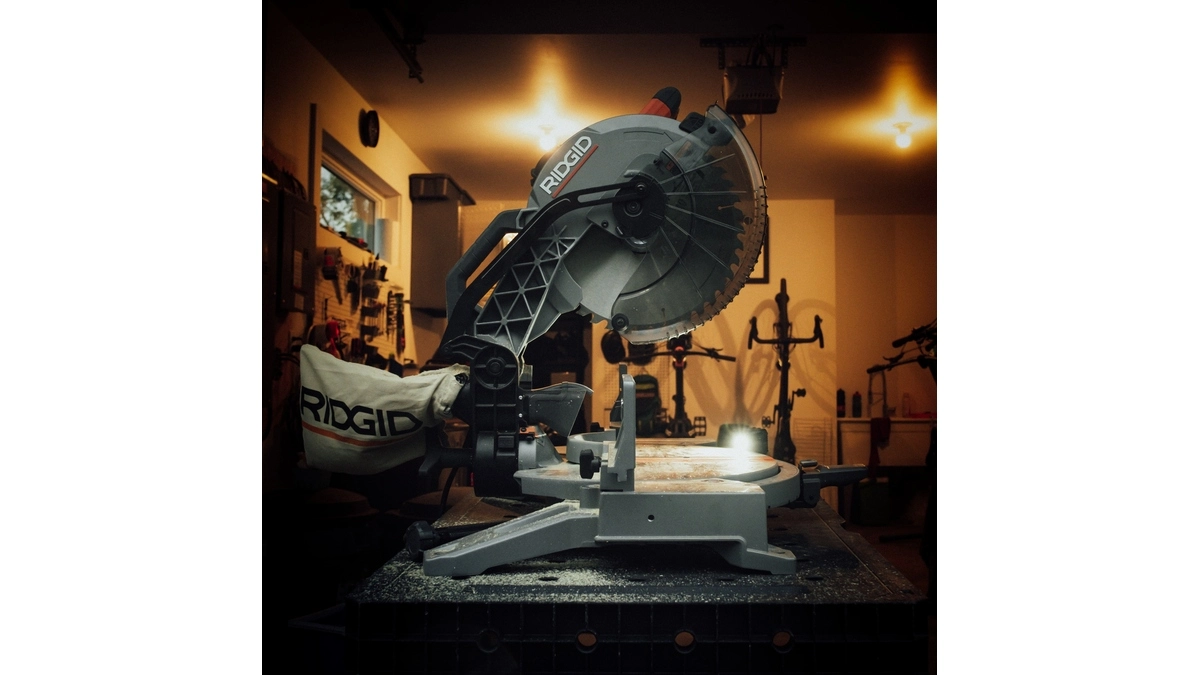
You should understand the basics of a miter saw or mitre saw before using it. This versatile power tool is essential for any DIY enthusiast or professional carpenter. A miter saw is designed to make precise angled cuts, known as miters, and crosscuts in various materials such as wood, metal, or plastic. It consists of a circular blade mounted on a pivoting arm that allows you to tilt and rotate the blade to achieve different angles.
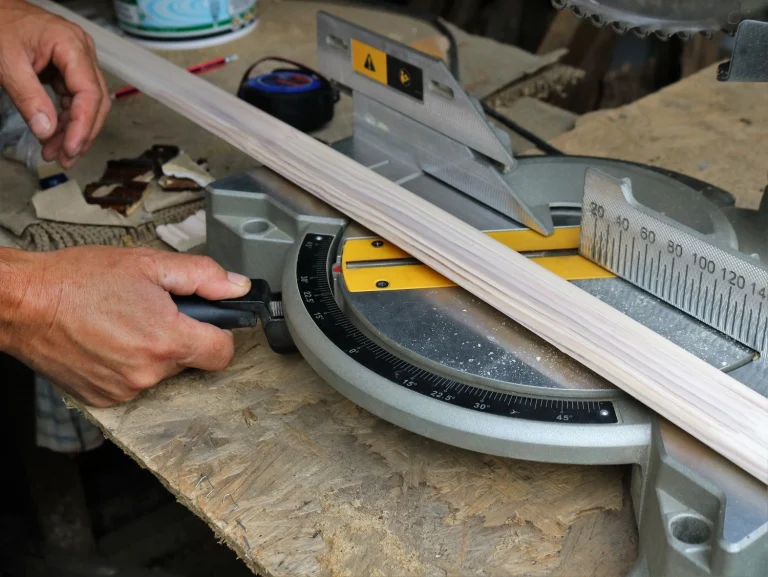
The main components of a miter saw include the blade guard, fence, miter gauge, bevel scale, and power switch. The blade guard is a safety feature that covers the blade when it’s not in use, preventing accidental contact. The fence provides support for the workpiece and ensures accurate cuts. The miter gauge allows you to set the desired angle for the cut, while the bevel scale controls the tilt of the blade for bevel cuts.
Before using a miter saw, always wear appropriate safety gear, including safety glasses and ear protection. Ensure that the work area is clear of any obstructions and that the saw is securely positioned on a stable surface. Familiarize yourself with the saw’s controls and adjust them as needed for your specific cut. Always follow the manufacturer’s instructions and guidelines for safe and proper use.
Exploring the Versatility and Precision of a Miter Saw
When exploring the versatility of a miter saw, consider its ability to make precise bevel cuts. A miter saw is a powerful tool that enables you to achieve accurate and angled cuts with ease. Here are four key ways in which a miter saw can liberate you in your woodworking projects:
- Bevel Cuts: With its beveling capabilities, a miter saw allows you to tilt the blade to make angled cuts on the workpiece. This is especially useful when creating decorative elements or joining pieces at different angles.
- Crosscuts: The miter saw excels at making clean, straight crosscuts. Whether you’re cutting lumber for framing or trimming boards for a project, the miter saw ensures precise and accurate results.
- Compound Cuts: By combining both miter and bevel angles, a miter saw can create compound cuts. This is ideal for projects that require intricate angles, such as crown molding or picture frames.
- Versatility: Miter saws come in various sizes and configurations, offering different cutting capacities. From compact models for small-scale projects to sliding compound miter saws for larger tasks, there’s a miter saw available to suit your specific needs.
The Different Types of Miter Saws
Take a look at the various models of miter saws available, each offering unique features and capabilities.
When it comes to miter saws, there are three main types: compound miter saws, sliding compound miter saws, and dual bevel sliding compound miter saws.
Compound miter saws are the most basic type and are ideal for simple crosscuts and miter cuts. They can tilt in one direction, allowing you to make bevel cuts along with miter cuts.
Sliding compound miter saws, on the other hand, have a sliding feature that allows the blade to move forward and backward. This increased cutting capacity is perfect for cutting wider boards and making longer crosscuts.
If you’re looking for more versatility, consider a dual bevel sliding compound miter saw. These saws can tilt in both directions, making it easier to create bevel cuts on both sides without flipping the workpiece. They also have the sliding feature, giving you the best of both worlds.
When choosing a miter saw, consider the type of projects you’ll be working on and the level of precision you require. Remember, the right miter saw can make a world of difference in your woodworking projects.
Tips and Tricks for Using a Miter Saw
Make sure to always wear safety goggles and gloves when operating a miter saw to protect yourself from potential accidents. To ensure a safe and efficient operation, here are some tips and tricks to follow:
- Positioning: Place the miter saw on a stable and level surface, ensuring that it’s securely fastened. Adjust the saw’s position and angle to match the desired cut.
- Blade Selection: Choose the appropriate blade for the material you’re cutting. Different blades have different tooth configurations and are designed for specific cutting applications.
- Proper Technique: Hold the material firmly against the fence and the base, ensuring a secure grip. Start the saw and slowly lower the blade onto the material, allowing it to cut smoothly and cleanly.
- Maintenance: Regularly inspect and clean the miter saw to ensure optimal performance. Keep the blade sharp and replace it when necessary. Check for any loose or damaged parts and address them promptly.
Enhancing Woodworking Projects With a Miter Saw
Now that we understand the basic components, let’s explore how a miter saw can take your woodworking projects to the next level:
Precision and Accuracy: The miter saw excels at producing precise and accurate cuts, ensuring that your wood pieces fit together seamlessly. This precision is crucial when creating furniture, frames, or any project where precise measurements are essential.
Versatility: With the ability to make both crosscuts and miter cuts at various angles, a miter saw adds versatility to your woodworking toolkit. This versatility allows you to tackle a wide range of projects, from simple picture frames to complex crown molding installations.
Time Efficiency: By making quick and accurate cuts, a miter saw can significantly reduce the time it takes to complete woodworking tasks. This time-saving aspect is especially beneficial when working on large projects or multiple pieces that require identical cuts.
Safety: Modern miter saws often come with safety features like blade guards and electric brakes, enhancing user safety. Additionally, the stability provided by the saw’s base and fence reduces the risk of kickback, a common hazard when working with other types of saws.
Frequently Asked Questions
What is a Miter Saw?
A miter saw is a power tool commonly used in woodworking shops. It is a saw used to make accurate cross cuts and miter cuts in various materials, primarily in wood.
What are the pros and cons of using a miter saw?
Some of the pros of using a miter saw include precise and accurate cuts, versatility in making different types of cuts, and the ability to easily make angled cuts. Additionally, miter saws are available in both stationary and portable versions, giving flexibility in terms of use in the shop or on the go. However, a potential con of using a miter saw is that it may not be the best option for ripping long boards, as it is primarily designed for cross-cutting and mitering.
What should I consider when buying a miter saw?
When buying a miter saw, it is important to consider the blade size, miter table size, and whether you need a single bevel or double bevel miter saw. Additionally, you should consider whether you prefer a corded or cordless miter saw, a stationary or sliding miter saw, as well as the dust extraction capabilities and the overall build quality of the saw.
How do I make a miter cut with a miter saw?
To make a miter cut with a miter saw, you need to adjust the angle of the saw table to the desired angle, typically 45 degrees for most common angles. Then, position the workpiece against the miter guide and make the cut using a controlled motion.
Can a miter saw be used for other types of cuts?
Yes, a miter saw can also be used for making cross cuts and bevel cuts, in addition to miter cuts. With the appropriate adjustments and accessories, it can also be used for making rip cuts and other specialized cuts.
What is the role of a miter box in using a miter saw?
A miter box is a tool that is used in conjunction with a miter saw to guide the workpiece and ensure accurate and precise cuts. It helps in holding the workpiece securely and providing a stable platform for making the desired cuts.
How does a miter saw differ from a circular saw?
While both tools are used for cutting wood, there are some key differences between a miter saw and a circular saw. A miter saw is typically stationary and has a fixed blade that can make precise angled cuts, while a circular saw is handheld and can make straight cuts across the grain of the wood.
How does a miter saw extract dust?
Miter saws often come with a dust collection system, which can be connected to a vacuum or dust collection unit. When the saw is in use, the dust extraction system helps to collect the sawdust and debris, keeping the work area clean and reducing the amount of dust released into the air.
Is it possible to fix one side of the miter table to make repeat cuts at the same angle?
Yes, some miter saws have a feature called a miter stop, which allows you to set the miter table at a specific angle and lock it in place. This feature is useful for making repeat cuts at the same angle without having to readjust the miter table each time.
What are some popular sizes of miter saw blades?
Popular sizes of miter saw blades include 10-inch and 12-inch diameters. These sizes are commonly used for various woodworking projects and provide a good balance between cutting capacity and accuracy.